Grand Canyon helicopter vs airplane tour compared: cost, views, flight time, comfort, and safety — so you can pick the right flight for your trip.
Options at a Glance
Both options get you airborne over one of the most photographed landscapes in the world, but they're built for different trips. The Grand Canyon helicopter vs airplane tour decision really comes down to what you want out of the 30 to 90 minutes you'll spend in the air — a close, slow look at canyon walls and a possible landing, or a wider, faster sweep across more territory for less money.
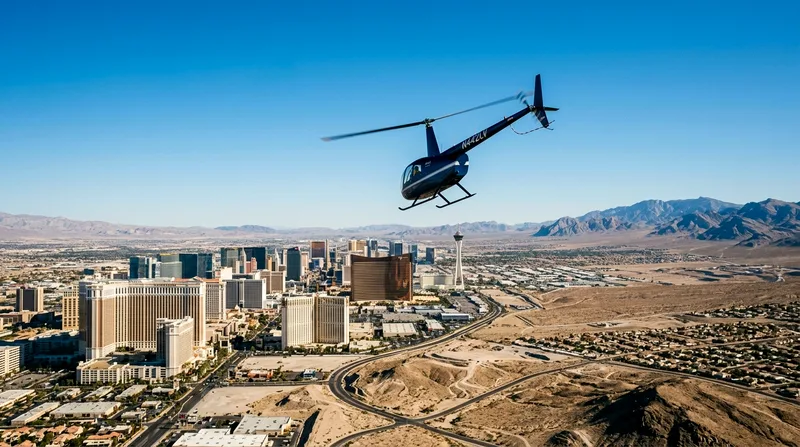
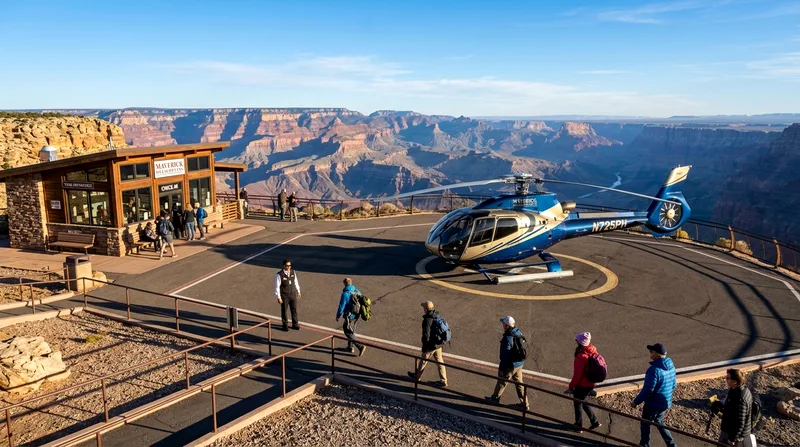
Most tours depart from Las Vegas, Boulder City, or the Grand Canyon West/South Rim area, with operators like Maverick Helicopter and Maverick Airlines running some of the more established routes. Helicopters tend to fly lower and slower, weaving into the canyon itself near Grand Canyon West. Airplanes fly higher and faster, giving you a broader panorama but staying outside the canyon rim in most cases due to airspace restrictions over the National Park.
If you're short on time in Vegas and want to tick off the canyon in half a day, both work. If you're set on landing on the canyon floor for champagne and a photo op, only the helicopter delivers that.
Helicopters cost more and fly closer to canyon walls, while airplanes cover more ground for less money and a smoother ride.
Grand Canyon helicopter vs airplane tour compared by cost, time, and experience
| Tour Type | Typical Cost (USD) | Flight Time | Altitude/Proximity | Landing Option | Best For |
|---|---|---|---|---|---|
| Helicopter (no landing) | $250-$350 | 25-30 min | Low, inside canyon rim near Grand Canyon West | No | Close-up views, photography |
| Helicopter (with landing) | $400-$600+ | 40-55 min total | Low, descends to canyon floor | Yes, Grand Canyon West floor | Special occasions, couples |
| Airplane (South Rim) | $150-$220 | 60-75 min | High, above rim level | No | Budget-conscious first-timers |
| Airplane (South + North Rim combo) | $200-$280 | 75-90 min | High, above rim level | No | Longer overview, fewer repeats |
| Helicopter + Skywalk add-on | $500-$700+ | Varies, half-day | Low, plus ground time at Skywalk | No (Skywalk is a walkway, not landing) | Families wanting a ground activity |
Prices and durations are typical ranges; always compare current prices and exact itineraries when booking.
Helicopter tours overview
Helicopter tours from Las Vegas typically run 3.5 to 4.5 hours door-to-door, including hotel pickup, with actual flight time around 25 to 45 minutes depending on whether the tour includes a landing. They fly into Grand Canyon West, part of Hualapai tribal land, rather than the South Rim or North Rim, which sit inside the National Park and have stricter flight ceilings. The appeal is proximity — helicopters can descend below the rim line, giving you a sense of scale that a high-altitude plane simply can't replicate. Expect a smaller cabin, usually four to six passengers, with window seats for everyone, which matters more here than on almost any other sightseeing flight.
Airplane tours overview
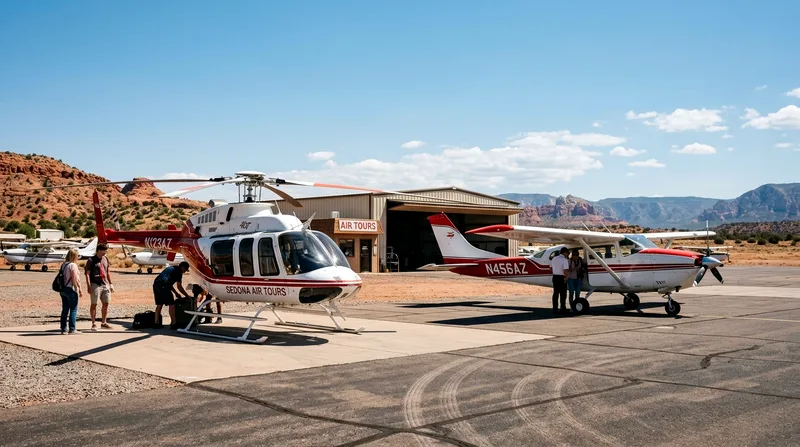
Airplane tours, often operated as Grand Canyon plane tours by the same companies running helicopter routes, use larger twin-engine aircraft seating 10 to 19 passengers. Flights run longer — 60 to 90 minutes in the air — and often cover both the South Rim and parts of the North Rim in a single trip, something no helicopter tour from Vegas does in one go. Cruising altitude sits well above the canyon, which trades intimacy for scope: you see the full curve of the Colorado River and the layered geology stretching for miles. It's a better fit if you want context over close-ups, or if you're combining the flight with a ground tour at the South Rim.
Cost and Pricing Comparison
Grand Canyon helicopter tour cost runs noticeably higher than the equivalent airplane trip, and the gap isn't small. A basic no-landing helicopter flight from Las Vegas starts around $250-$300 per person, while a comparable airplane tour covering more airspace can start closer to $150-$180. Add a canyon floor landing, a champagne toast, or a Skywalk combo, and helicopter pricing climbs past $500 quickly.
The value question isn't just about price per minute — it's about what you're paying for. Helicopters charge a premium for proximity and the landing privilege, which requires permits and limited daily slots at Grand Canyon West. Airplanes charge less partly because they can't descend into the canyon and partly because larger passenger counts spread the operating cost further.
Helicopter pricing factors
Expect the price to scale with three things: whether there's a landing, whether it includes ground time (a Skywalk visit, a picnic lunch at the canyon floor, a Hummer ride), and the departure point. Tours departing directly from the South Rim area tend to be shorter and sometimes cheaper than the full Vegas-to-canyon round trip, which includes extra flight time just getting there. Sunset and VIP seating upgrades can add another $50-$100 per person. If you're traveling as a couple, ask about the front "doors-off" or co-pilot seat — some operators charge extra for it, and it's worth it for photography but not essential for the view itself.
Airplane pricing factors
Airplane tour pricing is driven mainly by route length and whether the North Rim is included. A South Rim-only flight is the cheapest option in the sky-tour category, often $150-$200. Adding North Rim coverage or a ground excursion at the South Rim (a short bus tour, a meal) pushes the price toward $250-$300. Because cabins seat more people, discounts for groups or families are more common here than with helicopters, where the small cabin limits how much operators can flex on price.
Views, Altitude, and Flight Duration
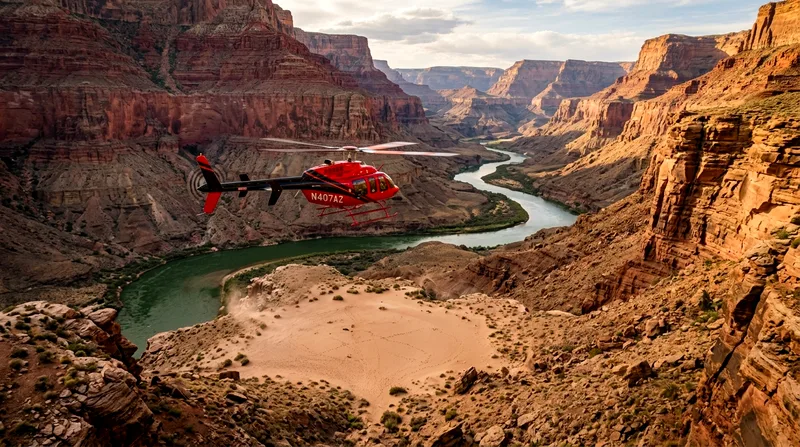
This is where the helicopter vs plane Grand Canyon debate gets personal — it depends on what kind of view actually excites you. Helicopters fly low enough to pick out individual rock striations, shadows crawling across canyon walls, and the Colorado River threading through the base. Airplanes fly high enough to show you the canyon's full geography in one frame: the way it bends, widens, and splits into side canyons for sixty miles in either direction.
Neither view is objectively better. A helicopter gives you drama and scale at close range. An airplane gives you context and geology you can actually trace with your eye. If you've done a Horseshoe Bend overlook or stood at a Zion viewpoint and want something that feels different in kind, not just bigger, the helicopter's low-altitude pass over Grand Canyon West delivers that novelty. If you want to understand how the canyon fits together as a landscape, the plane wins.
Helicopter viewing experience
Because helicopters can slow down, hover briefly, and bank at low altitude, photographers get genuinely useful compositions — canyon walls filling the frame, no haze softening the colors. Flights into Grand Canyon West typically cruise at 500-800 feet above the terrain in spots, compared to several thousand feet for airplanes. The trade-off is a narrower field of view per moment; you see less total canyon, but what you see is sharper and more immediate.
Airplane viewing experience
Airplanes cruise at altitudes that put the entire canyon width in view at once, which is genuinely useful for first-time visitors trying to mentally map the place — where the South Rim sits relative to the North Rim, how far the Colorado River has cut, where Lake Mead begins. Window seats matter more here than people expect; ask if the operator guarantees one, since center seats on 19-passenger aircraft get a weaker angle.
Comfort, Safety, and Physical Experience
Comfort is the most underrated factor in this comparison, and it's the one that trips up travelers who choose based on views alone. Helicopters are noisier and bumpier at low altitude, especially over the thermals that rise off sun-heated canyon rock in the afternoon. Airplanes fly smoother at higher altitude and have a more conventional cabin feel, closer to a short regional flight than an amusement ride.
Motion sickness is a real consideration — if you get queasy on small boats or turbulent commercial flights, lean airplane, and book a morning slot before afternoon heat builds up thermal bumps either way. Seniors and travelers with back or hip issues often find the airplane's seating more accommodating; helicopter cabins are tight, and getting in and out can be awkward for anyone with limited mobility.
Noise, vibration, and motion
Helicopters vibrate constantly and the rotor noise, even with headsets, is a different sensory experience than flying in a fixed-wing plane. Some travelers find it thrilling; others find forty-five minutes of it fatiguing. Airplanes generate engine noise too, but it's steadier and less physically felt through the seat and floor. If you're traveling with kids under eight, the plane is generally the calmer option — less to startle them, easier to keep them seated.
Safety records and considerations
Both helicopter and airplane sightseeing operators in the Grand Canyon area are regulated by the FAA and subject to routine inspections, and tour aircraft of both types have long, mostly safe operating histories at major regional airports. That said, helicopter tourism as a category has historically drawn more scrutiny for weather-related incidents, since low-altitude flight in canyon terrain is more sensitive to wind gusts and visibility than high-altitude airplane routes. Reputable operators cancel or delay flights for weather routinely — treat a cancellation as a sign the company is cautious, not incompetent, and avoid any operator who seems to pressure you to fly in marginal conditions.
Landing Tours vs Flyovers
This is the single biggest functional difference between the two aircraft types. Helicopters can land; fixed-wing planes, for airspace and terrain reasons, cannot land inside the canyon on a sightseeing tour. If a canyon-floor landing is non-negotiable for your trip, the decision is already made for you.
Helicopter landing options
Landing tours touch down on private land at the bottom of Grand Canyon West, not inside the National Park boundary (where helicopter landings are prohibited). Typical landing packages include 20-30 minutes on the canyon floor near the Colorado River, sometimes with a light picnic or champagne toast included. These tours run longer overall — plan for four to five hours including Vegas transport — and cost meaningfully more than a flyover-only trip. It's a genuinely different experience: standing at the bottom of the canyon, looking up at walls rather than down into them, which no airplane tour can offer at any price.
Airplane landing options
Airplane tours are flyovers only — there's no version of a Grand Canyon airplane tour that lands inside or at the base of the canyon. Some itineraries pair the flight with a ground stop at the South Rim visitor area or a bus-based add-on, but that's a separate ground tour bolted onto the flight, not a landing within the canyon itself. If ground time matters to you, pairing an airplane flyover with a separate day hiking the South Rim's Bright Angel Trail or visiting Grand Canyon West's Skywalk on the ground is the more common workaround.
Which Tour Is Right for You
Couples celebrating an anniversary or honeymoon tend to gravitate toward the helicopter-with-landing package — it photographs well, it's memorable, and the extra cost feels justified for a one-time trip. Families with younger kids are often better served by the airplane: cheaper per seat, smoother ride, and less risk of a meltdown forty-five minutes into a loud, bumpy helicopter cabin. Solo travelers and budget-conscious world travelers comparing this against a day trip to Antelope Canyon or Horseshoe Bend should weigh whether an aerial tour is even the best use of that budget — a full day driving the South Rim and hiking a few miles below the rim costs nothing beyond the park entrance fee of $35 per vehicle, valid for seven days.
European travelers on a tight two-week Western loop that also includes Zion, Bryce Canyon, and Monument Valley often skip the Grand Canyon flight entirely and prioritize ground time instead, since they're already seeing dramatic rock formations on the drive. That's a defensible call. But if the Grand Canyon is the single headline stop of the trip, paying for either tour — plane for value, helicopter for drama — is reasonable. Hikers and paragliders who already know how to read scale and elevation from the ground sometimes find airplane views slightly flat by comparison; for that crowd, the helicopter's lower passes feel more proportionate to what they already understand about the terrain.
Whichever you choose, book morning slots when possible — winds pick up in the afternoon, increasing the odds of a bumpier ride or a weather delay, and compare current prices and exact departure points before you book, since Vegas-based and South Rim-based tours differ in both cost and total trip length.
Frequently asked questions
Is a helicopter or airplane tour better for Grand Canyon views?
It depends on what you want to see. Helicopters fly lower and closer to canyon walls near Grand Canyon West, giving sharper, more dramatic close-up views. Airplanes fly higher and cover more canyon in one trip, often including both South and North Rim areas, giving a broader geographic picture. Neither is strictly "better" — close-up drama versus wide context is a personal preference.
How much does a helicopter tour cost compared to an airplane tour?
A basic no-landing helicopter tour typically runs $250-$350 per person, while landing packages with ground time can exceed $500-$600. Airplane tours generally cost less, starting around $150-$220 for a South Rim route and up to $280 for combined South and North Rim itineraries. Always check current prices before booking, as they vary by departure city and season.
How long does each type of tour take?
Helicopter flight time alone runs 25-55 minutes depending on whether it includes a landing; total trip time from Las Vegas with hotel pickup is usually 3.5-5 hours. Airplane tours spend 60-90 minutes in the air and run slightly shorter door-to-door since there's no canyon-floor stop involved.
Which tour is safer, helicopter or airplane?
Both helicopter and airplane sightseeing operators are FAA-regulated with established safety track records at Grand Canyon departure points. Helicopters operate closer to terrain and are more weather-sensitive, which is why reputable operators cancel or delay flights readily in windy conditions. Choosing an established operator and flying in the morning, when winds are calmer, reduces risk either way.
Do helicopter tours land at the bottom of the Grand Canyon?
Some do, but only at Grand Canyon West on Hualapai tribal land outside the National Park boundary, where landings are permitted. These landing packages add 20-30 minutes of ground time, often with a light meal or toast, and cost significantly more than a flyover-only tour. Airplane tours never land inside the canyon under any circumstance.