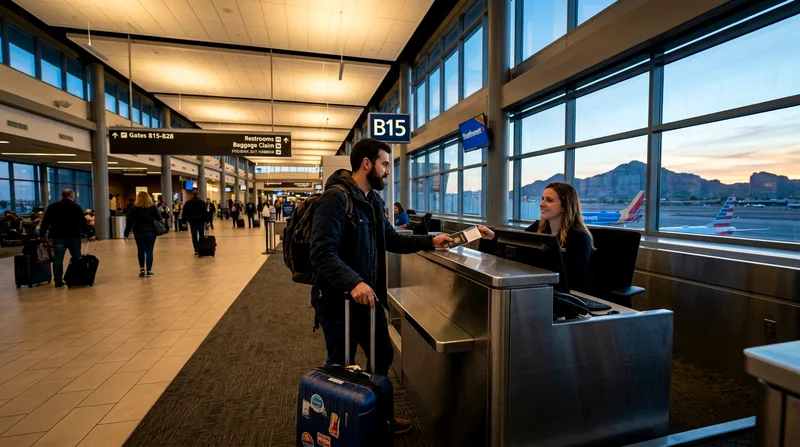
Grand Canyon for Europeans: Flights, Cars & Tipping Tips
Essential guide to Grand Canyon for Europeans: flights, visa rules, car hire, tipping norms, and which tours to pre-book before your trip.
8 min read · 15 Oct 2026
Itineraries
Plan your trip with modular Grand Canyon itineraries for 1–3 days. Rim selection, viewpoints, bookable activities, and realistic timing included.
A Grand Canyon itinerary only works if it matches how you actually like to travel, not how a brochure thinks you should. These plans are built around three trip lengths — one, two, and three days — because that's what most visitors realistically have, whether they're flying into Phoenix for a week or tacking the canyon onto a Southwest road trip through Zion, Sedona, and Moab.
If you're a first-time visitor or part of a family with young kids, the one-day plan gets you the essential views without exhausting anyone. Hikers, photographers, and couples wanting a slower pace should look at two or three days — that's when you can actually walk part of the Rim Trail at sunrise or book a mule ride or rafting half-day without feeling rushed. Senior travelers and those with mobility concerns will find the South Rim's paved, shuttle-served viewpoints far easier than anything on the North Rim or below the rim.
European and international travelers flying in from Las Vegas or Phoenix should budget the three-day version if possible — the drive alone eats a full day each way if you're coming from Vegas, roughly 4.5 hours one-way to the South Rim. I'd skip the ultra-compressed bus-tour day trips sold heavily in Vegas; you get maybe 90 minutes at the rim after 9+ hours round-trip on a bus, which is a bad trade unless it's truly your only option.
One day is enough to understand why the South Rim draws crowds, but not enough to do much more than the highlights. This plan assumes you're based in Williams, Tusayan, or Flagstaff the night before — trying to day-trip from Las Vegas or Phoenix and back in the same day is possible but brutal, with more hours in the car than at the rim.
A three-day Grand Canyon itinerary fits in a real hike and one bookable activity, while a one-day plan is limited to rim viewpoints only.
Grand Canyon itinerary comparison: 1-day, 2-day, and 3-day trip plans
| Itinerary | Best For | Key Activity | Hiking Included | North Rim Access |
|---|---|---|---|---|
| 1-Day | First-timers, families with young kids | Hermit Road viewpoints, sunset | Rim Trail walk only | No |
| 2-Day | Couples, hikers, photographers | Partial South Kaibab descent | Cedar Ridge or Ooh Aah Point | No |
| 3-Day | Road-trippers, adventure travelers | Helicopter, rafting, or North Rim visit | Bright Angel to 1.5-Mile Resthouse | Yes (seasonal) |
Typical pacing based on standard park hours and shuttle schedules; actual activity availability and trail conditions vary by season.
Enter the park by 7:30–8am through the South Entrance to beat both the crowds and the midday heat, especially in summer. Head straight to Mather Point for your first view, then catch the free shuttle along Hermit Road (closed to private cars March through November) to hit Hopi Point and Mohave Point — two of the widest, least obstructed panoramas on the rim. Budget 3 hours for this loop with stops.
By early afternoon, walk a section of the Rim Trail between Grand Canyon Village and Yavapai Point — it's paved, mostly flat, and manageable for most fitness levels, roughly 2.5 miles one-way if you want the full stretch. Stop at the Yavapai Geology Museum, free admission, for context on how the canyon actually formed. This is also the window to book a short helicopter tour over the canyon if that's on your list — flights typically run 25–45 minutes and need reserving at least a day ahead in peak season.
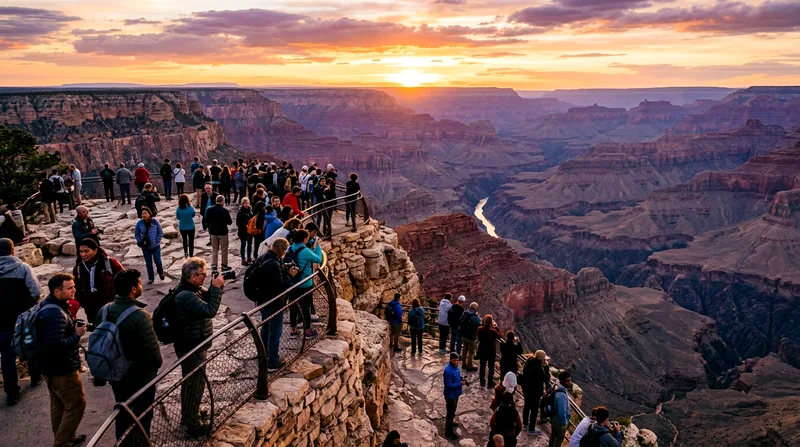
Head to Hopi Point or Yaki Point (shuttle-only) about 45 minutes before sunset — these fill up fast, so arrive early and expect to share the view with fifty other people with cameras. Desert View, 23 miles east with the historic Watchtower, is a quieter sunset alternative if you don't mind the drive. If weather closes in — thunderstorms are common in July and August — the Yavapai museum's indoor overlook windows are a reasonable backup that still gives you a view.
Two days changes the pace entirely. You stop feeling like you're racing the shuttle schedule and can actually fit in one real activity beyond viewpoint-hopping — a mule ride, a short rafting trip, or a longer hike below the rim.
Follow the one-day plan above but slow it down — spread the Hermit Road stops across the full morning and add Hermit's Rest at the far end of the route, a stone building from 1914 worth the stop for its architecture alone. Have lunch in Grand Canyon Village rather than rushing back to the car. Stay overnight at the South Rim (book months ahead for in-park lodges) or in Tusayan, a 10-minute drive from the entrance.
Start early with a partial descent on the South Kaibab Trail — go as far as Ooh Aah Point (1.5 miles round-trip, steep) or Cedar Ridge (3 miles round-trip) for canyon views you don't get from the rim. This trail has no water sources, so carry at least 1.5 liters per person even for a short hike. In the afternoon, this is the day to book a half-day rafting trip on the Colorado River or a scenic flight — both need advance reservation, especially May through September. Tired legs or bad weather? Swap the hike for the Tusayan Museum and a slower walk along the Trail of Time near Yavapai Point instead.
Three days is where the Grand Canyon itinerary stops feeling like a checklist and starts feeling like an actual trip. It also opens the door to the North Rim, 220 miles and about a 4.5-hour drive from the South Rim around the canyon — only worth it if you're there between mid-May and mid-October, since the North Rim closes for winter.
Arrive by early afternoon, check into South Rim or Tusayan lodging, and take it easy — walk the Rim Trail from the Village to Mather Point, visit the Geology Museum, and get oriented at the visitor center for trail conditions and shuttle routes. Save energy for the next two days rather than trying to see everything on arrival day.
Dedicate the full day to Hermit Road viewpoints and a longer hike — Bright Angel Trail to the 1.5-Mile Resthouse (3 miles round-trip) is a good middle-distance option with water available seasonally at the resthouse. Afternoon free for shopping in the Village or a mule ride if booked weeks ahead; mule trips sell out fast and require advance reservation, sometimes months out for peak season.
Choose your own adventure here: drive to the North Rim for its quieter, forested viewpoints like Bright Angel Point (far fewer crowds than the South Rim, but a long round-trip drive if you're not sleeping there), or stay south and book a helicopter tour, Jeep tour, or rafting trip. If you're continuing the Grand Circle Road Trip, this is the natural pivot day toward Sedona (about 2.5 hours south) or Zion National Park (around 4.5 hours northwest via Fredonia). Bad weather day? The IMAX theater in Tusayan and the Desert View Watchtower are solid indoor-adjacent fallbacks.
Inside the park, the free shuttle system is genuinely good — four routes cover Hermit Road, the Village, Kaibab Trail, and Tusayan, running roughly every 15-30 minutes depending on season. Hermit Road itself is closed to private vehicles most of the year, so unless you have a mobility placard, you're on the shuttle or walking that stretch.
Getting to the park is the bigger logistical question. From Las Vegas, it's about 4.5 hours by car to the South Rim (around 280 miles) — doable as a long day trip but far better as an overnight. From Phoenix, it's roughly 3.5-4 hours. Flagstaff, about 80 minutes from the South Rim, makes a sensible base if you're also routing through Sedona, which sits roughly 45 minutes south of Flagstaff and pairs naturally with a canyon stop. If you're road-tripping the wider Grand Circle — Zion, Bryce Canyon, Monument Valley, Moab's Arches and Canyonlands — the South Rim slots in as a southern anchor point, with Horseshoe Bend and Antelope Canyon near Page making a logical stop between the canyon and Zion.
I wouldn't recommend renting a car just for a South Rim day trip if you're staying in Tusayan — walk or shuttle instead and save the stress of parking, which fills up at the Village by mid-morning in peak season.
Where you sleep shapes your whole itinerary more than any single activity choice.
In-park lodges (El Tovar, Bright Angel Lodge, Kachina and Thunderbird) put you steps from the rim and save 20-30 minutes of driving each morning and evening — but they book out 6-13 months ahead for peak season and cost more than Tusayan options. Tusayan, just outside the South Entrance, offers more mid-range chain hotels with a 10-minute drive in. Williams, about an hour south, is cheaper still and has character — old Route 66 town — but adds real driving time if you're doing sunrise viewpoints.
The North Rim has one lodge, Grand Canyon Lodge, open mid-May to mid-October only, with limited rooms that sell out early. Jacob Lake, 45 minutes north, is the fallback. Most travelers combining the canyon with Zion or Bryce base in Kanab, Utah, instead — about 2 hours from the North Rim and well-positioned for the wider loop. If you're prioritizing flexibility over canyon proximity, Flagstaff beats all of these for restaurant variety and easy access to Sedona and Sunset Crater Volcano National Monument as an add-on day.
Two to three days is the sweet spot for most travelers — enough time for sunrise and sunset at different viewpoints, one below-the-rim hike, and a single bookable activity like rafting or a helicopter flight. One day works for a focused South Rim visit if you're tight on time, but anything less turns into a parking-lot-to-viewpoint sprint.
The South Rim, open year-round, has 90% of the infrastructure, viewpoints, and lodging, making it the default choice for nearly everyone. The North Rim is quieter and arguably more scenic from certain points, but it only opens mid-May to mid-October and requires a 4.5-hour drive around the canyon to reach from the South Rim.
Drive yourself and stay at least one night near the park — either in-park lodging or Tusayan — rather than doing a same-day bus tour from Las Vegas. Use the free shuttle system once inside the park; it's reliable and avoids the parking crunch at Grand Canyon Village.
Tusayan (10 minutes from the South Entrance) and Williams (about an hour south) are the main gateway towns, with Flagstaff (80 minutes away) a good alternative if you also want easy access to Sedona. For the North Rim, Kanab, Utah or Jacob Lake are the practical bases.
Yes — it's a natural stop on the Grand Circle Road Trip linking Zion, Bryce Canyon, Monument Valley, and Moab's national parks. Plan on roughly 4.5 hours driving between the South Rim and Zion via Page, where Horseshoe Bend and Antelope Canyon make worthwhile stops along the way.
Essential guide to Grand Canyon for Europeans: flights, visa rules, car hire, tipping norms, and which tours to pre-book before your trip.
8 min read · 15 Oct 2026
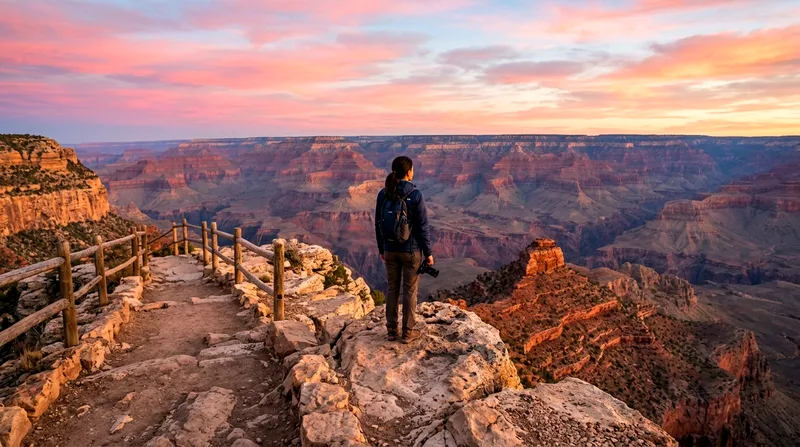
Plan your solo Grand Canyon trip with a 3-day itinerary, safety tips, group tours for solo travelers, and practical advice for visiting alone.
10 min read · 15 Oct 2026
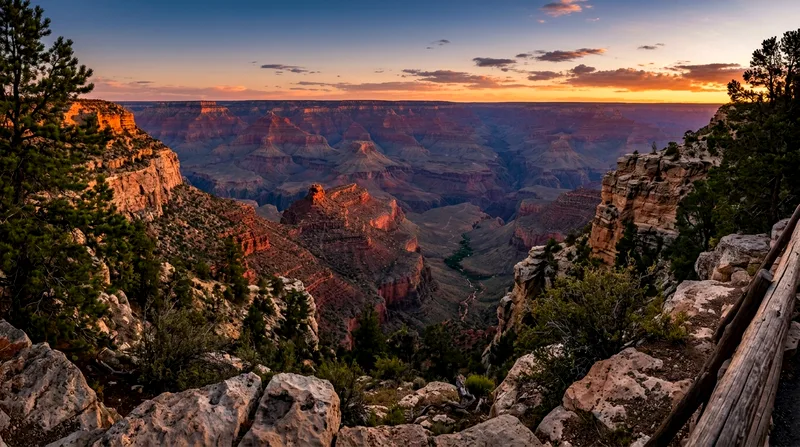
A 3-day Grand Canyon North Rim itinerary covering trails, scenic drives, mule rides, and lodging at this quieter side of the canyon.
10 min read · 15 Oct 2026
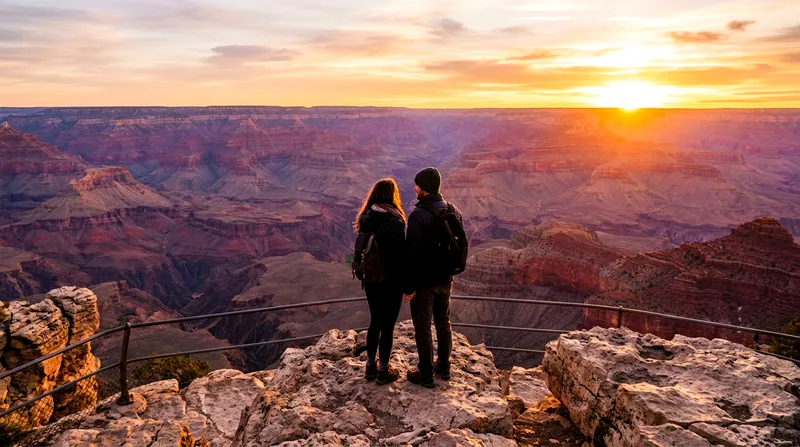
A romantic Grand Canyon itinerary for couples with sunset viewpoints, helicopter tours, and quiet rim walks. 3 days of lodging and dining tips included.
9 min read · 15 Oct 2026
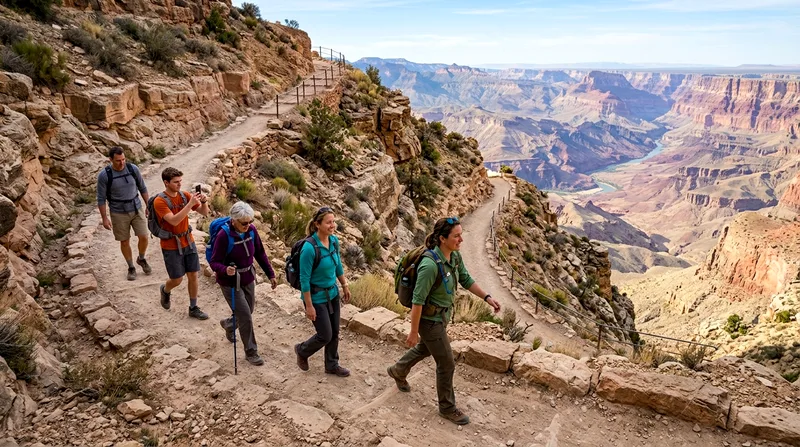
Plan your 3-day Grand Canyon trip with this detailed itinerary. Mix South Rim sightseeing, guided hikes, and optional helicopter or rafting tours.
9 min read · 15 Oct 2026
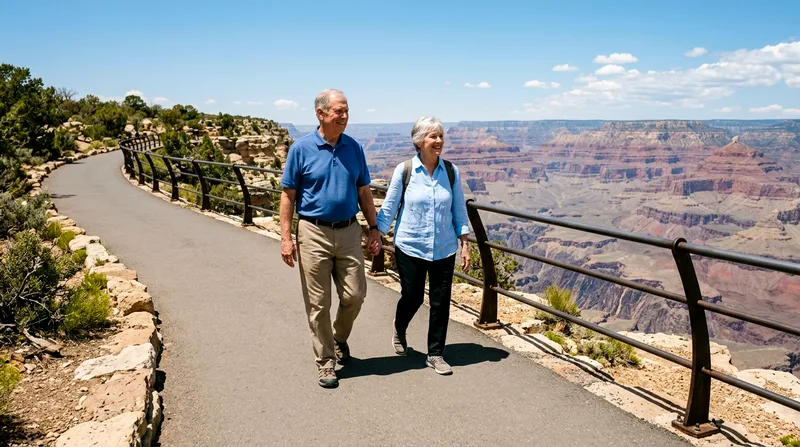
Pace-friendly Grand Canyon itinerary for seniors with accessible viewpoints, shuttle tips, and low-exertion tours. Plan your comfortable visit today.
9 min read · 15 Oct 2026
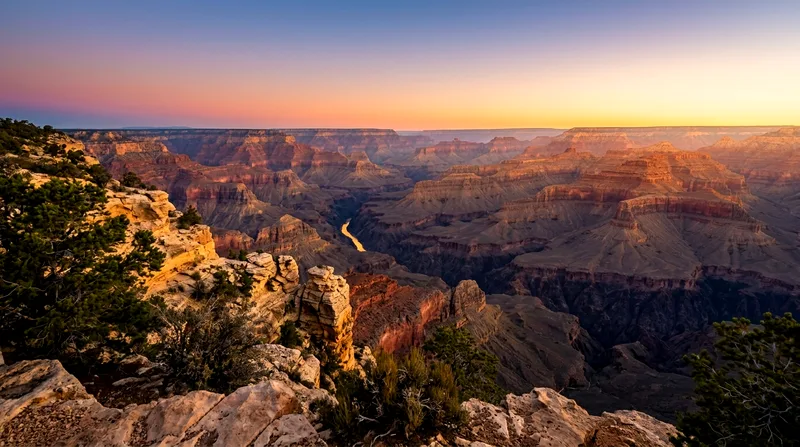
Make the most of a one day Grand Canyon itinerary with hour-by-hour timing, top South Rim viewpoints, a day hike option, and bookable tours.
9 min read · 15 Oct 2026