Grand Canyon helicopter tour price breakdown from $269–$789. Learn hidden fees, discount strategies, and which add-ons are actually worth it.
Pricing tiers and tour types explained
The Grand Canyon helicopter tour price spans a wide range for a reason — you're not comparing one product, you're comparing at least four different experiences that happen to use the same aircraft. At the low end, short scenic flights from the South Rim or Grand Canyon West run roughly $269–$349 per person for 25–30 minutes in the air with no landing. At the top end, a Las Vegas departure with a canyon landing, champagne picnic, and ground time can run $500–$789 per person once you add transport and extras.
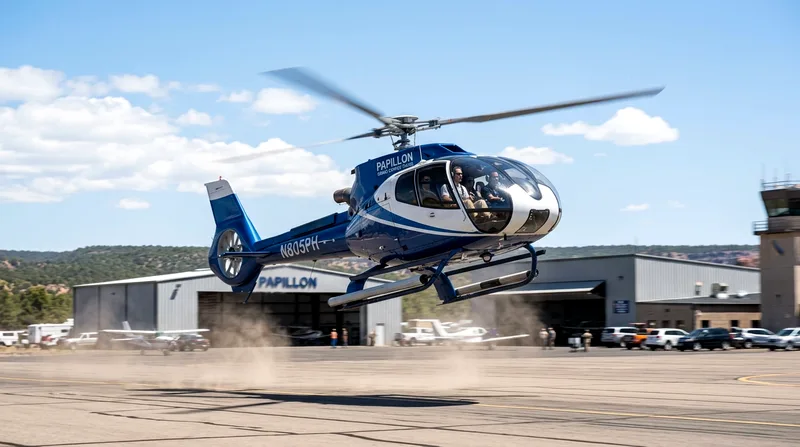
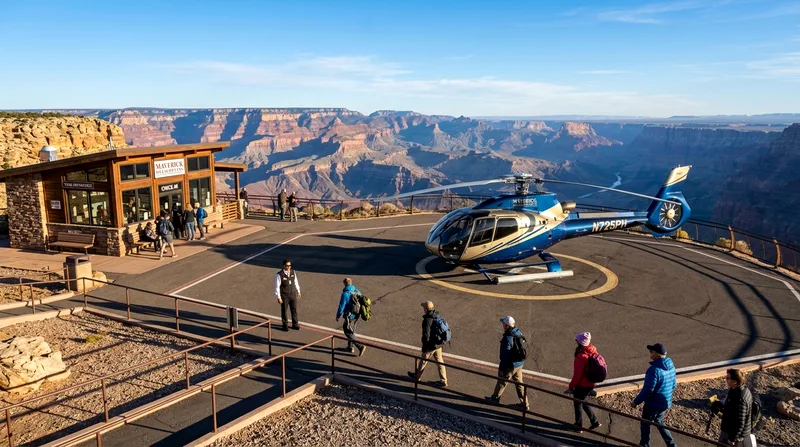
The confusion starts because operators list prices differently. Some quote the flight only; others bundle a hotel shuttle, a Hoover Dam flyover, or a Colorado River rafting add-on into the headline price. Papillon and Maverick Helicopter, two of the larger operators flying out of Las Vegas and the South Rim area, structure their tiers similarly: a base scenic flight, a mid-tier flight with a landing, and a premium package with a meal or extended ground stay. Grand Canyon Helicopters, flying primarily from Grand Canyon West near Skywalk, tends to price closer to the lower end because flights are shorter and the canyon floor landing is part of the standard package rather than an upsell.
I'd treat any price under $250 with some suspicion — it's usually a very short flight, sometimes without an actual canyon landing, or it excludes the park entry fee that Grand Canyon West charges separately (around $55–$90 depending on the package, paid on top of the flight). Read the inclusions line by line before comparing numbers across operators.
Landing tours and Las Vegas departures cost more than scenic-only flights from Grand Canyon West, but the gap narrows once mandatory land fees are included.
Grand Canyon helicopter tour price by tier and departure point
| Tour Type | Typical Price (per person) | Flight Length | Landing Included | Common Departure |
|---|---|---|---|---|
| Scenic-only (West Rim) | $269-$349 | 25-30 min | No | Grand Canyon West |
| Landing tour (West Rim) | $400-$550 | 40-50 min total | Yes | Grand Canyon West |
| Scenic-only (South Rim) | $300-$420 | 30-45 min | No | Tusayan/South Rim |
| Landing + picnic (Las Vegas) | $500-$650 | Half-day incl. transport | Yes | Las Vegas Strip |
| Premium multi-stop package | $650-$789 | Full day | Yes | Las Vegas Strip |
Typical published ranges; final price depends on season, add-ons, and whether Grand Canyon West entry fees are bundled, so confirm inclusions before booking.
Scenic-only flights vs. landing tours
A scenic-only flight keeps you in the air the whole time — typically 25 to 45 minutes, flying over the rim, into inner-canyon airspace where regulations allow, and back. You see a lot, but you never set foot below the rim. These run roughly $269–$450 depending on departure point and flight length.
A landing tour adds 20–30 minutes of ground time at the canyon floor, usually near the Colorado River on Hualapai tribal land near Grand Canyon West. This is where the price jumps to $400–$600+ per person. Is it worth it? For most travelers, yes — standing at the bottom of the canyon, hearing the river, is a genuinely different experience than viewing it from 4,000 feet. But if you get airsick easily or you're traveling with young children who won't appreciate the landing, the scenic-only option saves real money without losing much of the visual payoff.
Champagne picnic and ground experience add-ons
The champagne picnic add-on — a boxed meal and a glass of sparkling wine served at the landing site — typically adds $50–$120 per person over the base landing tour price. It's a nice touch for an anniversary or honeymoon, and the setting genuinely does the heavy lifting. But functionally, you're paying resort prices for a sandwich and a plastic cup of wine in exchange for the photo. If budget matters more than ceremony, skip it; the landing itself is the experience, not the food.
Legitimate ways to save money
There's no secret discount code that cuts a Grand Canyon helicopter ride price in half, but there are durable strategies that consistently work. The biggest lever is choosing your departure point. Flying from Grand Canyon West (closer to Las Vegas, about a 70-90 minute drive) is generally cheaper than flying from the South Rim near Flagstaff, since South Rim flights are longer and regulated under stricter National Park Service airspace rules that limit routes and add cost. If your itinerary is flexible, basing yourself near Flagstaff and booking a West Rim flight as a side trip can actually cost less than a straight Vegas departure once you weigh in transport.
Booking early and off-season timing
Booking 4-6 weeks ahead doesn't typically unlock a lower price, but it protects you from the price creep that happens as popular time slots (early morning, sunset) fill up and operators push remaining seats into pricier remaining slots. Morning flights are usually the cheapest because visibility is reliably clear; sunset flights, while dramatic, often carry a $30-70 premium and sell out first in summer.
Group discounts and package deals
Helicopters seat 4-6 passengers typically, and operators price per seat — but some offer a modest discount when you book an entire aircraft for a group of 4+, since it guarantees them a full flight regardless of other bookings. Combining the helicopter with a ground tour of Grand Canyon West (Skywalk entry, Hualapai Ranch) in one package can also save 10-15% versus booking each piece separately, since the operator isn't paying twice to market and process two transactions.
What's not worth cutting corners on
Cutting the wrong corner on a helicopter tour isn't like skipping the hotel breakfast — it has real safety and refund consequences. I wouldn't shop by price alone here, and I'd be skeptical of any listing priced 20% below everything else in its category without a clear explanation.
Safety certifications and operator reputation
Stick to operators with an established, long-running presence at Grand Canyon West, the South Rim, or Las Vegas — companies like Papillon, Maverick Helicopter, and Grand Canyon Helicopters have flown these routes for decades and are subject to FAA Part 135 air carrier certification. Before booking through a lesser-known operator or a heavily discounted third-party listing, check who's actually operating the flight — some platforms resell seats on the same handful of established carriers, so the real safety variable is the operator name on the aircraft, not the website you booked through.
Weather guarantees and cancellation policies
Grand Canyon weather, especially afternoon wind and summer monsoon storms, causes more cancellations than people expect. Reputable operators offer a full refund or free rebooking if they cancel for weather — but policies differ on what happens if you cancel. Many require 24-48 hours notice for a refund on your end; cancel same-day and you may forfeit the full price. Read the cancellation terms before booking, not after a storm rolls in on your travel date.
Booking checklist for best value
Before you commit to any Grand Canyon helicopter tour price, run through a short mental checklist. First, confirm whether the quoted price includes the Grand Canyon West entry/landing fee or whether that's billed separately on arrival — this alone can shift your real cost by $50-90 per person. Second, check departure point against your actual itinerary: a South Rim flight makes sense if you're already at the park staying in Tusayan or Flagstaff, while a Las Vegas departure only makes sense if Vegas is your base anyway, since the drive or flight to the canyon adds time and sometimes cost.
Third, compare the scenic-only and landing-tour prices side by side rather than anchoring on whichever one you saw first — the price gap is often smaller than it looks once you include Grand Canyon West's mandatory land fee on either option. Fourth, decide upfront whether you want the champagne picnic or any add-on; bundling it at booking is usually cheaper than trying to add it on-site. Finally, screenshot or save the cancellation policy and what counts as a qualifying weather cancellation versus an operator scheduling change — the distinction affects whether you get cash back or only a rebooking credit. If you're also weighing other canyon experiences in the region — a Horseshoe Bend viewpoint stop, an Antelope Canyon slot tour, or a Monument Valley detour — book the helicopter flight for your clearest-weather day and keep flexible, ground-based activities for backup days.
Frequently asked questions
How much does a Grand Canyon helicopter tour cost?
Expect roughly $269-$349 for a short scenic-only flight from Grand Canyon West, $400-$650 for a landing tour, and up to $789 for a premium Las Vegas package with a picnic and extended ground time. The final number depends heavily on whether entry fees, transport, and surcharges are bundled or billed separately.
What's the cheapest helicopter tour option?
A morning scenic-only flight departing from Grand Canyon West, booked outside summer peak months and without a champagne picnic or hotel shuttle add-on, is typically the lowest-cost option — generally in the $269-$320 range before the mandatory tribal land entry fee.
Are landing tours worth the extra cost?
For most travelers, yes — standing at the canyon floor near the Colorado River adds a tangible experience that aerial viewing can't replicate. If you're prone to motion sickness, traveling with toddlers, or purely budget-focused, the scenic-only flight delivers most of the visual impact for less money.
What hidden fees should I expect?
Watch for the Grand Canyon West entry/landing fee ($55-$90, often billed separately), fuel surcharges ($10-$25), hotel shuttle charges on budget listings ($30-$50), and suggested pilot gratuity. Always check the final checkout total, not the advertised starting price.
How do prices change by season?
Summer and US holiday weeks bring the highest demand and least flexibility, with flights selling out and little room for last-minute deals. Shoulder seasons (April-May, September-October) typically offer steadier availability and more comfortable flying conditions without the peak-season crowding.