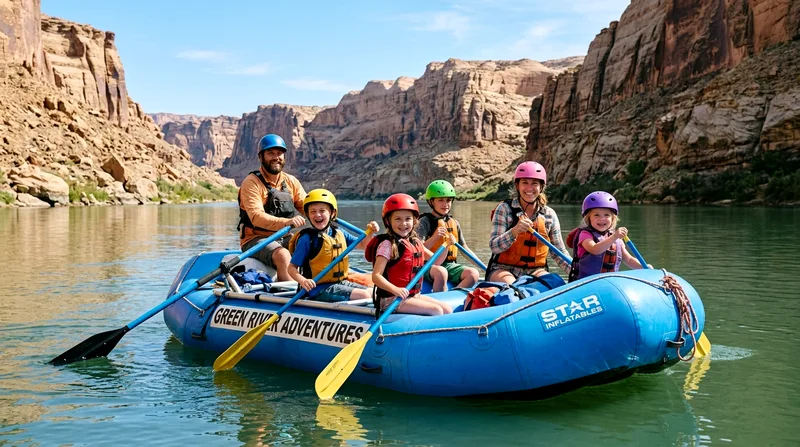
Grand Canyon Rafting with Kids: Family-Friendly Tours
Plan a safe Grand Canyon rafting trip with kids. Age limits, motorized vs oar-powered trips, safety gear, and what children actually do onboard.
8 min read · 15 Oct 2026
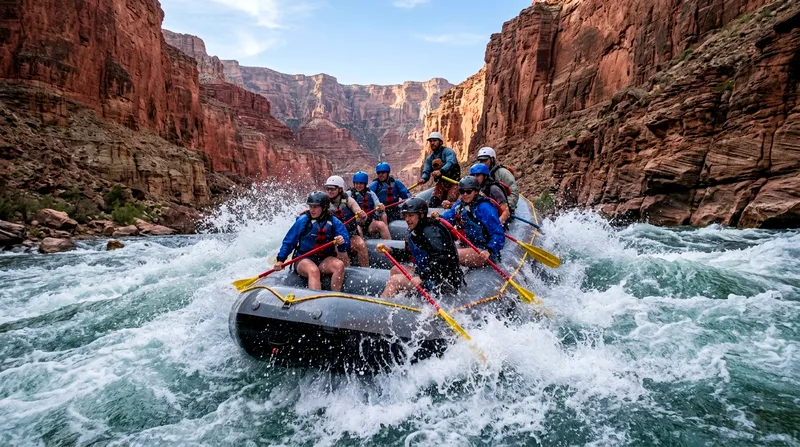
Tours & activities
Compare Grand Canyon rafting tours by duration, intensity, and trip type. Find the right river adventure from half-day floats to multi-day expeditions.
The Colorado River cuts 277 miles through the Grand Canyon, and rafting it remains the only way to see certain sections of the canyon up close — stretches of Redwall limestone and side canyons that no rim trail, helicopter, or mule ride can reach. Grand Canyon rafting tours range from a few hours of flatwater paddling near Glen Canyon Dam to full expeditions lasting over two weeks, and the gap between those two experiences is enormous. A half-day float and an 18-day whitewater trip share a river but almost nothing else in terms of cost, commitment, or what you'll remember afterward.
This guide breaks down the tour categories by duration and intensity, explains the commercial-versus-noncommercial decision that trips up a lot of planners, and gives you a framework for picking the right trip based on fitness, schedule, and budget — rather than whichever listing shows up first in a search. If you're also considering South Rim day hikes or a helicopter tour over the canyon, rafting is worth stacking against those options, since several multi-day trips combine a hike to or from Phantom Ranch with the river portion.
Grand Canyon rafting tours fall into three rough bands: smooth-water half-day or full-day trips, motorized multi-day trips of 6-8 days, and full-length oar-powered or hybrid trips running 12-18 days. Duration correlates directly with how much of the canyon you see and how much whitewater you hit, since the biggest named rapids — Lava Falls, Crystal, Hance — sit in the middle and lower sections that short trips never reach.
I'd steer most people away from thinking of the half-day float as a genuine "rafting tour" in the whitewater sense. It's a scenic float, good for families with young kids or anyone short on time, but it won't give you the adrenaline or the immersion that makes multi-day trips worth the money. On the other end, the full 12-18 day trips are extraordinary but represent a serious vacation commitment — most working travelers simply don't have three weeks to spare, which is exactly why the 6-8 day motorized trips dominate the commercial market.
Trip length determines both how much whitewater you encounter and how much of the canyon you actually see.
Grand Canyon rafting tour types compared by duration, intensity, and fit
| Tour Type | Duration | Whitewater Level | Typical Access Point | Best For |
|---|---|---|---|---|
| Half-day smooth float | 3-5 hours | None (flatwater) | Glen Canyon Dam to Lees Ferry | Families, seniors, limited time |
| Full-day smooth float | 1 day | None (flatwater) | Glen Canyon Dam area | Day-trippers from Page, AZ |
| Motorized multi-day | 6-8 days | Full range, Class 8-10 | Lees Ferry to Diamond Creek | Most first-time whitewater travelers |
| Oar-powered multi-day | 12-18 days | Full range, Class 8-10 | Lees Ferry to Lake Mead | Serious adventurers with time to spare |
| Hybrid (partial + hike) | 3-7 days | Full range on river portion | Lees Ferry to/from Phantom Ranch | Hikers combining rim and river |
Durations and classifications are typical figures from commercial itineraries; exact rapid ratings and schedules vary by outfitter and water level, so confirm details before booking.
These trips typically launch near Glen Canyon Dam and run downstream toward Lees Ferry, covering flat, calm water with no significant rapids. They last 3-5 hours for the half-day version or a full day including a short hike, and suit families with children as young as 4-5, seniors, and anyone with mobility concerns who still wants to be on the river. Expect to see towering canyon walls and maybe some petroglyphs, but no whitewater at all. It's a good add-on if you're already visiting Page, Arizona for Antelope Canyon or Horseshoe Bend, since all three sit within a short drive of each other — but don't book this expecting the whitewater experience people mean when they say "Grand Canyon rafting."
Multi-day trips launch at Lees Ferry and run through the canyon's major rapid sections, with options to take out partway at Phantom Ranch or Diamond Creek, or continue all the way to Lake Mead. Motorized trips cover the full 277-mile run in 6-8 days using larger pontoon-style rafts; oar-powered trips take longer — commonly 12-18 days — because paddle and oar rafts move slower and the guides row the technical sections themselves. Whitewater intensity on both covers the full range the canyon offers, including Class 8-10 rapids on the river's own 1-10 scale (roughly equivalent to Class IV-V on the international scale). This is the category most people picture when they say "whitewater rafting Grand Canyon," and it's where the river actually earns its reputation.
Every rafting trip through the Grand Canyon runs under a National Park Service permit system, but there are two distinct paths to get on the water: paying a commercial outfitter, or organizing your own noncommercial trip through the park's weighted lottery. The difference matters enormously for planning, because one path requires no special skills and the other requires river experience, your own gear, and luck.
Commercial trips are run by NPS-authorized outfitters with licensed guides, and this is what the overwhelming majority of visitors book. You show up, the outfitter handles permits, boats, food, and camping gear, and guides handle navigation and safety. Booking windows for popular summer dates often fill 6-12 months ahead, sometimes longer for specific trip lengths or boat types (oar vs. motor vs. paddle-assist). The trade-off is cost — multi-day commercial trips run well into four figures per person — against convenience and safety oversight. I think this is the right call for at least 95% of travelers; organizing your own trip without serious river experience is not a reasonable shortcut.
Noncommercial, or "private," trips require winning a slot through the NPS weighted lottery system, where your odds improve each year you apply without success. Once you have a permit, your group supplies its own boats, gear, food, and an experienced trip leader — the NPS doesn't provide guides. This route is dramatically cheaper per person but demands genuine whitewater rafting experience, logistics planning rivaling a small expedition, and a lot of patience with the lottery itself, since wait times can stretch years. Unless someone in your group has already run multi-day whitewater trips elsewhere, this isn't a realistic path — and it's not something I'd recommend chasing just to save money.
Beyond duration and whitewater intensity, a handful of practical factors separate a trip you'll love from one that disappoints. Group size shapes the social dynamic and the pace — a 16-person motorized raft feels very different from an 8-person oar trip. Inclusions vary too: most commercial trips cover meals, camping gear, and NPS fees, but gear rental, transportation to Lees Ferry, and the flight or hike out from Phantom Ranch or Diamond Creek sometimes cost extra.
Motorized trips commonly run 12-16 passengers per raft, while oar-powered trips use smaller boats carrying 4-6 people each, with several boats traveling together. Smaller boats mean more hands-on paddling (on paddle-assist trips) and closer guide interaction; larger motorized rafts mean a faster, more stable ride with less physical effort required. Check exactly what's included before comparing prices between outfitters — some bundle the exit transportation (often a small plane from Peach Springs or a hike out at Phantom Ranch) while others charge it separately, which can shift the real cost by several hundred dollars.
Multi-day trips involve significant lead time and nonrefundable deposits in many cases, so read the cancellation policy before you pay anything — river season weather and water releases from Glen Canyon Dam can shift logistics even after booking. Most outfitters also require a basic health disclosure, since trips involve swimming through rapids, camping without facilities, and days without cell service or quick evacuation options. Travelers with cardiac conditions, limited mobility, or recent surgery should talk to the outfitter directly rather than assume a general "moderate fitness" listing applies to them.
Grand Canyon rafting season runs roughly April through October, with the National Park Service and outfitters scheduling trips around water releases from Glen Canyon Dam and canyon weather extremes. Outside that window, cold water temperatures and limited outfitter availability make rafting impractical for most visitors.
June through August is peak season — warmest air and water temperatures, the fullest trip calendars, and the highest prices. It's also when the canyon's inner gorge can hit well over 100°F (38°C) at river level, which some travelers underestimate until they're there. Shoulder months — April, May, September, and October — bring cooler, more comfortable daytime temperatures and slightly thinner crowds, though nights get cold enough to need real sleeping gear. I'd lean toward May or September for most travelers: you avoid the worst heat without sacrificing much water flow or trip availability.
Water flow through the canyon is controlled by releases from Glen Canyon Dam rather than natural snowmelt timing, which makes Grand Canyon rafting more predictable than free-flowing rivers like sections of the Colorado elsewhere. That said, flow adjustments do change rapid intensity day to day, and sudden monsoon storms in July and August can trigger flash flooding in side canyons — a real hazard guides take seriously. Afternoon thunderstorms are common enough in late summer that they're worth factoring into your packing list and your expectations for side-canyon hikes during the trip.
With categories and seasons covered, the actual decision comes down to two questions: what can your body handle, and what can your calendar and budget handle. Answer those honestly before you start comparing specific trip listings, because the range of options — from a 4-hour flatwater float to an 18-day expedition — is wide enough that "Grand Canyon rafting" means different things to different people.
If you can hike a few miles comfortably, swim without panic, and tolerate heat, you're a reasonable fit for a motorized multi-day trip — the most physically forgiving of the whitewater options since guides do the rowing. Oar-powered and paddle-assist trips ask more of you: paddle trips in particular require consistent physical effort over many days and suit travelers already comfortable with kayaking or similar sports. Families with kids under 8, or travelers managing chronic health conditions, are usually better served by the smooth-water floats near Lees Ferry rather than pushing into whitewater territory.
Multi-day commercial trips are a genuine investment — figure a multi-day motorized trip costs meaningfully more than a comparable land-based South Rim hiking and lodging trip, given the specialized gear, guide staffing, and permit fees involved. If budget is tight, a hybrid trip pairing a hike to Phantom Ranch with a shorter river segment trims both cost and time commitment while still delivering real whitewater. European travelers and others flying long-haul should also factor jet lag and limited vacation days into trip length — an 18-day oar trip plus international travel time adds up to nearly a month away, which is unrealistic for most annual leave allowances. Compare that to a long weekend rafting combined with a Bryce Canyon or Zion stop, which fits a two-week US itinerary far more comfortably.
A motorized multi-day trip (6-8 days) is the best starting point for whitewater beginners — guides handle navigation, boats are stable, and you still experience the canyon's major rapids. If you want zero whitewater first, try a half-day smooth-water float near Lees Ferry before committing to a multi-day trip.
Commercial trips are run by NPS-licensed outfitters who handle permits, guiding, boats, and meals — you simply book and show up. Noncommercial trips require winning an NPS lottery permit and supplying your own experienced trip leader, boats, and gear; they're far cheaper but require real whitewater experience.
Half-day smooth-water floats are the cheapest option, typically in the low hundreds of dollars per person. Multi-day commercial whitewater trips run well into four figures per person depending on length, boat type, and inclusions — always check current prices and what's included before booking, since exit transportation and gear rental sometimes cost extra.
Motorized multi-day trips suit moderately fit travelers who can hike short distances, swim, and tolerate heat near 100°F at river level. Oar and paddle trips demand more sustained physical effort. Smooth-water floats require minimal fitness and work for most ages and mobility levels.
The season runs April through October. May and September offer the best balance — warm enough water and air temperatures without the extreme summer heat or peak-season crowds of June through August. Late-summer monsoon storms add flash-flood risk worth knowing about.
Plan a safe Grand Canyon rafting trip with kids. Age limits, motorized vs oar-powered trips, safety gear, and what children actually do onboard.
8 min read · 15 Oct 2026
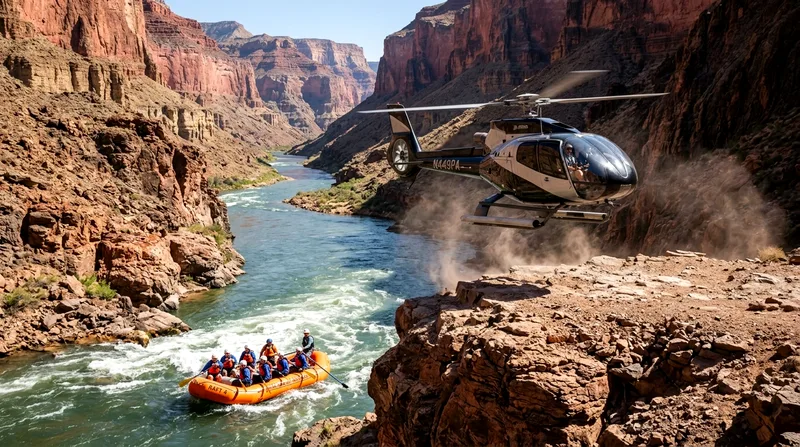
Compare Grand Canyon rafting and helicopter combo packages—trip types, costs, logistics, and whether paying the premium actually makes sense.
8 min read · 15 Oct 2026
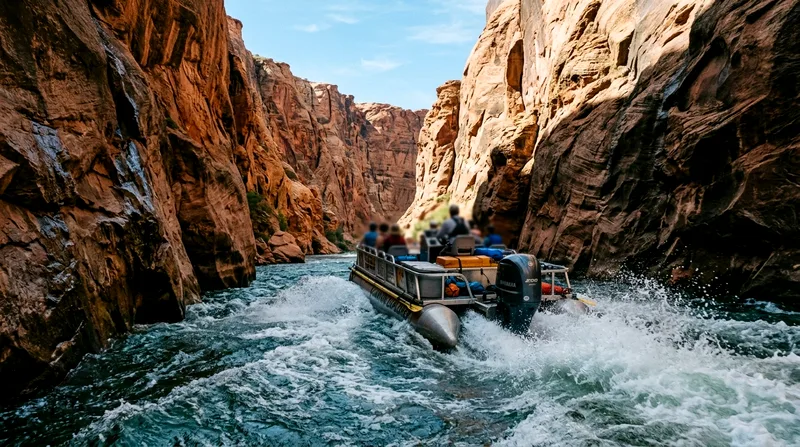
Compare Grand Canyon multi day rafting trip options from 3 to 18 days. Motorized vs oar-powered, permits, inclusions, and booking timing explained.
10 min read · 15 Oct 2026
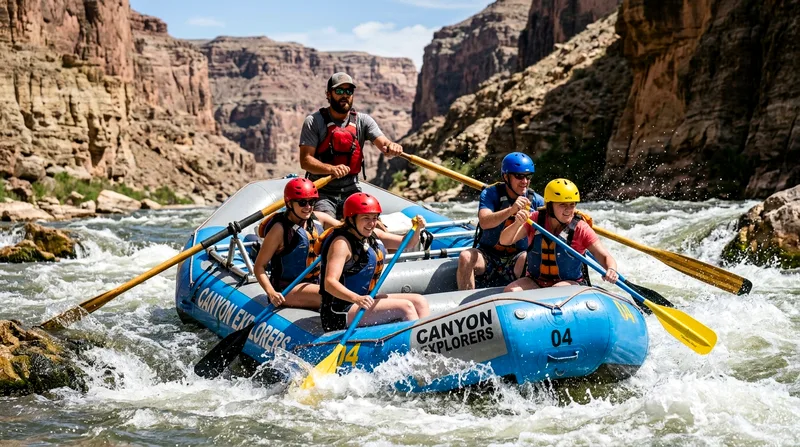
Compare Grand Canyon one day rafting trip options, smooth water and whitewater, for families, seniors, and thrill seekers. Know before you book.
9 min read · 15 Oct 2026
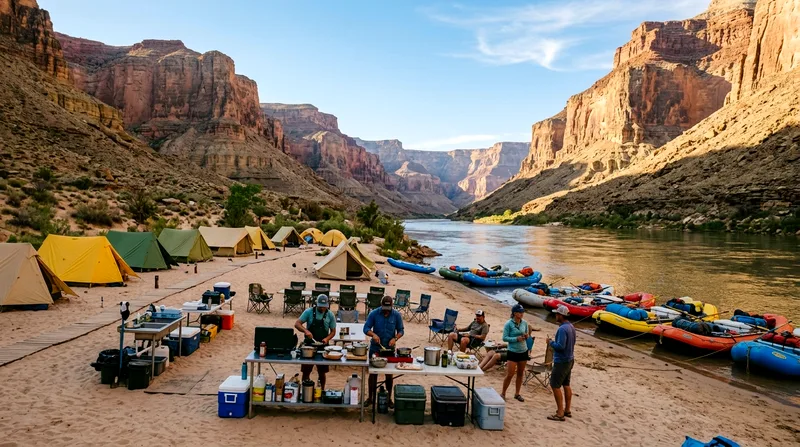
Grand Canyon rafting tour price depends on trip length and season. See the real cost breakdown, where money goes, and how to book smarter.
9 min read · 15 Oct 2026
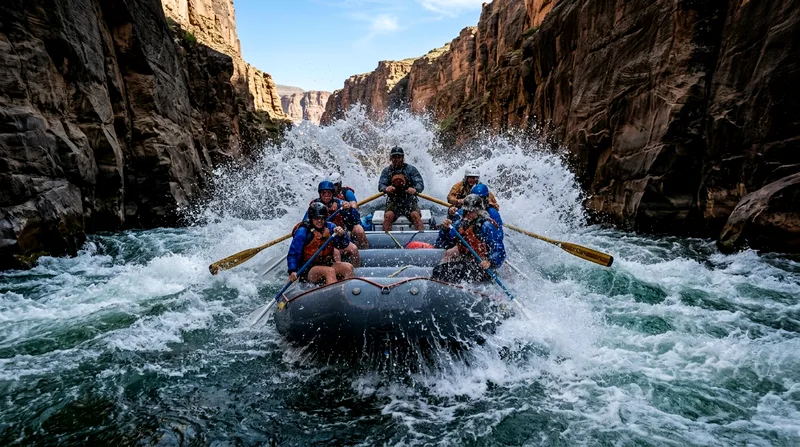
Compare Grand Canyon whitewater vs smooth water rafting: duration, rapids difficulty, age limits, cost, and which trip suits your group.
9 min read · 15 Oct 2026