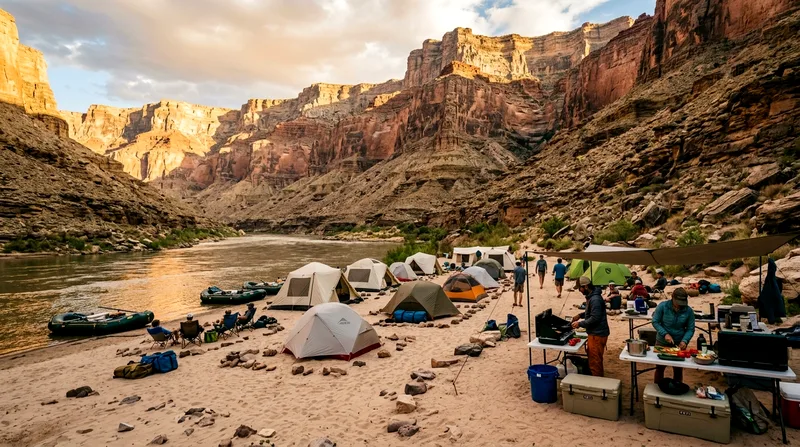
Grand Canyon Backpacking Tours: Multi-Day Options Compared
Compare guided Grand Canyon backpacking tours by difficulty, route, and inclusions. Honest advice on permits, group size, and booking timing.
8 min read · 15 Oct 2026
Tours & activities
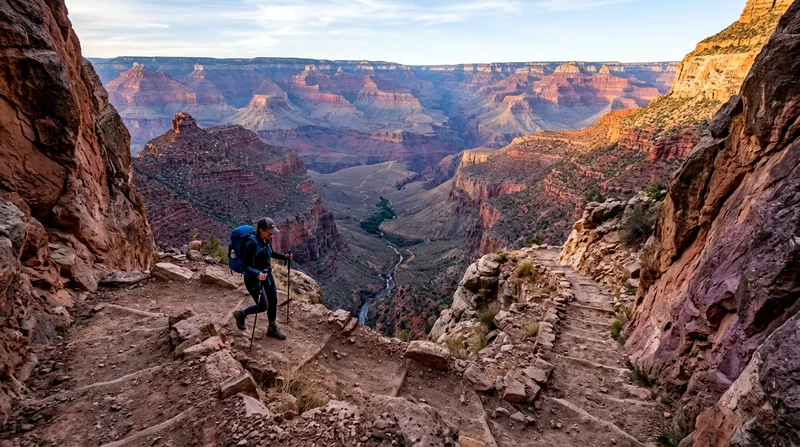
Compare guided and self-guided Grand Canyon hiking tours by difficulty, duration, and cost. Find the right trail for your fitness level and experience.
Grand Canyon hiking tours aren't one product — they split roughly into rim walks, inner-canyon day hikes, and multi-day backpacking trips, and each demands a different body and budget. The mistake I see most often is people booking based on photos rather than matching the hike to their actual conditioning. A flat, paved section of the Rim Trail near Grand Canyon Village is nothing like descending Bright Angel Trail to Indian Garden and climbing back out in afternoon heat.
If you've got two healthy knees and can walk five miles without stopping, you've got options. If you're managing a chronic condition, traveling with young kids, or you're simply unsure how your body handles 7,000 feet of elevation, start at the rim. Nobody has ever regretted turning around early at the Grand Canyon; plenty of people have regretted not doing so.
For beginners, the right move is a rim-based walk or a short guided descent no further than Cedar Ridge on the South Kaibab Trail — about 1.5 miles each way with roughly 1,140 feet of elevation change. This gives you real canyon views and a taste of the inner trail system without committing to the brutal climb back out that catches so many unprepared hikers. Guided half-day tours along the South Rim, often stopping at viewpoints like Hermits Rest or Desert View, suit families with kids over seven or eight, couples who want commentary without exertion, and senior travelers who want to see the canyon up close but aren't after a physical test. Avoid Bright Angel Trail beyond the 1.5-mile rest house if you're in this category — the return climb in summer heat sends more hikers to emergency services than any other stretch in the park.
If you regularly hike 10+ miles with a loaded pack and you've dealt with real elevation gain before, the Grand Canyon's inner trails open up. Rim-to-river day hikes to Phantom Ranch and back are possible for very fit hikers, but the National Park Service explicitly discourages doing this in one day during summer — it's roughly 9.5 miles and 4,380 feet of descent via South Kaibab, then the same in reverse, often in 100°F+ heat at the bottom. Overnight permits let you break the trip into two or three days, staying at Phantom Ranch or one of the backcountry campgrounds. Operators like Wildland Trekking and MT Sobek run multi-day guided treks that handle logistics, permits, and pacing — worth it if you don't want to navigate the permit lottery yourself or you're coming from outside the US and don't know the terrain.
This is the real fork in the road for anyone planning Grand Canyon hiking tours. Self-guided hiking costs nothing beyond park entry and your own gear, and the main rim trails and the upper sections of Bright Angel and South Kaibab are well-marked and heavily trafficked — you're rarely more than a mile from other hikers. Guided hiking costs more, sometimes considerably more for multi-day backpacking trips, but you get route knowledge, pacing discipline, and someone who recognizes early heat exhaustion before you do.
I'd push most European travelers and first-time US national park visitors toward at least one guided outing, even a short one, simply because the altitude and dry heat catch people off guard who've never hiked in a desert environment. Compare that to Zion, where many of the best trails (Angels Landing aside) are shorter and better shaded — Grand Canyon's inner trails are more exposed and more punishing on the way back up, which is the opposite direction of most people's intuition about "the hard part."
A guide handles the permit paperwork for backcountry trips, carries emergency communication gear, and paces the group to avoid the classic rookie error — going too fast on the descent and having nothing left for the climb. Guided multi-day treks typically include meals, a shared campsite or lodge stay at Phantom Ranch, and a naturalist who can point out the Vishnu Schist or explain why mule trains always have right of way on the trail. The downside: fixed itineraries and group pace. If you're a strong hiker stuck behind slower group members, it's frustrating, and the per-person cost runs well above self-guided hiking once you factor in guide fees and logistics support.
Self-guided works well for rim trails and short inner-canyon out-and-backs where cell coverage, water stations (seasonal on Bright Angel), and ranger presence are reliable. Bright Angel Trail has water stops at the 1.5-mile and 3-mile rest houses and at Indian Garden during the warmer months — check with the National Park Service before relying on this, since stations do shut off seasonally. The risk with self-guided hiking is purely human: people misjudge distance and heat, especially since the return trip is always uphill and always hotter than the descent. If you go self-guided, tell someone your plan, carry at least one liter of water per hour of hiking in summer, and treat any multi-day backcountry trip as requiring the same permit process whether or not you hire a guide.
Breaking Grand Canyon hiking tours into three buckets makes the decision easier: rim day hikes, inner-canyon day hikes, and overnight backpacking tours. Each has a different risk profile, and conflating them is how people end up in trouble.
Rim trails are low-risk and permit-free, while inner-canyon and overnight hikes demand real fitness and advance permits.
Grand Canyon hiking tour categories compared by difficulty, elevation, and permit needs
| Trail/Tour Type | Difficulty | Elevation Change | Typical Duration | Permit Needed |
|---|---|---|---|---|
| South Rim Trail (paved sections) | Easy | Minimal | 1-3 hours | No |
| South Kaibab to Cedar Ridge | Moderate | approx. 1,140 ft | 2-3 hours round trip | No |
| Bright Angel to Indian Garden | Moderate-Hard | approx. 3,000 ft | 6-9 hours round trip | No (day use) |
| Rim-to-River day hike (South Kaibab/Bright Angel) | Hard | approx. 4,380 ft | 10-12 hours | No, but NPS discourages in one day |
| Phantom Ranch overnight | Hard | approx. 4,380 ft one way | 2-3 days | Yes, lodging or campground permit |
| Multi-day backcountry backpacking | Hard-Strenuous | 4,000+ ft | 3-5 days | Yes, backcountry permit lottery |
Figures are typical published ranges from National Park Service trail data; conditions and permit rules change, so confirm current details before you book.
Day hikes, whether on the rim or dropping into the canyon, let you sleep in a real bed and bail out any time — the obvious advantage for families and anyone uncertain about their stamina. Overnight tours require a backcountry permit from the National Park Service, booked through a lottery system months ahead, plus the physical capacity to carry camping gear (or pay extra for a guided trip that handles it). The reward is proportional: watching sunset and sunrise from inside the canyon, at Phantom Ranch or a backcountry site, is a different experience entirely from a day-tripper's view from the rim. But overnight trips also mean no quick exit if weather turns or someone gets injured — you're committed once you're below the rim.
Rim trails — the paved Rim Trail between Hermits Rest and the South Kaibab trailhead, for instance — are flat, wheelchair- and stroller-accessible in sections, and carry essentially none of the heat risk that defines inner-canyon hiking. Inner canyon trails like Bright Angel and South Kaibab drop you 3,000 to 4,800 feet depending on your turnaround point, and temperatures at the bottom routinely run 20-25°F hotter than the rim. This is the single biggest planning error I see: people compare the Grand Canyon to Bryce Canyon's Navajo Loop or Zion's Riverside Walk, both of which are shorter and gentler, and assume similar effort. The Grand Canyon's inner trails are longer, hotter, and the climb out is unforgiving in a way Bryce simply isn't.
Once you know roughly which category fits you, the actual booking decision comes down to group size, what's included, and how flexible the cancellation terms are. Don't just compare headline prices — a cheaper guided hike that doesn't include water, lunch, or a rain contingency can cost you more in frustration than a pricier one that does.
Group hiking tours typically run somewhere between six and fifteen people, which keeps costs down but means you move at the pace of the slowest member and get less individual attention from the guide. Private or small-group tours — sometimes capped at four to six people — cost more per person but let you set the pace, ask more questions, and, frankly, avoid the awkwardness of waiting around for stragglers on narrow switchback sections. Couples and solo hikers who want a faster pace should look specifically for small-group or private options rather than assuming all "guided hikes" are the same format. Families with mixed-ability members often do better in a slightly larger group, since the pace tends to be gentler by necessity.
Check exactly what's included: some day tours cover transport from South Rim lodges or Tusayan but not lunch; multi-day treks usually include meals and permits but sometimes charge extra for gear rental like trekking poles or sleeping bags. Weather and heat-related cancellations are common enough at the Grand Canyon — the NPS sometimes closes certain inner-canyon trail sections or issues extreme heat warnings in summer — that you want a clear refund or rescheduling policy before you pay in full. Always compare current prices and read recent reviews before booking, since availability and terms shift season to season and operator to operator.
Timing affects both safety and availability more than almost any other factor in Grand Canyon hiking tours, and it's the thing most visitors plan around last instead of first.
Spring (March to May) and fall (September to early November) are the best windows for inner-canyon hiking — daytime rim temperatures sit in the 60s and 70s Fahrenheit, and the canyon floor, while still considerably hotter, doesn't reach the dangerous triple digits common in June through August. Summer hiking below the rim is genuinely risky; inner-canyon temperatures regularly exceed 100°F and heat-related rescues spike every July and August. Winter brings snow and ice to the rim and upper trail sections, which actually makes rim trails more treacherous than inner trails some days, while lower elevations near the river stay mild. Compare this to Sedona or Horseshoe Bend, where heat is a factor but elevation doesn't swing temperature by 20+ degrees across a single trail — the Grand Canyon's vertical relief is what makes seasonal timing so much more consequential here.
Backcountry permits for overnight inner-canyon camping are issued through a National Park Service lottery system, and applications typically open about four months before the intended month of travel. Phantom Ranch lodging (as opposed to camping) is booked separately through a lottery as well, often 15 months out for popular dates. If you want a guided multi-day backpacking tour, book with enough lead time that the operator can secure permits — three to six months ahead is reasonable for spring or fall dates, longer for peak season. Day hikes need no permit at all, which is part of why they're the lower-stress option if your travel dates are fixed and you can't gamble on a lottery result.
No, rim trails and the upper sections of Bright Angel and South Kaibab don't require a guide — they're well-marked and busy with other hikers. A guide becomes genuinely useful for inner-canyon day hikes to the river or any overnight backcountry trip, where heat management, pacing, and permit logistics matter more than trail-finding.
Spring (March-May) and fall (September-early November) offer the safest combination of moderate rim temperatures and tolerable inner-canyon heat. Summer hiking below the rim carries real heat-stroke risk, with canyon floor temperatures often exceeding 100°F; winter is fine for rim walks but can bring ice to upper trail sections.
The paved South Rim Trail and a short descent on South Kaibab to Cedar Ridge (about 1.5 miles each way, roughly 1,140 feet of elevation change) give beginners real canyon views without the punishing climb back out that longer inner-canyon hikes demand.
Day hikes need no permit, let you turn back any time, and you sleep outside the canyon. Overnight tours require a National Park Service backcountry permit (lottery-based), demand you carry or arrange camping gear, and commit you to staying below the rim regardless of weather or fatigue.
Day hikes and short guided rim tours can often be booked weeks ahead. Overnight backpacking tours and Phantom Ranch lodging need three to six months of lead time minimum, since permits are allocated through a lottery that opens months before the travel month.
Compare guided Grand Canyon backpacking tours by difficulty, route, and inclusions. Honest advice on permits, group size, and booking timing.
8 min read · 15 Oct 2026
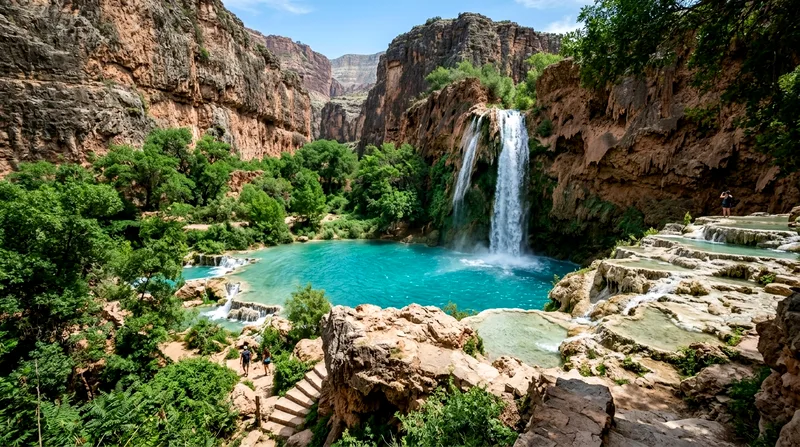
Learn how to book a Havasu Falls tour via permit lottery or guided operators. Compare options, costs, and what's included in your trek.
8 min read · 15 Oct 2026
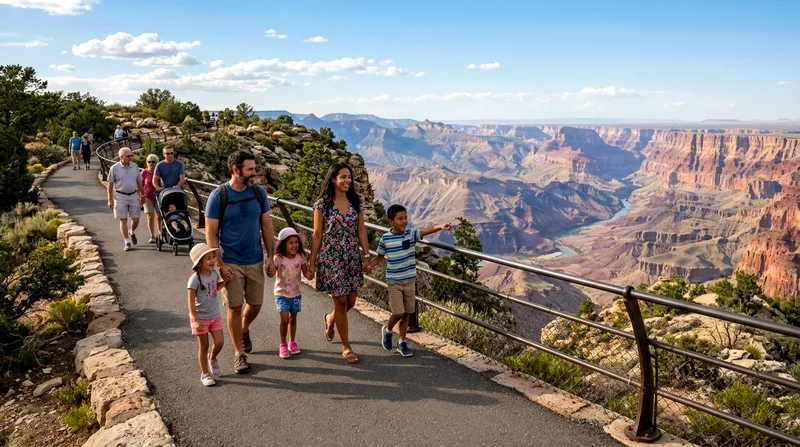
Discover the best easy Grand Canyon hikes for beginners, families, and seniors. Short trails, rim walks, and guided options with minimal elevation gain.
10 min read · 15 Oct 2026
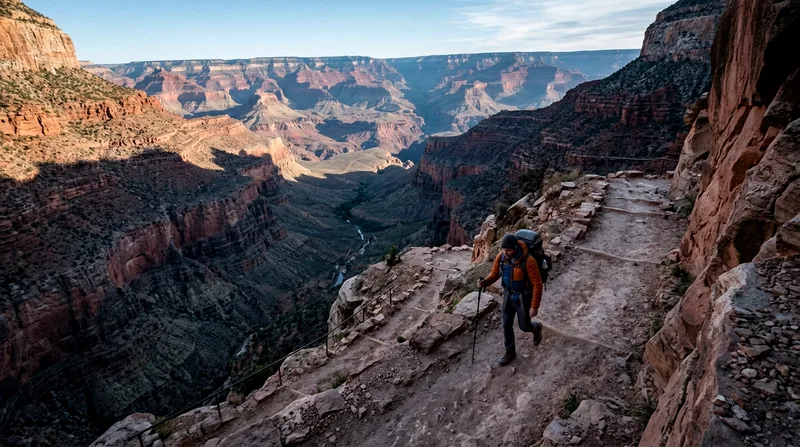
Compare rim-to-rim guided tours, multi-day packages, and logistics for the Grand Canyon rim to rim hike. Fitness, permits, and booking tips inside.
9 min read · 15 Oct 2026
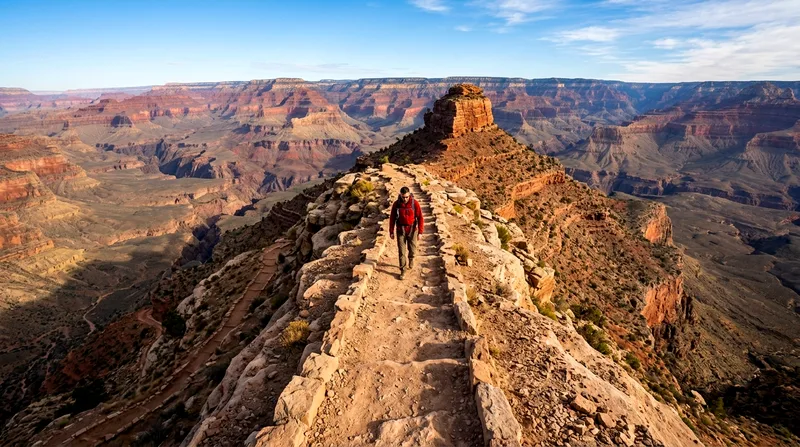
Learn about the South Kaibab Trail at Grand Canyon: steep descent, shuttle access, viewpoints, guided tours, and what to know before you hike.
9 min read · 15 Oct 2026
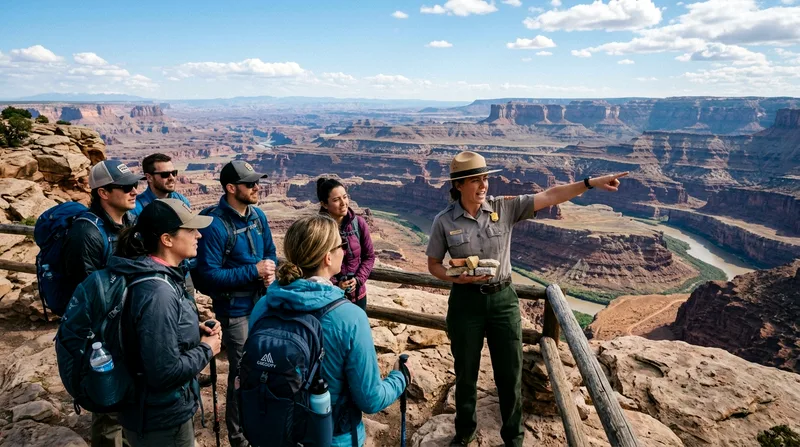
Compare Grand Canyon guided vs self-guided hike options—cost, safety, flexibility, and experience quality—to decide which fits your trip.
9 min read · 15 Oct 2026
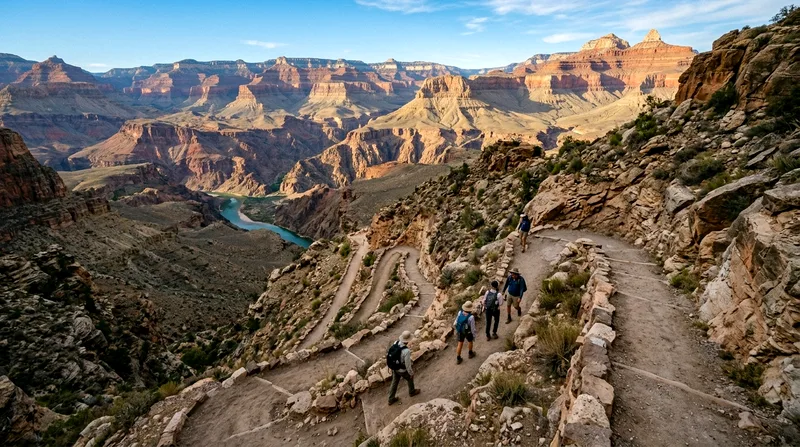
Complete Bright Angel Trail guide: permits, difficulty, water sources, guided tours, gear checklist & best times to hike the Grand Canyon's most popular trail.
9 min read · 15 Oct 2026