Explore Grand Canyon sunset helicopter tours for couples and photographers. Flight duration, best months, window seat tips, and pricing before you book.
What Is a Sunset Helicopter Tour
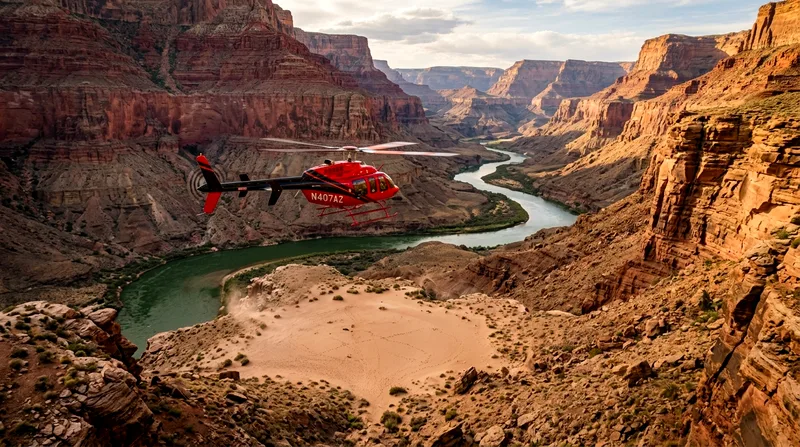
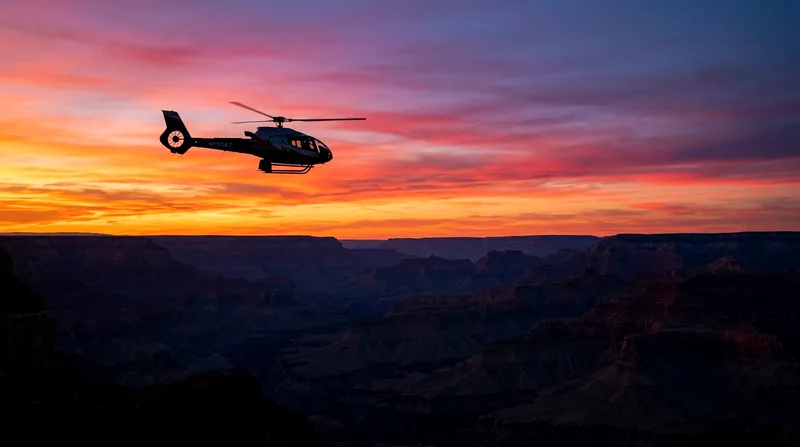
A Grand Canyon sunset helicopter tour is simply a flight timed to the last hour or two of daylight, when the sun sits low and throws long shadows across the canyon's rock layers. That timing is the entire product. The same route flown at noon looks flat and washed out by comparison; at sunset, the Kaibab limestone and Redwall layers turn deep orange and the shadows carve the canyon into something closer to a relief map than a photograph.
Most sunset flights depart from one of three points: Grand Canyon South Rim near Tusayan, Grand Canyon West (closer to Las Vegas), or directly from Las Vegas itself. The South Rim flights tend to cover the canyon's most photographed sections, including views toward the Colorado River. Grand Canyon West flights, run with aircraft like the EcoStar, often include a stop on the canyon floor — something the National Park Service doesn't permit within South Rim airspace.
Flight Duration and Coverage Areas
Expect somewhere between 25 and 50 minutes of actual flight time, depending on departure point and package. A Las Vegas sunset tour that includes the Hoover Dam and a stretch of the Colorado River en route will run longer — often 45 minutes to over an hour round trip — because you're covering more ground before you even reach the canyon rim. A South Rim-based flight is shorter and more concentrated, often 25-30 minutes, because you're already close to the canyon when you take off. Don't assume longer automatically means better: a 30-minute South Rim flight at sunset can show you more dramatic canyon terrain than a longer Vegas-based flight that spends half its time over desert and dam infrastructure.
Canyon Floor Landing and Amenities
Landing tours are almost exclusively a Grand Canyon West product, flown on tribal land outside the national park boundary, which is why they're permitted there and not from the South Rim. Some sunset packages pair the landing with a small picnic or champagne toast set up canyon-side — a nice touch for couples, though it adds 20-30 minutes on the ground and pushes the total experience closer to two hours door-to-door from Las Vegas. If your priority is maximum time in the air rather than time on the ground, skip the landing add-on and book a flight-only option instead.
Why Book a Sunset Flight Over Others
Compare a midday flight to a sunset one and the difference isn't subtle. Midday light is harsh and overhead, which flattens the canyon's texture — fine for a quick first look, less interesting for photos or for the kind of silence-inducing view you want on an anniversary trip. Sunset compresses the most dramatic light into a narrow window, and operators schedule around it precisely because demand is higher than for any other time slot.
That said, sunset flights sell out faster and cost somewhat more than equivalent midday or morning flights, and in winter the window is short — sometimes under 30 minutes of usable golden light before the canyon falls into shadow. If you're the type who wants a leisurely, unhurried outing, a mid-morning tour might suit you better: calmer winds, lower fares, and no pressure around a tight light window.
Golden Hour Lighting for Photographers
Photographers should think of the sunset flight as a 15-20 minute working window, not a full hour of ideal light. The best color typically happens in the last 20-30 minutes before the sun dips below the horizon, when the canyon walls pick up a red-gold cast and shadows stretch dramatically across the buttes. Earlier in the flight, while you're still approaching the canyon, light is more neutral — useful for wide establishing shots, less useful for the dramatic imagery most people are chasing.
Romantic Experience for Couples
For couples, the appeal isn't just the view — it's the pairing of a quiet cabin, headsets that cut outside noise, and a shared experience that's genuinely hard to replicate on foot. Some operators pair sunset flights with champagne service on landing tours at Grand Canyon West, which pushes it further into "special occasion" territory. If you're booking for an anniversary or proposal, confirm the champagne/landing package specifically — not every sunset flight includes it, and flight-only sunset tours are a different (cheaper) product.
How to Book and Visit Options
You've got two real paths: book directly with a helicopter operator at the South Rim, Tusayan, or Grand Canyon West, or book through a marketplace like Viator or GetYourGuide that aggregates several operators' sunset packages. Direct booking sometimes gives you more flexibility to call and ask about window seat policies or weight restrictions. Marketplace booking is convenient if you're already comparing other Grand Canyon or Las Vegas activities and want one place to manage bookings and read recent traveler feedback.
South Rim flights are shorter and more canyon-focused, while Las Vegas departures take longer but can include a canyon floor landing.
Grand Canyon sunset helicopter tour options compared by departure point
| Departure Point | Typical Flight Time (min) | Canyon Floor Landing | Drive/Transfer Time | Best For |
|---|---|---|---|---|
| South Rim / Tusayan | 25-30 | No (park restriction) | Minimal if staying nearby | Short, canyon-focused flight |
| Grand Canyon West | 30-45 | Yes, often included | Approx. 2.5 hrs from Las Vegas | Landing + picnic experience |
| Las Vegas (direct) | 45-70 | Sometimes, package dependent | Hotel pickup included | Convenience, no car needed |
Typical figures based on common tour structures; exact duration, inclusions, and pricing vary by operator and season, so confirm details before booking.
Independent Booking vs. Guided Tours
A "guided tour" in this context usually just means the helicopter package includes ground transport from your hotel plus the flight — there's no walking tour involved. If you're staying in Las Vegas without a car, that transport inclusion matters: Grand Canyon West is roughly 120 miles (about a 2.5-hour drive) from the Strip, and self-driving to a helipad timed exactly for sunset adds risk if you hit traffic. Booking a package with round-trip transport removes that variable. If you already have a car and are staying in Tusayan near the South Rim, independent booking directly with a local operator is simpler and often slightly cheaper since you're not paying for transport you don't need.
Las Vegas and South Rim Departures
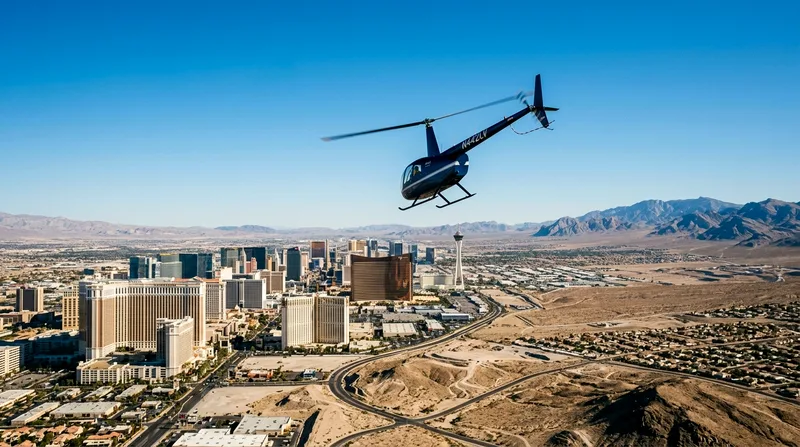
Las Vegas departures are the more popular choice simply because more travelers are based there, and several Vegas sunset routes fly over Lake Mead, Hoover Dam, and sometimes detour near Valley of Rire-adjacent desert terrain before reaching the canyon itself. South Rim departures from Tusayan are shorter, more canyon-focused, and better if you're already road-tripping through Arizona and don't want to backtrack toward Nevada. If you're combining this with other South Rim activities — a sunrise viewpoint stop, a Rim Trail walk, or a half-day at Grand Canyon Village — basing your helicopter tour there instead of Vegas saves a full day of driving.
Best Months and Light Conditions
The best month for a sunset helicopter tour depends on what you want more of: longer flying light or cooler, calmer air. Late spring (May) and early autumn (September-October) tend to offer the best combination — warm enough for comfortable evening flights, with sunset times late enough (often after 7 PM) that you're not rushing dinner plans to catch the flight.
Seasonal Sunset Timing Variations
Summer (June-August) gives you the longest daylight, with sunset sometimes after 8 PM, meaning more flexibility in scheduling a late-day flight without conflicting with dinner reservations. Winter sunset arrives as early as 5 PM, compressing your options and often meaning the "sunset flight" slot is also the last flight of the day — book it and you've got zero buffer if weather delays the schedule.
Weather Impact on Visibility
Wind is the real enemy here, not rain. Grand Canyon helicopter operators ground flights in high wind more often than overcast skies, and spring afternoons (March-April) are notorious for gusty conditions that cause delays or cancellations. If your trip dates are flexible, aim for a morning booking slot with sunset as a backup, or build in a spare evening before your Vegas or Arizona departure so a weather cancellation doesn't sink the whole plan.
Photography Tips and Window Seats
Every seat in an EcoStar or similar tour helicopter technically has a window, but not every window has an unobstructed view — support struts, door frames, and the pilot's position all affect your sightline.
Securing Window Seat Guarantees
Weight and balance rules, not preference, usually determine seating on tour helicopters — operators calculate passenger weight distribution before assigning seats, and some won't finalize seating until check-in. If a window seat matters to you, book a private charter (costing significantly more) or ask directly whether the operator allows seat requests, and be upfront about wanting the right-side or left-side window depending on the flight path's canyon-facing side. Don't expect a guarantee from a marketplace booking — confirm directly with the operator's desk the morning of your flight.
Camera Settings for Aerial Sunset Shots
Shoot in shutter priority or manual mode at 1/1000s or faster to counter helicopter vibration — anything slower and you'll get motion blur even with image stabilization. Bump ISO up rather than slow your shutter speed; a little noise is far more forgivable than a blurred canyon wall. Skip the polarizing filter (it can create odd banding through plexiglass windows) and keep your lens close to the glass without touching it, since contact transmits vibration directly into your shot. A mid-range zoom (24-105mm equivalent) covers both wide canyon shots and tighter compositions without a lens change mid-flight, which you won't have time or space for anyway.
Pricing and Value Assessment
Pricing varies by departure city, flight length, and whether a landing or champagne service is included, so always check current prices and package details when booking rather than relying on a number you saw months ago.
Cost Breakdown and Inclusions
As a general pattern, flight-only sunset tours from the South Rim/Tusayan run cheaper than Las Vegas-based packages with a canyon floor landing and champagne toast, since the latter includes more flight time, ground transport, and an on-the-ground experience. Hotel pickup, if included, typically adds to the package price compared to meeting at the helipad yourself. Fuel surcharges and weight-based pricing (some operators charge more for passengers over a certain weight threshold) can also shift the final cost, so read the fine print on the booking page rather than assuming the headline price is final.
Is It Worth the Investment
For couples and photographers, yes — the light quality alone justifies paying more than a midday flight costs. For families with restless kids or budget-focused solo travelers, it's harder to justify; a South Rim sunset viewpoint like Yavapai Point or Hopi Point costs nothing and delivers a similar emotional payoff, minus the aerial perspective. Compare it mentally to a sunset boat tour at Horseshoe Bend or a sunrise balloon ride over Sedona: all three sell the same commodity — ideal light at a premium price — and all three are worth it once, not necessarily every trip.
Frequently asked questions
Is a Grand Canyon sunset helicopter tour worth the cost?
For couples and photographers, generally yes — the golden-hour light transforms the canyon's color and shadow in a way no midday flight matches. For budget travelers or families with young kids, a free sunset viewpoint on the South Rim delivers similar emotional impact for zero dollars, so weigh your priorities before paying the premium that sunset slots typically carry over midday flights.
What is the best month for sunset helicopter tours?
May, September, and October tend to offer the best balance of comfortable temperatures, calmer winds, and a sunset late enough to avoid rushing your schedule. Summer gives the longest daylight window but hotter midday conditions and more afternoon wind; winter means an earlier sunset and less schedule flexibility if your flight gets delayed.
How do you guarantee a window seat on a helicopter?
Seating on standard tour helicopters is usually assigned based on passenger weight distribution, not personal preference, so there's no guaranteed way to pick your exact seat on a shared flight. Booking a private charter is the only reliable guarantee; otherwise, call the operator directly and ask about their seating policy before you book.
What should you bring for sunset photography from a helicopter?
Bring a camera capable of fast shutter speeds (1/1000s or quicker), a mid-range zoom lens around 24-105mm, and extra memory cards — skip filters, which can cause glare or banding through the window. Keep straps secured and avoid letting your lens touch the glass, since vibration transfers directly into your shots.
Can you land on the canyon floor during sunset tours?
Yes, but typically only on Grand Canyon West tours, flown on tribal land outside the national park boundary where the National Park Service's no-landing rule doesn't apply. South Rim sunset flights near Tusayan generally do not include a landing, so check which departure point you're booking if a canyon floor stop matters to you.