Explore the Grand Canyon sunset jeep tour through Kaibab Forest. Compare costs, operators, photography tips, and whether it justifies the price.
What Is a Grand Canyon Sunset Jeep Tour
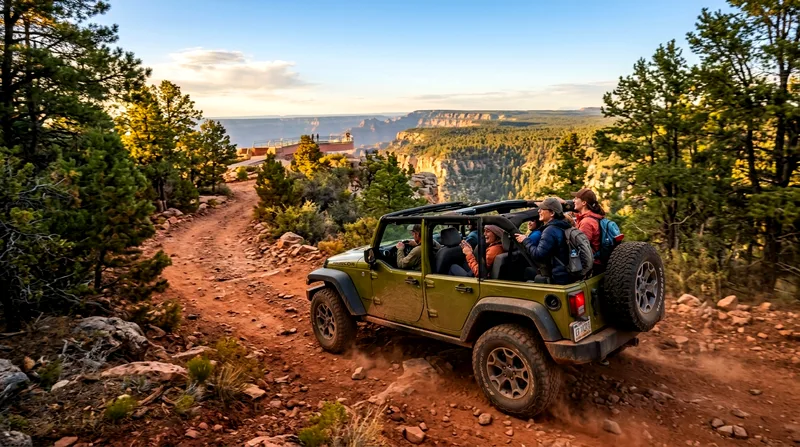
A Grand Canyon sunset jeep tour is an evening excursion, typically departing from Tusayan or a South Rim pickup point, that takes small groups into Kaibab National Forest in open-air or modified 4x4 vehicles to watch the sun drop over the canyon from a handful of established viewpoints. Operators like Pink Jeek Tours and Grand Canyon Jeep Tours & Safaris run these as their signature evening product, usually lasting two to three hours total, with 60-90 minutes of actual driving and the rest spent parked at a viewpoint with your guide pointing out rock formations and telling you when the light will peak.
The pitch is exclusivity — off-road access to spots most day visitors never see. That's partly true. Some of the forest roads used aren't open to private vehicles, so a guided jeep does get you to quieter pullouts than the paved overlooks along Desert View Drive. But don't confuse "quieter" with "secret." Grandview Point and Desert View, both mentioned by nearly every operator's itinerary, are drivable by any rental car. What you're really paying for is someone else doing the driving on gravel forest roads after dark, plus a narrated history of the canyon's geology and tribal connections.
Experience overview and Kaibab Forest access
Kaibab National Forest wraps around the South Rim and includes dirt and gravel roads that aren't part of the main park road system. Jeep tour operators hold permits to drive specific forest routes, which is the actual value-add over a rental car — not the destination viewpoints themselves, most of which sit inside Grand Canyon National Park and are reachable by any licensed visitor. Expect a bumpy, slow ride (10-15 mph on rough sections) through ponderosa pine forest before emerging at a rim overlook. The vehicles seat 6-13 passengers depending on the operator, usually in open-sided trucks with bench seating and roll bars — closer to a safari vehicle than a true jeep.
Why sunset tours differ from daytime options
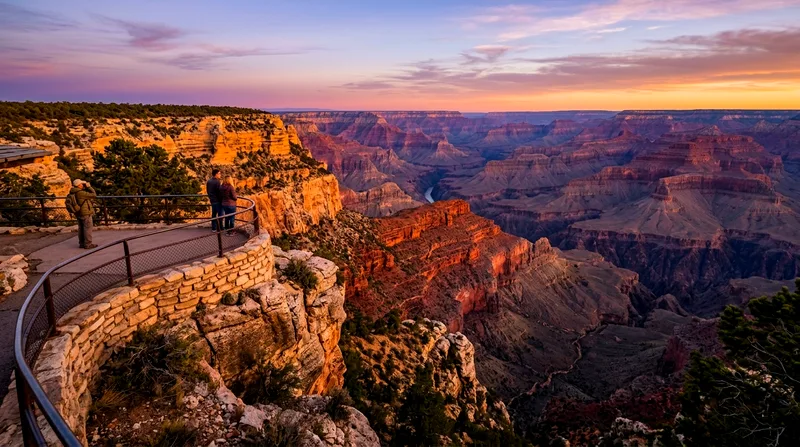
Daytime jeep tours focus on off-road thrills and wildlife spotting; sunset tours slow down and prioritize parking at one or two viewpoints for 30-45 minutes of uninterrupted light. Guides time departures so the group arrives 45-60 minutes before sunset, giving you the blue-hour approach, the main event, and a few minutes of afterglow before the drive back in headlights. If you've done a daytime tour and expect the same pace, you'll be disappointed — there's less driving variety and more sitting still, which is exactly what photographers want but can feel slow to kids under eight.
How to Book: Independent vs. Guided Tours
This is the real decision point, and it's not close to a tie for most travelers. If you have a rental car and a current National Park Service map, you can drive to Desert View, Grandview Point, Moran Point, and Lipan Point yourself, park for free (beyond the park entrance fee), and watch the same sunset. No tour required. The tradeoff is you do the driving on narrow, sometimes crowded roads at dusk, and you miss the forest back-road sections that only permitted operators can access.
Guided tours solve logistics at a price. You're booked through a fixed window, picked up (sometimes from Tusayan or South Rim lodges), and someone else navigates. For solo travelers without a car, or couples who'd rather not deal with reversing a rental SUV on a gravel shoulder in fading light, that convenience has real value. For families, check minimum age and weight restrictions before booking — some open-air jeeps aren't suited to toddlers or car seats.
A guided jeep tour buys convenience and forest-road access, not a view you couldn't reach yourself by car.
Grand Canyon sunset jeep tour vs. self-driving to the same viewpoints
| Option | Access to forest roads | Driving required | Typical cost level | Best for |
|---|---|---|---|---|
| Guided sunset jeep tour | Yes, permitted roads | No | Mid-to-high | Couples, solo travelers, photographers without a car |
| Self-drive rental car to Desert View | No | Yes | Low (just fuel + park fee) | Budget travelers, families with car seats |
| Self-drive to Grandview Point | No | Yes | Low | Hikers combining Rim Trail walk |
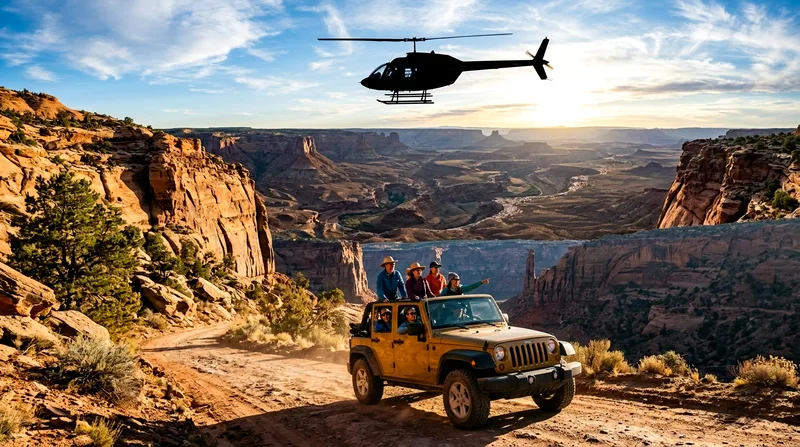
| Helicopter sunset flight | No (aerial) | No | High | Special occasions, bucket-list perspective |
| Rafting day with evening return | No | No (boat) | High | Adventure travelers wanting the canyon floor view |
Typical figures; exact pricing, routes, and seasonal sunset times vary, so check current options before booking.
Self-guided jeep rental logistics
Renting your own 4x4 to replicate this experience is harder than it sounds. Most forest roads used by licensed tour operators require special use permits that individual renters can't obtain, so a self-driven jeep rental won't get you onto the same off-road sections — you'll be limited to paved park roads like anyone else. If your goal is simply sunset at a rim viewpoint, skip the rental premium entirely and use a standard car; save the 4x4 rental for red-rock trails near Sedona or backcountry roads outside the park boundary instead.
Operator-led tour booking process
Book through an operator's own site or aggregators like GetYourGuide, and cross-check reviews on TripAdvisor before paying — ratings and recent comments reveal whether a company has been cancelling for weather or overbooking vehicles. Reserve at least a few days ahead in shoulder season and weeks ahead in June through August, when sunset slots sell out fast. Confirm the exact departure point: some tours leave from Tusayan hotels, others expect you at a South Rim pickup near Grand Canyon Lodges. Always check current prices and availability before booking, since schedules shift with sunset times across the season.
Pricing, Inclusions, and Cost Breakdown
Sunset jeep tours generally run more than daytime equivalents because they're shorter but staffed during a premium time slot. Expect per-person pricing in a range that typically runs higher than a basic scenic drive tour and lower than a helicopter flight — think of it as a mid-tier add-on experience rather than the trip's centerpiece. Group size, vehicle type, and whether hotel pickup is included all shift the price within that range.
Typical price ranges and what's included
Inclusions usually cover the guide, vehicle, forest road access permit fees, and sometimes a light snack or water bottle. The park entrance fee ($35 per vehicle, valid seven days, as of recent published NPS rates) is often separate and not included — check this before assuming the tour price is all-in. Some operators bundle hotel pickup from Tusayan; others require you to meet at a fixed location, which can mean an extra taxi or rideshare cost if you're staying inside the park itself.
Hidden costs and value assessment
Gratuity for the guide (commonly 15-20% in the US tour industry) isn't included and adds up on a group tour. Photography add-ons — a printed photo package, for instance — are usually upsold separately and rarely worth it when your own phone or camera does the same job in better light control. My honest take: the value is in the convenience and narration, not in anything you physically couldn't see for free. If you're traveling on a tight budget, spend the money on a helicopter tour or a Colorado River rafting day instead — both deliver perspectives you genuinely cannot replicate by driving yourself.
Best Time to Visit and Seasonal Considerations
Timing drives everything about this tour's quality, more than operator choice does. Sunset time at the South Rim swings from around 5:00 pm in December to nearly 8:45 pm in late June, so tour departure times shift monthly — confirm the exact pickup time when you book rather than assuming a fixed schedule.
Optimal months for sunset quality
Late spring (May) and early fall (September-October) tend to deliver the clearest skies and most dramatic color, since summer's monsoon season (mid-July through September) brings afternoon thunderstorms that can cancel or shorten tours with little warning. Winter sunsets are often crisp and clean too, but cold temperatures at 7,000 feet elevation mean dressing for near-freezing conditions in an open-air vehicle after dark — bring a real jacket, not just a sweater.
Weather and crowd patterns
Crowds at the popular overlooks like Desert View peak in summer regardless of tour or no tour, so one advantage of a jeep tour is access to quieter forest-road viewpoints away from the bus traffic. Compare that to Horseshoe Bend near Page, where no tour access exists to dodge crowds — everyone hikes the same short trail to the same rim edge. If overcrowding is your main concern, a Grand Canyon sunset jeep tour genuinely solves that problem better than, say, trying to find solitude at Zion's Angels Landing in peak season.
Photography Tips and Nearby Add-Ons
Photographers and content creators are a big part of why these tours sell well, and for good reason — the elevated, uncrowded viewpoints and guide knowledge of exact sun angles save real time compared to scouting alone. A guide who runs this route nightly knows which overlook faces the sun correctly on a given date, which matters more than any camera gear you bring.
Camera settings for golden hour
For the 20 minutes before and after sunset, shoot in aperture priority around f/8-f/11 for depth across canyon layers, keep ISO low (100-400) since you'll have a tripod or stable rail to lean on, and bracket exposures — the dynamic range between a bright sky and shadowed canyon walls exceeds what most phone or camera sensors capture in one frame. If you shoot phone-only, use the native HDR mode and avoid digital zoom; it degrades canyon detail fast. Bring a lens cloth — dust from the forest road access kicks up more than you'd expect.
Combining with dining and hiking experiences
Pair the tour with an early dinner at one of the Grand Canyon Lodges restaurants beforehand, since most sunset departures leave little time for a sit-down meal afterward in the dark. If you're also hiking, do it earlier in the day — the Rim Trail near Grandview Point is flat and easy, while anything below the rim (South Kaibab, Bright Angel) should be finished well before your tour pickup, since descending trails after dark without headlamps is a real safety risk, not just an inconvenience.
Frequently asked questions
Is a Grand Canyon sunset jeep tour worth the price?
It depends on what you value. If you have no car or dislike driving unfamiliar gravel roads at dusk, the convenience and guided access to quieter Kaibab Forest viewpoints justify the cost. If you're comfortable driving and just want the sunset view, you can get the same light at Desert View or Grandview Point for the price of the park entrance fee alone.
How long does a sunset jeep tour typically last?
Most run two to three hours total, including pickup, the drive through forest roads, 30-45 minutes parked at one or two viewpoints during peak light, and the return trip. Actual off-road driving time is usually under 90 minutes.
What wildlife might you see on an evening jeep tour?
Mule deer and elk are the most commonly spotted animals at dusk in Kaibab Forest, along with California condors occasionally circling near the rim. Sightings aren't guaranteed on any given evening — treat wildlife viewing as a bonus, not the main reason to book.
Do sunset jeep tours bypass the park entrance gate?
No. The park entrance fee is typically separate from the tour price and still applies if you're entering Grand Canyon National Park proper. What the jeep does bypass is the general public restriction on certain Kaibab National Forest service roads, not the park's own gate fee.
What should you bring and wear for a sunset jeep tour?
Layer up — temperatures drop fast after sunset at 7,000 feet elevation, even in summer. Bring a jacket, closed-toe shoes for the gravel terrain, a charged phone or camera, and a dust-resistant bag since open-air vehicles kick up forest road dust on the drive.