Compare Grand Canyon ATV tour options, routes, age rules, and booking tips. Find the right off-road ride near the canyon before you book.
Who ATV Tours Suit Best
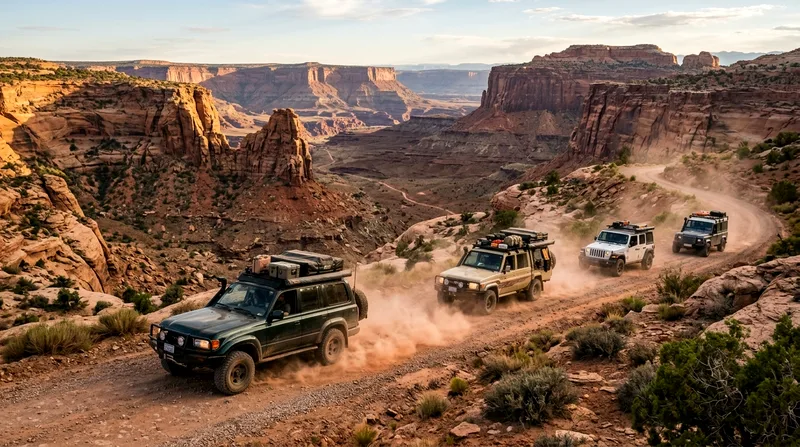
A Grand Canyon ATV tour is not a ride inside the national park — the Park Service doesn't allow motorized off-roading on its trails. Instead, these tours operate on private and tribal land bordering the canyon, near Grandview Point on the South Rim side, on the Arizona Strip north of the North Rim, and on routes accessible from Las Vegas or Williams, Arizona. That distinction matters when you're deciding whether this is the right activity, because you're buying a red-rock desert driving experience with canyon glimpses, not a descent into the gorge.
If you want to feel the terrain under you rather than watch it from a bus window, this fits. It suits travelers who have two to four hours to spare, don't mind dust, and want something more physical than a scenic drive but less committing than a multi-day hike. Families with teenagers, couples looking for a half-day adventure between bigger sightseeing blocks, and solo travelers staying in Williams or Tusayan all gravitate toward these tours because they're short, don't require advance fitness training, and end with genuine viewpoints — places like the overlooks near Grandview Point or the Bar 10 Ranch area on the North Rim side.
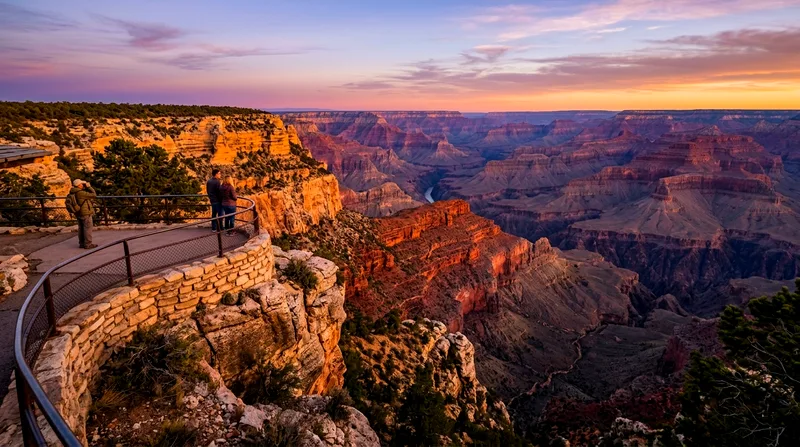
I'd skip this if your main goal is seeing the canyon's iconic South Rim vistas — Mather Point, Yavapai Point — because ATV routes don't go there. Pair an ATV tour with a separate park visit or a helicopter flight instead.
Beginner and family riders
Beginner-friendly tours run at a controlled pace, usually with a lead guide setting speed and frequent stops for photos. Operators like Canyon Off Road Adventures and Pink Adventure Tours design shorter loops — often 1.5 to 2.5 hours of actual riding — specifically for guests who've never driven an ATV. Expect a 10-15 minute safety briefing, a practice stretch on flat ground, and constant radio contact with the guide. Family tours commonly allow kids as young as 6-8 to ride as a passenger on a UTV, though solo ATV driving almost always requires a minimum age, discussed further down. If your group includes a nervous teenager or a senior traveler worried about jolting terrain, ask the operator about their "family loop" or "scenic loop" specifically — it's usually smoother and shorter than the advanced backcountry route.
Experienced off-road enthusiasts
For riders who've driven ATVs or dirt bikes before, the appeal is the longer backcountry routes — some full-day trips push toward 50 miles of mixed terrain, with sections of looser sand, rock gardens, and steeper grades near canyon-adjacent mesas. Grand Canyon UTV Tours and similar backcountry-focused operators often run these as half-day or full-day excursions departing early to beat afternoon heat. Expect less hand-holding: guides still lead, but the pace is faster and stops are less frequent. If you've ridden at places like Sand Hollow near Zion or desert trails outside Sedona, you'll find the Arizona Strip routes comparable in difficulty but considerably more remote — cell service disappears fast, so solo riders should always book a guided trip rather than a self-guided rental in these areas.
ATV vs. UTV Tours Compared
The ATV-versus-UTV choice shapes everything about your day — who can ride, how many people you need in your group, and how much control you actually have over the vehicle. ATVs (quad bikes) are single or two-person straddle vehicles you steer with handlebars, similar to a motorbike. UTVs (side-by-sides, sometimes branded Polaris Adventures' RZR or similar models) have steering wheels, bucket or bench seats, and seatbelts, and carry two to four passengers.
Neither is objectively better — it depends on your group and your appetite for hands-on driving. Couples traveling together often prefer a UTV because one person can drive while the other just enjoys the scenery without needing a motorcycle-style license or balance skills. Solo travelers or riding pairs who want the sportier feel usually book single ATVs.
UTVs suit mixed-ability groups and families, while single ATVs suit solo and experienced riders wanting direct control.
Grand Canyon ATV tour types compared: vehicle, group size, and best fit
| Tour Type | Typical Duration | Riders per Vehicle | Min. Driver Age | Best For |
|---|---|---|---|---|
| Beginner scenic loop (ATV or UTV) | 1.5-2.5 hours | 1-4 | 16 (driver) | First-timers, short itineraries |
| Half-day backcountry (UTV) | 3-5 hours | 2-4 | 16-18 (driver) | Families, couples |
| Full-day Arizona Strip (ATV or UTV) | 6+ hours | 1-4 | 18 (advanced routes) | Experienced off-roaders |
| Private group tour | 2-6 hours | Custom | Varies | Groups wanting own pace |
| Sunset/photo tour | 1.5-3 hours | 1-4 | 16 (driver) | Couples, photographers |
Durations and age minimums vary by operator and route; confirm specifics before booking.
Single-rider ATV experiences
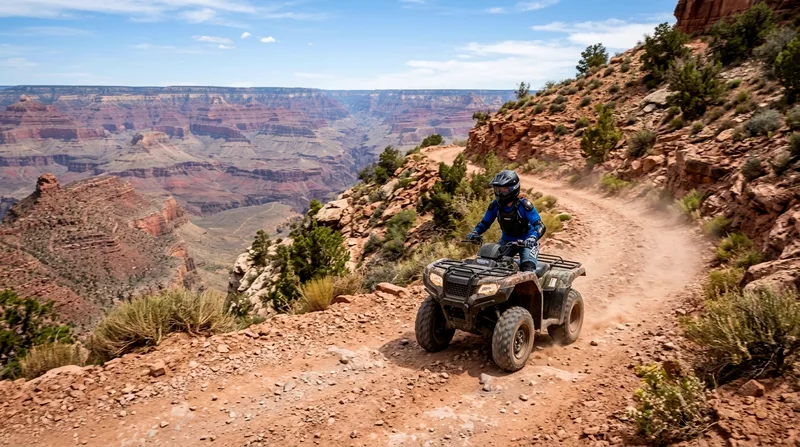
A single ATV puts you fully in control — throttle, brake, and balance all down to you. This appeals to solo travelers and confident riders who want an active, slightly physical outing rather than a passive sightseeing trip. Most tour-grade ATVs seat one or two, and operators typically require riders to be comfortable with a motorcycle-style grip throttle. Expect more fatigue after two hours than you'd get in a UTV, especially on bumpier backcountry sections. If you've never ridden one, do the beginner loop first — don't jump straight into an advanced ATV trail on day one in Arizona heat.
Multi-passenger UTV options
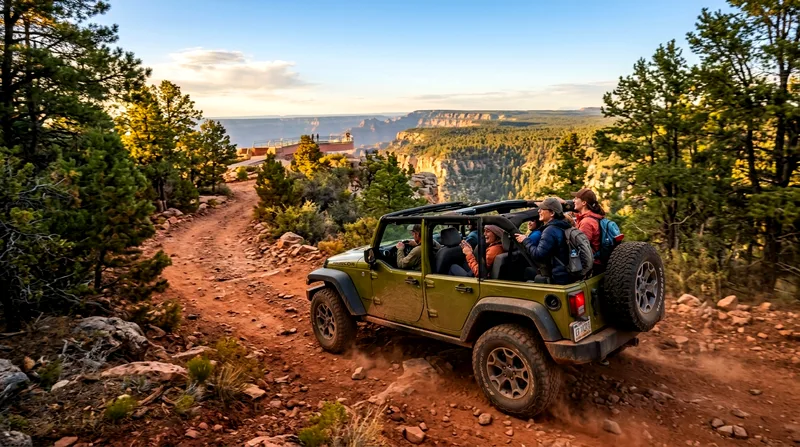
UTVs are the default choice for families and mixed-ability groups. A typical four-seat UTV lets one licensed adult drive while three passengers ride along, which means kids, grandparents, or anyone without a license can still experience the trail. The enclosed roll cage and seatbelts also make UTVs feel safer to nervous riders, even though the actual terrain and speeds are often identical to the ATV route. The trade-off: only one person per vehicle gets to drive, so if everyone in your group wants hands-on control, you'll need multiple UTVs, which raises the overall cost per person.
Age, License, and Safety Requirements
Safety rules on Grand Canyon ATV tours are set by each operator and by Arizona and Utah off-highway vehicle laws depending on which side of the state line the trail falls. This is one area where it genuinely pays to read the fine print before booking, because minimum ages and license rules vary more than people expect, and getting turned away at check-in wastes a half-day of your trip.
All reputable operators supply DOT-approved helmets, goggles, and often gloves as part of the tour price. You're expected to wear closed-toe shoes — sandals or flip-flops will get you refused a seat — and long pants are strongly recommended even in summer, since dust and loose gravel kick up constantly. Bring sunglasses as backup even if goggles are provided, and a bandana or buff for your face on dusty, multi-vehicle convoys.
Age restrictions by operator
Typical minimum age to drive a single ATV solo is 16, though some backcountry or advanced routes set it at 18. Younger children, often from age 6 and up, can usually ride as a passenger on a UTV with an adult driver, but not on a solo ATV. A handful of family-oriented operators near Williams or Tusayan allow smaller youth ATVs for kids as young as 10-12 on slow, closed-loop sections — always confirm this directly with the operator rather than assuming, since it changes trip to trip and season to season.
Driver's license and skill requirements
Most operators require any driver — ATV or UTV — to hold a valid government-issued driver's license, even though you're not driving on public roads. This is a liability and insurance requirement, not a skill test, and it applies to UTVs as much as ATVs. No prior off-road experience is required for beginner tours; guides run a short training session before departure. For advanced backcountry trips, some operators ask about prior riding experience during booking, mainly so they can group riders of similar skill level together on the trail.
Key Booking Factors and Comparison
Once you know whether you want an ATV or UTV and you've checked the age rules against your group, the real decision comes down to duration, route, and group size — and how those line up with the rest of your Grand Canyon itinerary. A 1.5-hour sunset loop near Williams fits neatly after a morning at the South Rim. A full-day Arizona Strip trip toward the North Rim essentially eats your whole day, so don't also plan a Horseshoe Bend or Antelope Canyon visit the same date — the driving alone between those sites and the ATV staging areas can run two-plus hours each way.
Tour duration and route options
Short tours (1.5-2.5 hours) stick to established loops with a handful of overlooks and moderate terrain — good for a first ride or a group with mixed experience. Half-day tours (3-5 hours) usually add a lunch stop or extended scenic break, often at a ranch property like Bar 10 Ranch on the North Rim side. Full-day tours (6+ hours) cover the most ground and the widest variety of terrain, but they also mean more sun exposure and more fatigue — bring more water than you think you need, at least one liter per hour in summer.
Group size and private tours
Standard group tours mix you with other travelers, typically six to twelve vehicles in a convoy, which keeps costs down but means you move at the group's pace. Private tours cost more per person but let you set the speed and skip waiting for slower riders — worth it for serious off-road enthusiasts or couples who don't want photo stops dictated by strangers. If you're traveling with young kids or anxious seniors, ask whether the operator offers a smaller, separate sub-group rather than lumping everyone into one large convoy.
When to Book Your ATV Tour
Weather and demand both swing hard across the year here, and booking timing should reflect both.
Seasonal conditions and weather
Summer (June-August) brings temperatures that regularly exceed 100°F (38°C) at lower elevations near Las Vegas and the Arizona Strip, which makes early morning or sunset departures far more comfortable than midday ones — ask specifically for a dawn or evening slot in July and August. Spring and fall (March-May, September-October) offer the most reliable riding conditions: cooler air, stable trails, less dust haze obscuring canyon views. Winter tours still run near Williams and the South Rim side, but North Rim-adjacent routes sometimes close or shorten due to snow and mud, since the North Rim itself closes to regular vehicle traffic in winter. Always check current trail conditions when booking a winter trip rather than assuming the standard route is open.
Advance booking recommendations
Book 2-4 weeks ahead for summer weekends and holiday periods, when tours out of Williams and Tusayan fill fastest. Shoulder season trips can often be booked a few days out. Cancellation policies vary by operator — many allow free cancellation up to 24-48 hours before departure, but weather-related cancellations (dust storms, flash flood warnings) are typically rescheduled rather than refunded outright. Compare current prices, cancellation terms, and recent reviews before you book, since availability and policies shift operator to operator and season to season.
Frequently asked questions
What are the age and license requirements for Grand Canyon ATV tours?
Most operators require solo ATV drivers to be at least 16, with some advanced backcountry routes setting the minimum at 18. UTV passengers can often be as young as 6-8. Anyone driving, ATV or UTV, generally needs a valid government-issued driver's license, even off public roads — this is an insurance requirement, not a skills test.
How long do Grand Canyon ATV tours typically last?
Tours range from short 1.5-2.5 hour scenic loops to half-day trips of 3-5 hours and full-day backcountry routes of 6 or more hours. Shorter tours suit riders combining the activity with other sightseeing the same day; full-day trips are better treated as the day's main activity.
What is the difference between ATV and UTV tours?
ATVs are single or two-person straddle vehicles steered with handlebars, giving a more hands-on, physical ride. UTVs are side-by-side vehicles with steering wheels and seatbelts, carrying two to four people, so non-drivers — kids, grandparents, anyone without a license — can ride along while one person drives.
Where do Grand Canyon ATV tours depart from?
Common departure points include Williams, Arizona and Tusayan near the South Rim, routes near Grandview Point, and backcountry trips on the Arizona Strip accessible from Las Vegas or near the North Rim, sometimes staging close to properties like Bar 10 Ranch. None operate inside the national park's main trail network.
What should I bring and wear on an ATV tour?
Wear closed-toe shoes and long pants; sandals typically get you refused a seat. Bring sunglasses, sunscreen, and a face covering for dust, plus more water than feels necessary — at least a liter per hour in summer heat. Helmets and goggles are usually provided by the operator.