Planning the Las Vegas to Grand Canyon drive? Compare routes to West, South, and North Rim, drive times, scenic stops, and day-trip logistics.
Las Vegas to Grand Canyon Drive: What to Expect
The Grand Canyon is one of the most popular road-trip destinations from Las Vegas, and for good reason — it's close enough for a long day trip, yet varied enough to justify an overnight stay. But "the Grand Canyon" from Las Vegas actually means three very different drives, depending on which rim you're headed to. The West Rim is barely two hours away and feels like an extension of a Vegas day. The South Rim, the one most people picture when they imagine the canyon, is a genuine half-day drive each way. The North Rim is remote, seasonal, and frankly not worth attempting as a Vegas day trip under almost any circumstance.
This guide breaks down the real drive times, the highway routes you'll actually take, the stops worth making along the way, and the logistics — fuel, timing, and overnight options — that make the difference between a smooth trip and a stressful one. If you're deciding between rims or trying to figure out whether a day trip is realistic, this is the practical version, not the marketing one.
Distance and Drive Time by Rim
Drive time is the single biggest factor in choosing a rim, and the differences are bigger than most first-time visitors expect. A West Rim trip and a South Rim trip are not interchangeable half-day plans — one is a quick excursion, the other eats most of your day before you even reach the canyon.
The West Rim is the fastest drive from Las Vegas, but the South Rim offers the more complete Grand Canyon experience for roughly double the driving time.
Las Vegas to Grand Canyon drive compared: distance, time and rim type
| Rim | Distance from Las Vegas | Drive time (one way) | Managed by | Best for |
|---|---|---|---|---|
| West Rim | approx. 120 miles | approx. 2–2.5 hours | Hualapai Tribe | Quick day trips, Skywalk visitors |
| South Rim | approx. 275 miles | approx. 4.5–5 hours | National Park Service | First-time visitors, hikers, classic views |
| North Rim | approx. 270 miles | approx. 5.5 hours | National Park Service | Quiet visits, seasonal travel (May–Oct) |
Drive times are typical under normal traffic and weather; add time for stops at Hoover Dam or Boulder City.
West Rim Drive Time and Distance
Grand Canyon West Rim sits roughly 120 miles from the Las Vegas Strip, and the drive typically takes about 2 to 2.5 hours one way, depending on traffic through Boulder City. This is the rim home to the Skywalk glass bridge, run by the Hualapai Tribe, and it's by far the most practical choice for a Vegas-based day trip. The trade-off: it's not part of Grand Canyon National Park, the canyon views are narrower and less dramatic than the South Rim's, and the Skywalk and most activities carry separate entry fees on top of the general admission charge. If you're short on time, this is the rim to book. If you want the postcard version of the canyon, it isn't.
South Rim Drive Time and Distance
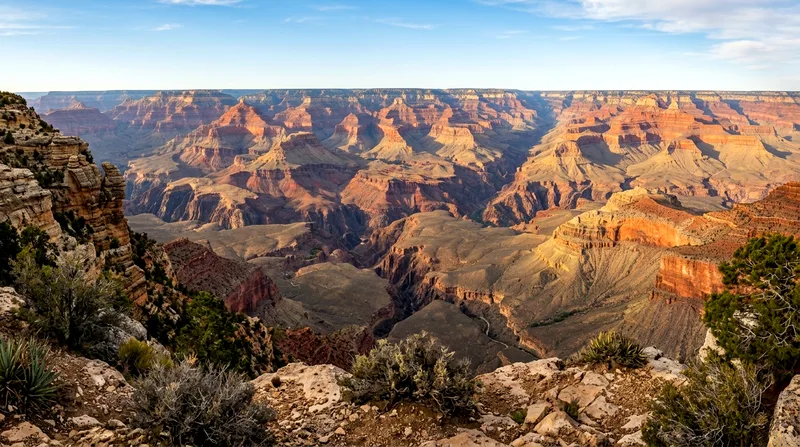
The South Rim, including Grand Canyon Village, is about 275 miles from Las Vegas, and the drive runs 4.5 to 5 hours one way under normal conditions. This is the Grand Canyon most photographs depict — wider views, more developed infrastructure, visitor centers, and the trailheads for Bright Angel and South Kaibab. It's inside Grand Canyon National Park proper, with the standard park entrance fee covering seven days. The distance makes it a long day trip (10+ hours round trip driving alone) or a much more comfortable overnight. Compare that to a Yosemite or Zion day trip from a base city — the South Rim is genuinely on the far edge of what's sane to attempt in a single day.
North Rim Drive Time and Distance
The North Rim is about 270 miles from Las Vegas by road, but because of the canyon's geography, the drive takes close to 5.5 hours and involves winding highway through the Kaibab Plateau. It's also only open seasonally, roughly mid-May through mid-October, closing for snow the rest of the year. Unless you're specifically chasing the North Rim's quieter, forested character — and have two full days to spend — skip it on a Vegas-based trip. It's a worse value proposition than the South Rim for almost every visitor profile covered here.
Route Options and Highways for the Las Vegas to Grand Canyon Drive
There are two main highway corridors out of Las Vegas, and which one you take depends entirely on your rim choice. Both are well-paved, well-signed, and don't require a 4x4 or special vehicle — any rental sedan handles them fine.
I-11 and US-93 to West Rim
For the West Rim, you'll take I-11 South out of Las Vegas, which merges with US-93 past Boulder City and crosses the Colorado River via the Mike O'Callaghan–Pat Tillman Memorial Bridge, right alongside Hoover Dam. From there, US-93 continues south into Arizona before you turn off onto Pierce Ferry Road and then Diamond Bar Road — the last stretch, about 20 miles, is partly unpaved gravel. It's manageable in a normal car at low speed, but it's dusty, washboarded in places, and not fun in the rain. This is the one real downside of the West Rim drive that brochures tend to skip over.
I-40 and AZ-64 to South Rim
For the South Rim, the standard route runs I-11 to US-93 south, then connects to I-40 East near Kingman, Arizona. You'll follow I-40 through Williams, Arizona, then turn north on AZ-64, which runs straight into Grand Canyon Village and the South Entrance. This route is entirely paved highway, well-serviced with gas and food in Kingman and Williams, and far less prone to surprises than the West Rim's gravel finish. It's also the route you'd use to continue on to Sedona or Flagstaff if you're extending the trip rather than doubling back to Vegas.
Scenic Stops Along the Las Vegas to Grand Canyon Drive
Both routes pass genuinely worthwhile stops, not just gas-station towns. Building in an hour or two for these makes the drive feel like part of the trip rather than a chore to get through.
Hoover Dam and Boulder City
Hoover Dam sits about 30 minutes from the Strip and is a near-mandatory stop if you're taking the West Rim route — it's directly on the way. You can view it free from the bypass bridge overlook, or pay for a guided tour of the dam itself, which runs a little over an hour. Boulder City, just before the dam, is a small, deliberately non-casino town (gambling is banned there) with cafes and a historic downtown worth 20 minutes if you want a coffee break before the desert stretch ahead. Skip the dam tour if you're tight on time for a West Rim day trip — the free overlook view is enough for most people.
Historic Towns and Viewpoints
On the South Rim route, Kingman and Williams, Arizona are the two towns worth knowing. Kingman sits on old Route 66 and has a handful of diners and a small transportation museum if you need a longer break. Williams, closer to the canyon, markets itself hard as a "Route 66 town" and is also the departure point for the Grand Canyon Railway, a scenic train alternative to driving the last stretch — worth considering if someone in your group doesn't want to do the return drive. On the West Rim side, there's little beyond the dam and small desert pull-offs, which is part of why that route feels shorter and less scenic once you're past Hoover Dam.
Day Trip vs Overnight: Planning Your Grand Canyon Road Trip
Whether to do this as a single long day or break it into an overnight trip comes down to which rim you've chosen and how much driving fatigue your group can tolerate.
Feasibility and Time Considerations
A West Rim day trip from Las Vegas is genuinely feasible — budget 10 to 12 hours total, including 4 to 5 hours of driving, 2 to 3 hours at the rim, and stops at Hoover Dam. Leave by 7 or 8 a.m. A South Rim day trip is possible but demanding: with 9 to 10 hours of round-trip driving, you're looking at a 14 to 16 hour day if you want more than an hour or two actually at the canyon. It's doable once, but I wouldn't recommend it with young kids or for anyone who dislikes long highway stretches. An overnight near the South Rim turns a grueling day into a relaxed two-day trip with time for a sunrise or sunset viewpoint, which the day-trip version almost always sacrifices.
Accommodation Options Near Each Rim
Near the West Rim, lodging is limited — there's little beyond Peach Springs or heading back toward Kingman, so most visitors genuinely do treat it as a day trip rather than seeking a bed nearby. Near the South Rim, Grand Canyon Village has several in-park lodges (book these months ahead for peak season), plus the town of Tusayan just outside the park entrance with more standard hotel options. Williams, about 55 minutes south, is a solid overflow option with more availability and lower prices than in-park lodging. If you're cross-referencing this with a broader Southwest itinerary, Williams also works well as a base before continuing to Sedona or Flagstaff.
Fuel, Rest Stops and Logistics for the Drive
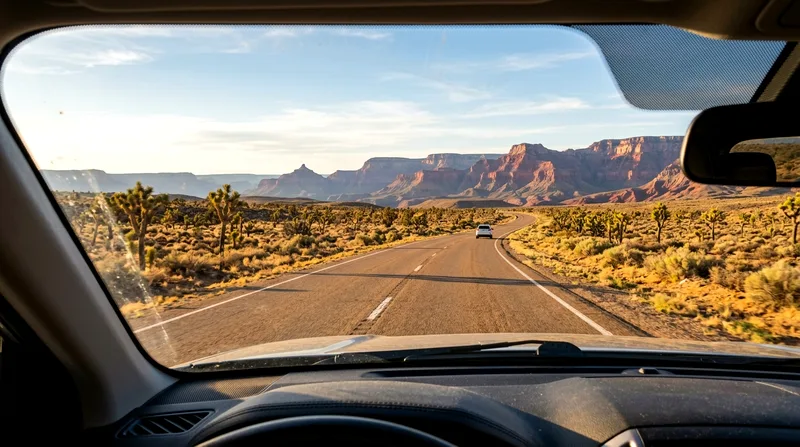
This is genuine desert driving, and while neither route is remote in the way, say, parts of Monument Valley access roads are, gaps between services are longer than driving around Las Vegas itself prepares you for.
Gas Stations and Service Locations
On the West Rim route, fill up in Boulder City or Kingman — once you turn onto Pierce Ferry Road, there are no gas stations until you're back on a highway, and the West Rim itself has very limited fuel services. On the South Rim route via I-40, Kingman and Williams both have full services, so you're never more than roughly an hour from a gas station. My rule: top off the tank any time it drops below half on either route. Desert heat and air conditioning burn fuel faster than you'd expect, and the last thing you want is to be calculating range on a gravel road.
Best Departure Times and Traffic
Leave Las Vegas before 8 a.m. if possible — both routes see some Strip-adjacent congestion that clears up fast once you're past Boulder City or onto I-11. Summer weekends bring heavier traffic to Hoover Dam's overlook parking, so arrive early or expect a short wait. Winter driving on US-93 and the West Rim's gravel section can be fine, but check weather if rain or snow is forecast — that unpaved stretch turns slick and rutted quickly. For the South Rim, AZ-64 near Williams occasionally sees winter ice; it's not Yosemite's chain-control territory, but a cautious pace in bad weather is still warranted.
Booking Your Grand Canyon Trip from Las Vegas
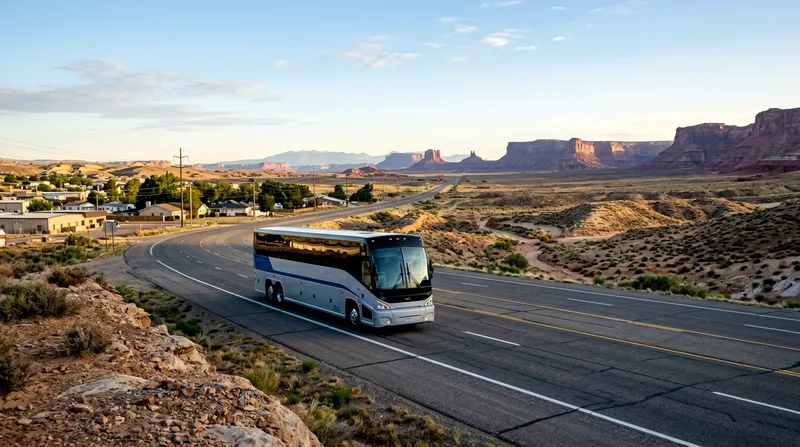
If driving yourself isn't appealing — or you'd rather not deal with the Pierce Ferry gravel road or a 10-hour round trip to the South Rim — guided day tours from Las Vegas cover both rims by bus, van, or small plane, often bundling Skywalk tickets or South Rim park entry into one booking. Helicopter tours are also popular from Vegas, particularly to the West Rim, where some itineraries include a landing inside the canyon itself — something you can't do on South Rim flights, which operate under stricter airspace restrictions. For paragliding or more adventurous add-ons, the Vegas-based tour market is thinner than at Zion or Sedona, so most of that activity happens once you're near the canyon rather than as part of the drive itself. Whichever rim you choose, compare current tour and ticket prices before you book — availability shifts seasonally and guided options often sell out on weekends.
Frequently asked questions
How long does it take to drive from Las Vegas to Grand Canyon?
It depends on the rim. The West Rim takes about 2 to 2.5 hours one way (around 120 miles), the South Rim takes 4.5 to 5 hours (about 275 miles), and the North Rim takes roughly 5.5 hours despite being a similar distance to the South Rim, due to winding mountain roads.
Which part of Grand Canyon is closest to Las Vegas?
The West Rim is closest, about 120 miles and 2 to 2.5 hours via I-11 and US-93. It's run by the Hualapai Tribe rather than the National Park Service, and it's home to the Skywalk glass bridge — but the views are narrower than the South Rim's classic vistas.
Can I do a day trip to the Grand Canyon from Las Vegas?
Yes, especially to the West Rim, where a 10-12 hour day including driving, sightseeing, and a Hoover Dam stop is realistic. A South Rim day trip is possible but long — expect 14 to 16 hours total — so it's better suited to a one-time push than a relaxed visit.
What is the best route from Las Vegas to Grand Canyon?
For the West Rim, take I-11 South to US-93, crossing near Hoover Dam, then Pierce Ferry Road and Diamond Bar Road (partly gravel). For the South Rim, take I-11/US-93 to I-40 East through Kingman and Williams, then AZ-64 north into Grand Canyon Village — fully paved and better serviced.
What are the fuel and rest stop options on this drive?
Fill up in Boulder City or Kingman before the West Rim route, since there's no fuel on Pierce Ferry or Diamond Bar Road. On the South Rim route, Kingman and Williams both have full gas and food services roughly every hour along I-40 and AZ-64.