Compare South Rim vs West Rim tours from Las Vegas. Weigh drive time, cost, scenery, and crowds to decide which Grand Canyon tour suits you.
South Rim vs West Rim: Quick Comparison
Anyone researching a Las Vegas to Grand Canyon South Rim tour runs into the same fork in the road almost immediately: South Rim or West Rim? They're not the same canyon experience, even though both get marketed under the same "Grand Canyon from Vegas" umbrella on sites like GetYourGuide and TripAdvisor.
The South Rim sits inside Grand Canyon National Park proper, roughly 4.5 to 5 hours from Las Vegas by road. The West Rim, managed by the Hualapai Tribe rather than the National Park Service, is about 2 to 2.5 hours away and includes attractions like the Skywalk glass bridge. That distance difference drives almost every other decision — cost, tour length, scenery, and crowd experience all flow from it.
I'll say this plainly: the West Rim is a convenience product, and the South Rim is the actual destination. That's not a knock on West Rim operators — they've built a solid business around proximity — but the rock formations, the depth of the canyon, and the forest-rim views at the South Rim are simply more dramatic. If you've seen photos of the Grand Canyon in any magazine or film, you were almost certainly looking at the South Rim.
South Rim tours take roughly twice as long and cost noticeably more, but reward you with National Park access and more dramatic canyon views.
Las Vegas to Grand Canyon South Rim tour vs West Rim tour compared
| Option | Drive Time from Vegas | Typical Tour Length | Typical Cost (per person) | Best For |
|---|---|---|---|---|
| South Rim (guided bus tour) | approx. 4.5-5 hrs one-way | 13-15 hrs round trip | $180-$250 | First-time visitors, photographers, hikers |
| South Rim (small plane add-on) | approx. 1 hr flight | 8-10 hrs total | $350-$450 | Time-limited travelers wanting both rims |
| West Rim (guided bus tour) | approx. 2-2.5 hrs one-way | 7-9 hrs round trip | $100-$170 | Single-day visitors, Skywalk seekers |
| West Rim (helicopter tour) | approx. 45 min flight | 4-6 hrs total | $250-$400 | Thrill-seekers, short layovers |
| Self-drive to South Rim | approx. 4.5-5 hrs one-way | 2-3 days recommended | Car rental + park fee ($35/vehicle) | Independent travelers, longer stays |
Prices and durations are typical ranges; always check current prices and availability when booking, since operator offerings and fuel surcharges change.
What Each Option Offers
South Rim tours typically include Grand Canyon Village, Mather Point, Yavapai Point, and sometimes a stop at Hoover Dam or along a stretch of historic Route 66 near Kingman or Seligman. You're inside the National Park, which means ranger stations, visitor centers, and marked trails like the Rim Trail. West Rim packages usually bundle in the Skywalk (an extra fee, typically $20-25 on top of admission), Eagle Point, Guano Point, and sometimes a short Hualapai Ranch stop. Some West Rim tours also offer helicopter rides down to the canyon floor near the Colorado River — something the South Rim doesn't permit within park boundaries. Papillon is one of the better-known operators running both helicopter and ground tours to the West Rim and occasionally South Rim flightseeing routes.
Key Differences at a Glance
Beyond distance, the National Park status matters more than people expect. South Rim visits count toward National Park Service lands, so if you've got an $80 America the Beautiful annual pass, it covers entry. West Rim is tribal land, separate ticketing, separate rules, and your park pass does nothing there. The South Rim also has far more infrastructure — lodges, a free shuttle system, multiple overlooks spaced along a 25-mile stretch — while the West Rim is a smaller, more contained visitor area built mainly around the Skywalk and a couple of photo points.
Head-to-Head: Time, Cost, and Effort
This is where the South Rim decision gets real. You're not comparing a 2-hour drive to a 2.5-hour drive — you're comparing a half-day outing to something close to a full day, sunrise to sunset, often leaving Vegas hotels by 6 or 7 a.m. and returning after 9 p.m.
Drive Time and Tour Duration
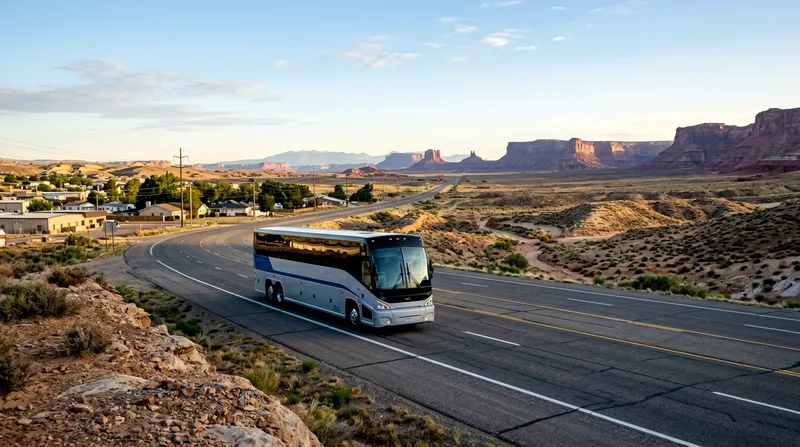
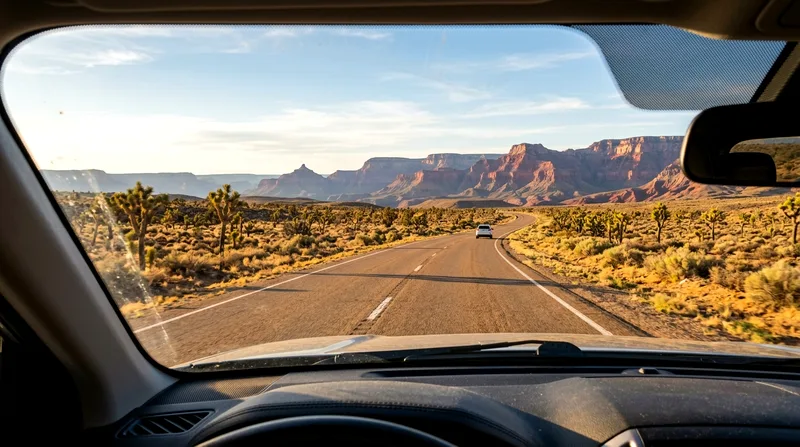
A Las Vegas to South Rim day trip covers roughly 275 miles one-way by road, translating to 4.5 to 5 hours of driving each direction on top of time spent at the canyon itself. Most guided bus tours structure the day as a 13 to 15 hour round trip, with only 3 to 4 hours actually spent at the rim once you subtract driving, rest stops, and lunch. That ratio bothers some travelers — you spend more time on the bus than at the destination. If that math doesn't sit right with you, a small plane add-on (common with South Rim package tours) cuts the one-way travel to about an hour in the air, though it roughly doubles the price and adds its own logistics around luggage weight limits and airstrip transfers. West Rim tours, by contrast, get you there in 2 to 2.5 hours, making a 7 to 9 hour round trip realistic even for someone catching an evening show back in Vegas.
Pricing and What's Included
South Rim bus tours generally run $180 to $250 per person, usually including hotel pickup, a guide, and sometimes lunch — though some budget operators charge lunch separately, so read the fine print before booking. West Rim tours are cheaper, typically $100 to $170, but add-ons like the Skywalk walk itself, a Hualapai Ranch lunch, or helicopter descents to the canyon floor can push the final cost well past the advertised base price. Neither style of tour includes the America the Beautiful pass benefit automatically — if you're self-driving instead of booking a guided tour, the $35 per-vehicle park entrance fee at the South Rim is a bargain compared to what either guided option charges per person.
Scenery, Views, and Crowd Levels
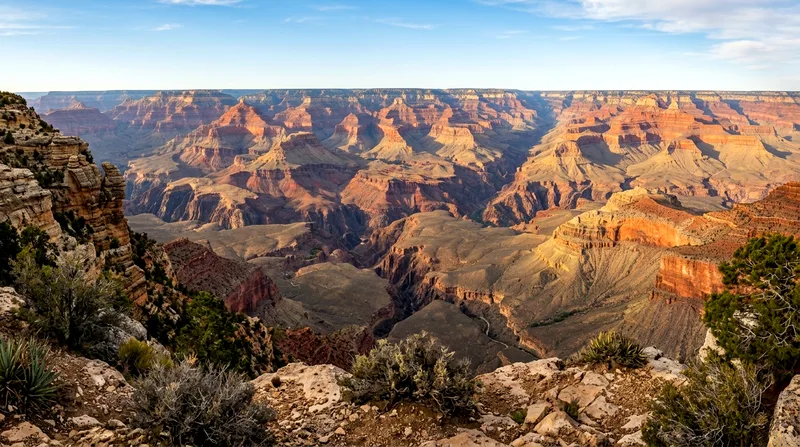
I'll be direct about this: the West Rim's canyon section is narrower and less visually layered than the South Rim's. The South Rim shows off the canyon's famous horizontal banding — the exposed rock layers that took millions of years to form — across a much wider and deeper vista. If photography or simply standing in front of something enormous is the point of your trip, the South Rim wins without much argument.
South Rim Viewpoints and Photo Stops
Mather Point is the classic first stop and usually where tour buses unload — expect company there, but the view justifies it. Yavapai Point offers a slightly different angle with a small geology museum attached. If your tour allows any free time, walking even a short stretch of the paved Rim Trail gets you away from the main crowd clusters at the parking areas. Desert View Watchtower, about 25 miles east, is a worthwhile stop if your itinerary includes it, offering one of the few elevated vantage points along the route. Compare that to the West Rim's Eagle Point and Guano Point — both good, neither matching the scale of what the South Rim spreads in front of you.
Crowds and Peak Season Timing
Summer (June through August) brings the heaviest crowds to the South Rim, with midday parking lots at Mather Point filling up and shuttle buses running at near capacity. Spring and fall — April-May and September-October — offer cooler temperatures and noticeably thinner crowds, which matters if you're trying to get a clean photo without ten strangers in frame. Winter is the quiet season at the South Rim (it stays open year-round, unlike the North Rim, which closes seasonally), though some overlooks can get icy. The West Rim doesn't have quite the same seasonal crush since visitor caps and tour group sizes are more tightly managed by the Hualapai Tribe, but it also never really empties out — it's designed for steady, year-round throughput.
Who Should Choose South Rim
Not everyone needs the extra four or five hours in a bus. But certain travelers get far more value out of the South Rim than the West Rim, and it's worth being honest about who falls into each camp.
Best for First-Time Visitors
If this is your only trip to the Grand Canyon — not a layover, but the trip — go to the South Rim. It's the Grand Canyon National Park that appears in textbooks, documentaries, and nearly every piece of marketing about the American Southwest. European travelers in particular, who've often flown ten-plus hours to reach the U.S. West, tend to regret skipping it for a shorter West Rim visit once they realize the difference afterward. Families with children should know the South Rim has more amenities — visitor centers, restrooms, a general store, and ranger talks — making a long day slightly more manageable with kids in tow.
Best for Photography and Nature Lovers
Hikers and photographers should skip the West Rim entirely. The South Rim connects to real trail systems — the Bright Angel Trail and South Kaibab Trail both start near Grand Canyon Village, letting fit travelers descend even a mile or two into the canyon for a genuinely different perspective than any rim overlook offers. Sportsmen and paragliders won't find permitted flying at either rim (the airspace above Grand Canyon National Park is restricted), but helicopter lovers can still book flightseeing tours that depart from near Tusayan, just south of the park boundary, giving aerial views without the restrictions that apply to West Rim commercial flights over tribal land.
The Verdict: Is It Worth It
Here's my honest take: a Las Vegas to Grand Canyon South Rim day trip is worth it if you treat it as a long, rewarding day rather than a quick excursion. The extra 4-5 hours of driving and the $100-200 premium over West Rim tours buy you something the West Rim simply can't replicate — a wider, deeper, geologically richer canyon inside an actual National Park, with trail access and a visitor infrastructure built over more than a century.
Where it stops making sense is for someone with a single free day in Vegas who also wants time for a pool, a show, or the Strip that evening. A 13-15 hour round trip eats your whole day and leaves you tired for whatever's next. In that case, the West Rim, or even a Hoover Dam and Lake Mead half-day tour instead, is the more realistic choice. Self-driving is worth a brief mention too: renting a car and doing the South Rim over two days — overnighting in Williams or Tusayan — avoids the bus-day grind entirely and costs less per person if you're traveling with three or four people splitting a rental and gas.
Compared to other Southwest icons — Zion, Bryce Canyon, Antelope Canyon, Monument Valley — the South Rim actually requires less specialized booking than places like Antelope Canyon, which mandates tribal-guided entry with limited daily slots. That makes the South Rim comparatively easy to plan around once you commit to the drive time.
Frequently asked questions
Is it worth driving to Grand Canyon South Rim from Las Vegas?
Yes, if you have a full day to dedicate to it and want the authentic National Park experience. The 4.5-5 hour drive each way is long, but the South Rim's scenery and trail access outperform closer alternatives like the West Rim. If you're short on time, consider the West Rim or a small plane add-on instead.
How long does a South Rim day trip from Vegas take?
Most guided bus tours run 13-15 hours round trip, including roughly 3-4 hours actually spent at the rim. Flying via small plane cuts total time to around 8-10 hours. Self-driving over two days with an overnight near the park is a less rushed alternative.
What's the difference between South Rim and West Rim tours?
South Rim tours visit Grand Canyon National Park itself, about 4.5-5 hours from Vegas, with deeper canyon views and trail access. West Rim tours reach Hualapai tribal land in 2-2.5 hours, offering the Skywalk and helicopter rides to the canyon floor, but narrower, less dramatic scenery.
How much does a South Rim tour from Las Vegas cost?
Guided bus tours typically cost $180-$250 per person, often including pickup and a guide. Small plane package tours run $350-$450. Self-driving costs mainly gas, car rental, and the $35 per-vehicle park entrance fee, which is cheaper for groups.
What's included in a South Rim tour package?
Most packages include round-trip transportation, a guide or driver, and stops at viewpoints like Mather Point and Yavapai Point. Some add Hoover Dam or Route 66 stops en route. Lunch is sometimes included — check the listing on GetYourGuide or TripAdvisor before booking since this varies by operator.