Compare Grand Canyon one day rafting trip options, smooth water and whitewater, for families, seniors, and thrill seekers. Know before you book.
Who Each Rafting Trip Type Suits
A Grand Canyon one day rafting trip is not one product — it's a spectrum running from a gentle scenic float to a genuinely physical whitewater run with Class 3-4 rapids. Before you look at any comparison table, figure out which end of that spectrum your group actually belongs on, because the wrong choice ruins the day for someone. I've seen the complaints on TripAdvisor from families who booked a whitewater trip expecting a lazy river and got soaked, cold, and scared instead.
Smooth water trips, mostly run on the western end of the canyon near Grand Canyon West on the Hualapai Reservation, suit people who want the scenery and the river without the risk of getting thrown around. Whitewater one-day trips, which typically launch near Lees Ferry or combine with a helicopter exit, suit people who specifically want rapids as the main event, not a side effect of seeing the canyon.
Families and children
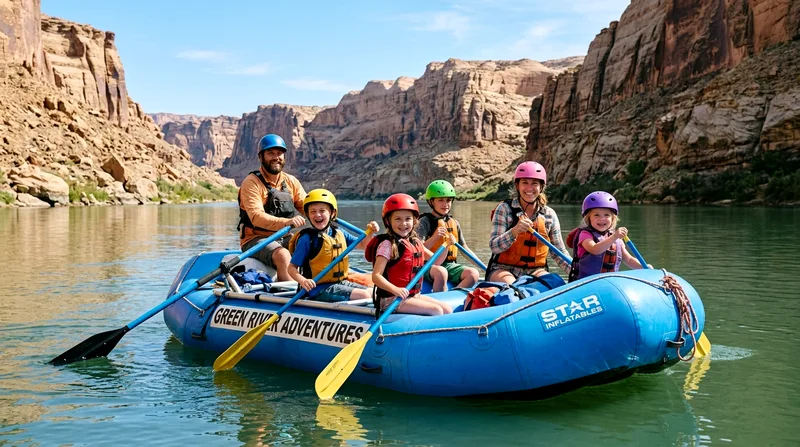
Smooth water floats are the realistic choice for most families with kids under 12. Minimum ages on smooth water trips are often around 4 to 8 years old depending on the operator, while whitewater trips commonly require minimum ages of 8, 12, or even higher for the more technical sections. A half-day smooth water trip keeps young kids engaged for a few hours without the meltdown risk of a long day on a hard bench seat. If your teenagers are strong swimmers and want more adrenaline, a one-day whitewater trip with Class 3-4 rapids is manageable for most healthy 12-year-olds, but check the specific age floor before booking — it varies more than people expect.
Seniors and less active visitors
Seniors and anyone with back, hip, or balance issues should lean toward smooth water trips almost every time. These trips involve calmer water, shorter days (often 3 to 4 hours on the river), and far less jolting than whitewater sections. Whitewater trips require you to brace, grip, and sometimes get thrown forward against a strap — not ideal if you have osteoporosis or a recent joint replacement. If mobility is a concern, ask directly about getting in and out of the raft, because riverbank entry points aren't always flat, and some require a short scramble down rock or sand.
Adventure and thrill seekers
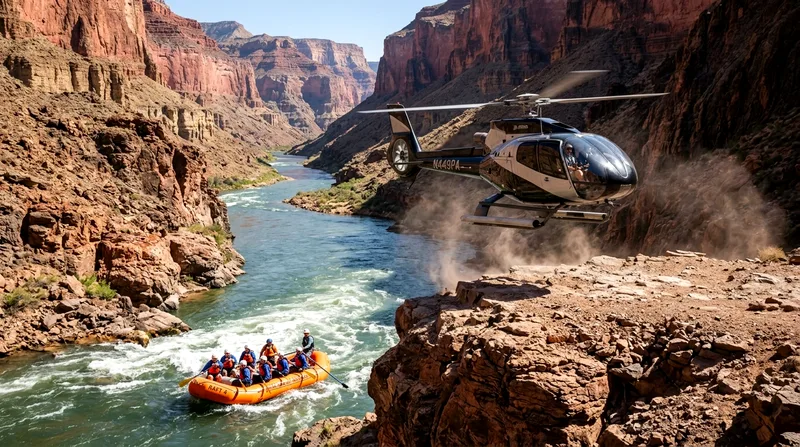
If you want actual whitewater, a one-day trip through sections with Class 3-4 rapids delivers real rapids, not just splashy riffles. These trips are usually paired with a motorized raft for speed and a helicopter flight in or out of the canyon to make the single-day timeframe work, since a true multi-day whitewater run through the Grand Canyon normally takes a week or more by commercial raft. The trade-off: you're getting a condensed, logistics-heavy day — van transfers, a helicopter leg, and a shorter river stretch than the multi-day trips cover. If you want the full Grand Canyon whitewater experience, a one-day trip is a taste, not the real deal.
One-Day vs Half-Day Rafting Compared
The terms get used loosely, so it's worth separating them clearly. A half-day rafting Grand Canyon trip generally runs 3 to 4 hours on the water, often as part of a longer day that includes a scenic drive or a stop at a viewpoint. A full one-day trip can run 6 to 8 hours including transport, with more time actually on the river and sometimes lunch included at a riverside stop or sandy beach.
Half-day trips suit shorter visits and calmer water, while full one-day trips cover more ground and suit travelers who want a fuller river experience.
Grand Canyon one day rafting trip vs half-day options compared
| Trip Type | Typical Duration | Water Type | Best For |
|---|---|---|---|
| Half-day smooth water | 3-4 hours on river | Calm, flat water | Families, seniors, first-timers |
| Full one-day smooth water | 6-8 hours incl. transfers | Calm, flat water | Visitors wanting more scenery and a lunch stop |
| One-day whitewater (helicopter combo) | 6-9 hours incl. flight | Class 3-4 rapids | Thrill seekers, fit adults and teens |
| Multi-day whitewater (for comparison) | 3-8 days | Class 3-8 rapids | Serious rafting trips, not a one-day decision |
Durations and rapid classifications are typical ranges; always confirm current itinerary details and water conditions before booking.
Trip duration and distance covered
Half-day smooth water trips near Grand Canyon West typically cover somewhere around 10 to 15 miles of river, enough to pass through a meaningful stretch of canyon without an exhausting day. Full one-day trips, especially those combined with helicopter transport to reach less accessible stretches, can cover similar or slightly longer distances but spend more total time doing it, with added time for transfers from Las Vegas, Williams, or Flagstaff. If you're staying in Flagstaff or near the South Rim and want to minimize drive time, check logistics carefully — some one-day rafting trips actually depart from or connect through the Grand Canyon West area, which is a different drive than the South Rim entrance near El Tovar.
Scenic highlights and canyon views
Both trip lengths deliver canyon walls rising well over a thousand feet in places, but the half-day trip tends to concentrate the "wow" moments into a shorter window, which some travelers actually prefer — less waiting around, more payoff per hour. Full one-day trips allow for more stops: a side canyon hike, a longer lunch break, maybe a chance to see petroglyphs along certain stretches. If photography matters to you, the one-day option gives more time for the light to change, which matters in a canyon where shadows shift fast through the afternoon.
Key Booking Factors to Consider
Don't book on price and dates alone. The details that actually affect your day are usually buried further down the listing than the headline cost.
Inclusions and what's provided
Most one-day and half-day trips include life jackets, a safety briefing, and transport from a central pickup point, but lunch, wetsuits, and dry bags are inconsistent across operators. Smooth water trips near Grand Canyon West often bundle in a Hualapai cultural stop or a viewpoint visit; whitewater trips sometimes include the helicopter leg in the base price and sometimes charge it separately. Read the inclusions list line by line on GrandCanyon.com-style booking pages or wherever you book, and don't assume lunch or wetsuit rental is covered just because a similar trip elsewhere includes it.
Group size and private options
Standard rafts on commercial one-day trips often carry anywhere from 10 to 25 passengers on motorized smooth water trips, which keeps costs down but means less personal attention and more waiting during loading and unloading. Smaller group or private raft options exist for some whitewater trips, usually at a noticeably higher price, and suit travelers who want a quieter trip or have a group with mixed ability levels. If you're traveling solo, a shared departure is the economical often more sociable choice.
Cancellation and weather policies
River levels, dam releases, and weather all affect whether a trip runs as planned. Reputable operators publish clear weather and water-level cancellation policies, often with a full refund or free rebooking if the trip is canceled on their end — but cancellations initiated by you within 24 to 72 hours of departure are frequently non-refundable. Check this before paying a deposit, and avoid any listing that's vague about what happens if the river is running high or a flash flood warning is issued, which does happen in late summer monsoon season.
When to Book Your Rafting Trip
Timing affects both water conditions and availability, and the two don't always point the same direction.
Seasonal considerations and water levels
The rafting season for one-day Colorado River trips generally runs from spring through fall, roughly March or April through October, with water temperature and flow controlled largely by releases from Glen Canyon Dam rather than natural seasonal melt alone. Early season water is cold — often in the 50s Fahrenheit even in summer air temperatures well over 100°F — so smooth water trips in spring can mean a surprisingly chilly splash zone. Late summer brings monsoon storms, which can cause sudden water level changes and occasional flash flood closures in side canyons, so build a buffer day into your itinerary if rafting is a priority, not an afterthought.
Advance booking windows
Smooth water one-day trips out of Grand Canyon West generally have more daily capacity and can sometimes be booked within a week of travel, especially outside peak summer months. Whitewater one-day trips combined with helicopter transport have far more limited daily slots and sell out weeks in advance during June, July, and August — the peak period when families travel and Grand Canyon National Park sees its highest visitor numbers. If your trip dates are fixed and summer is unavoidable, book whitewater slots as soon as your travel dates are confirmed, ideally one to three months out.
Smooth Water vs Whitewater Experiences
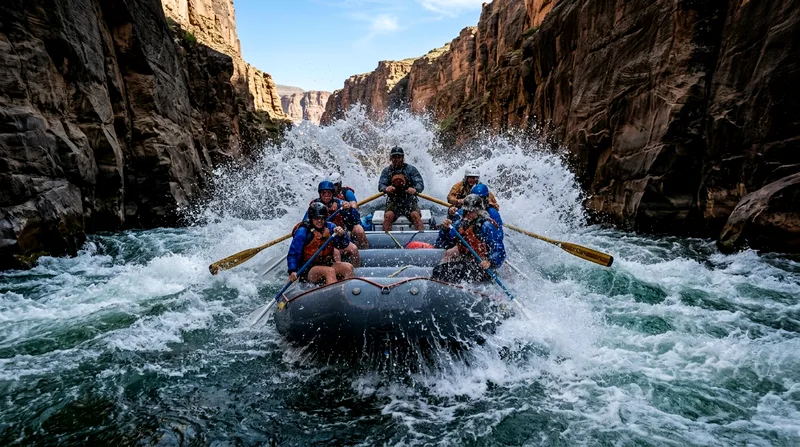
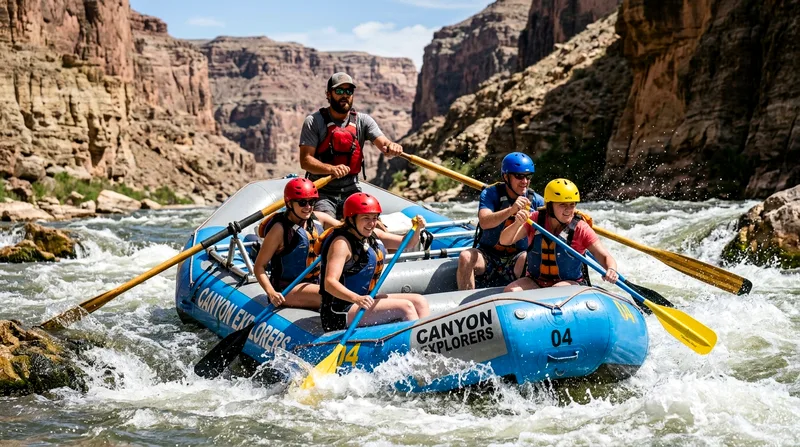
This is the real fork in the decision tree, more important than duration. Smooth water rafting Grand Canyon trips run on sections with no significant rapids — you're floating, not bouncing — which makes the whole day about scenery, wildlife, and conversation rather than adrenaline. Whitewater trips run through numbered rapids rated on the standard 1-10 Grand Canyon scale (roughly comparable to Class 3-4 on other rivers), delivering genuine drops, splashes over the bow, and moments where you'll want both hands on the rope, not the camera.
Difficulty levels and rapids classification
Grand Canyon rapids use their own 1-10 rating scale rather than the international Class 1-6 system, though Class 3-4 is the commonly used comparison for the rapids encountered on typical one-day whitewater trips. That puts them well below the canyon's biggest named rapids, which can hit 8 or higher at certain water levels and are reserved for multi-day trips with experienced guides. In practical terms, a one-day whitewater trip gives you real excitement without the sustained risk of the canyon's most serious water — a reasonable middle ground, not a watered-down gimmick.
Physical requirements and age limits
Whitewater trips typically require you to be reasonably mobile, able to climb in and out of a raft unassisted, and comfortable getting wet and cold for extended periods. Most operators set minimum ages between 8 and 12 for one-day whitewater trips and may set upper limits or require a doctor's note for travelers with certain heart or back conditions. Smooth water trips are far more forgiving — minimum ages can be as low as 4, and there's generally no upper age limit as long as mobility allows a short walk to the boat launch. Pregnant travelers are commonly advised against whitewater trips regardless of trimester; check the specific policy when booking.
Frequently asked questions
How long does a one-day Grand Canyon rafting trip take?
A full one-day trip typically runs 6 to 8 hours including transfers, lunch, and time on the water, while a half-day version runs about 3 to 4 hours. Add 1 to 3 hours of driving or shuttle time if you're departing from Las Vegas, Williams, or Flagstaff, since most launch points sit well outside the towns themselves.
What is the difference between smooth water and whitewater rafting?
Smooth water rafting covers calm, flat sections of the Colorado River with no significant rapids — ideal for scenery, photography, and nervous first-timers. Whitewater rafting runs through rated rapids, commonly compared to Class 3-4, delivering real drops and splashes and requiring more physical engagement and a higher minimum age.
Are there age restrictions for Grand Canyon rafting trips?
Yes, and they vary by trip type. Smooth water trips often allow children as young as 4 to 8, while whitewater one-day trips commonly set minimums between 8 and 12 years old. Always confirm the exact age policy with the operator before booking, since it affects refund eligibility if a child doesn't meet the cutoff on the day.
What should I bring on a one-day rafting trip?
Pack quick-dry clothing, a secured hat, polarized sunglasses with a strap, reef-safe sunscreen, and a dry bag for your phone or camera. Water shoes or sturdy sandals work better than flip-flops for scrambling over rocks at launch points. Bring a light jacket even in summer — river water stays cold, and wind chill on a moving raft is real even at 100°F air temperature.
When is the best time to book a Grand Canyon rafting trip?
For summer travel (June through August), book whitewater one-day trips one to three months ahead since helicopter-combo slots sell out first. Smooth water trips have more flexibility and can sometimes be booked within a week, except during peak holiday weeks. Shoulder season (April, May, September, October) offers better availability and cooler river-adjacent air temperatures.