Compare Grand Canyon whitewater vs smooth water rafting: duration, rapids difficulty, age limits, cost, and which trip suits your group.
Quick Comparison: Whitewater vs Smooth Water
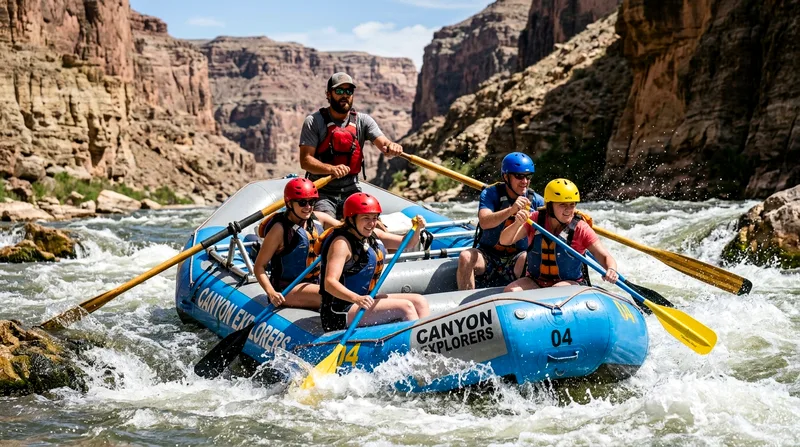
The core decision between Grand Canyon whitewater vs smooth water rafting comes down to how much adrenaline and time you're willing to trade for comfort. Whitewater trips run through the heart of Grand Canyon National Park on the Colorado River, tackling rapids rated up to Class VIII on the river's own unique scale (roughly equivalent to Class V elsewhere). Smooth-water trips, often launched near Glen Canyon Dam above Lees Ferry or combined with a Hualapai Tribe rim tour on the lower river, skip the rapids entirely and float through flat or gently moving water.
Both trips show you the canyon's geology — the Vishnu Schist at river level, the Redwall Limestone bands higher up — but from different vantage points and at different paces. Whitewater guides tend to move fast between rapids, so you get bursts of scenery between adrenaline spikes. Smooth-water trips drift slowly, which some travelers find meditative and others find a little dull after the first hour.
I'd steer most families and first-timers toward smooth water, and most fit adults under 50 who crave a story to tell toward whitewater — but that's a generalization, not a rule.
Smooth-water rafting is shorter, calmer, and open to nearly all ages, while whitewater demands more time, fitness, and tolerance for risk.
Grand Canyon whitewater vs smooth water rafting compared
| Trip Type | Typical Duration | Rapids Difficulty | Minimum Age | Typical Cost (USD) | Best For |
|---|---|---|---|---|---|
| Smooth water (Glen Canyon) | 3-4 hours | None to minimal riffles | None (often 4+) | approx. $90-$150 | Families, seniors, short visits |
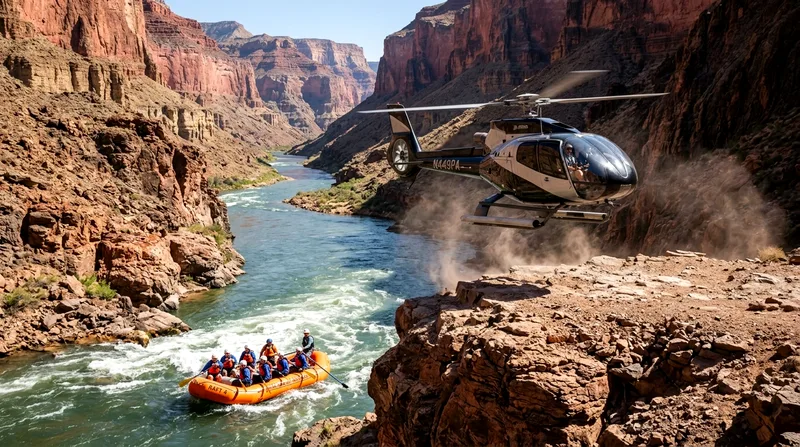
| Smooth water (lower canyon, Hualapai) | Half-day | None to minimal | Around 4+ | approx. $125-$450 (incl. helicopter options) | Day-trippers, combo tours |
| Whitewater half/one-day (motor, upper sections) | 1 day | Class III-V | Around 8-12+ | approx. $450-$600 | Short whitewater taste, teens+ |
| Whitewater multi-day motorized raft | 3-8 days | Class III-VIII | Usually 8-12+ | approx. $2,200-$3,800 | Families with teens, time-limited adults |
| Whitewater multi-day oar/paddle trip | 9-18 days | Class III-VIII | Usually 12-16+ | approx. $3,500-$5,500+ | Experienced, fit adventurers |
Figures are typical published ranges and vary by outfitter, season, and launch point; always confirm current pricing and age limits before booking.
Thrill and rapids intensity
Whitewater sections include named rapids like Lava Falls, Crystal, and Hance — Lava Falls alone drops about 13 feet in a short run and is often cited as the most intense rapid on the trip. Smooth-water floats have essentially no rapids; the water moves at a walking pace or slower, with small riffles at most. If you want your heart rate up, whitewater delivers; if you want to actually hear your guide's commentary on the rock layers without shouting, smooth water wins.
Scenery and geological views
Smooth-water trips near Lees Ferry show younger Navajo sandstone and Kaibab limestone walls rising close to the water — dramatic, but not as deep as the inner gorge. Whitewater trips penetrate further into the canyon, passing nearly two billion years of exposed rock in places. Fodor's Travel and plenty of TripAdvisor reviews note that multi-day whitewater trips feel more immersive precisely because you camp on beaches and see the canyon change light morning to night, something a half-day float can't replicate.
Physical Demands and Difficulty Levels
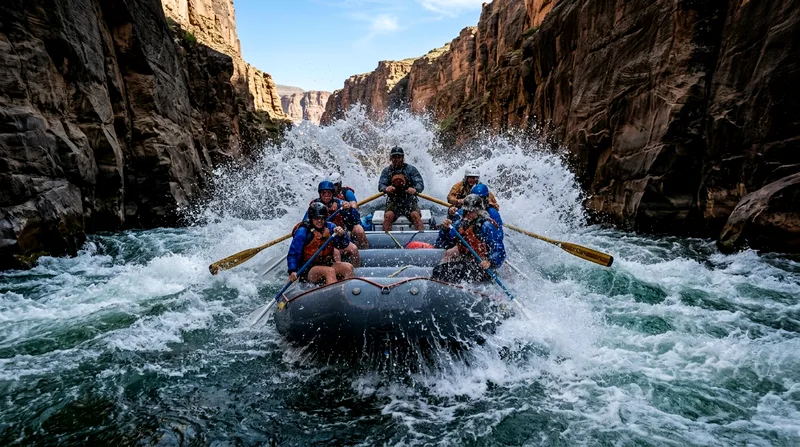
This is where the two trip types diverge most sharply, and where I think a lot of marketing glosses over the reality. Whitewater rafting on the Colorado River through the Grand Canyon isn't a gentle bob through waves — it involves being bounced, soaked, and occasionally thrown against the raft's tubes hard enough to bruise. You'll climb in and out of rafts on uneven rock and sand, hike side canyons in heat that regularly tops 100°F (38°C) in summer, and sleep on the ground for multi-day trips. Smooth-water trips ask almost nothing of your body beyond sitting still and climbing a short set of stairs at the put-in.
Whitewater exertion and skill required
On paddle-boat whitewater trips, you're an active crew member, following a guide's commands through rapids — core strength and the ability to hold a paddle grip under splashback matter. On oar-rig and motorized trips, guides do the rowing, but you still need the core and grip strength to hold on during rapids like Hermit or Granite. Multi-day trips also mean sun exposure for 6-10 hours daily, cold nights in the inner canyon shoulder seasons, and no quick exit — the nearest road access points are days apart on foot. Grand Canyon Whitewater and similar outfitters typically require a signed health form disclosing heart conditions, recent surgeries, and mobility limitations.
Smooth-water ease and accessibility
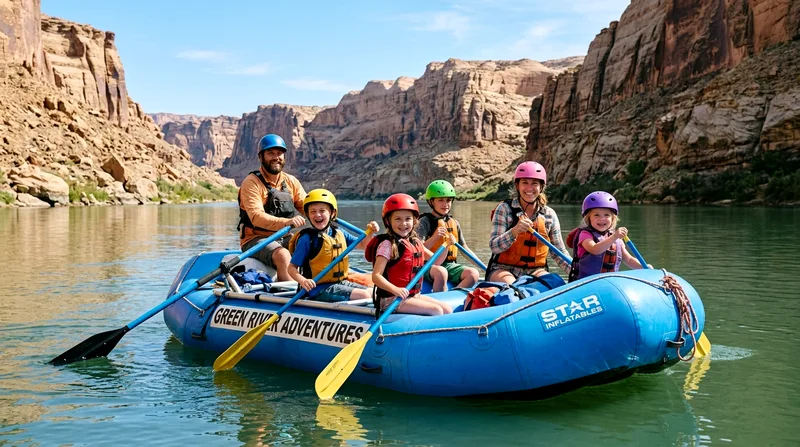
Smooth-water floats require no paddling skill and minimal mobility — guides handle the oars or motor, and passengers mostly sit and look up at the canyon walls. Wheelchair users with transfer ability can often join with advance notice; check with the specific operator since boat types vary. The biggest physical demand is tolerating 3-4 hours of sun and occasional cold spray from the dam-released water, which runs a chilly 46-50°F (8-10°C) even in August — bring a layer even in summer.
Age, Fitness, and Safety Restrictions
Grand Canyon rafting age restrictions are set partly by the National Park Service and the river concessioners, and partly by individual outfitter policy, so they vary more than people expect. Don't assume every company uses the same cutoff — always confirm with the specific outfitter named on your booking confirmation, whether that's Grand Canyon Whitewater, Advantage Grand Canyon, or another licensed concessioner.
Safety protocols are broadly similar across trip types: life jackets (PFDs) at all times on the water, mandatory safety briefings, and guides trained in wilderness first aid or higher. Whitewater trips add swim-team evacuation drills and stricter rules about securing gear, since a flipped raft in a Class VIII rapid is a genuinely different event than a splash on flat water.
Age minimums and maximums
Smooth-water trips near Lees Ferry or on the lower river often accept children as young as 4-8 depending on the operator and boat type. Whitewater multi-day trips commonly set minimums between 8 and 16 years old — paddle trips skew older because they require active participation, motorized oar trips skew a bit younger. There's generally no strict upper age limit for either, but outfitters may ask seniors with cardiac or mobility issues to complete a more detailed health screening, and some trips aren't recommended for pregnant travelers at any stage.
Fitness prerequisites and health considerations
Whitewater outfitters typically ask about heart disease, recent surgery, back and neck problems, and seizure history on a medical form — not to be bureaucratic, but because evacuation from the inner canyon can take hours by helicopter. Smooth-water trips have a much shorter health questionnaire, often just confirming the ability to sit upright for a few hours and climb in/out of a boat unassisted. If you have a bad back, I'd skip whitewater entirely rather than hope for a calm day — the bigger rapids jolt the spine regardless of raft type.
Trip Duration, Cost, and Logistics
Smooth water vs whitewater cost differences are significant, and duration explains most of it. A smooth-water float is something you can slot into a single day alongside a South Rim visit or a Hoover Dam stop; a full whitewater trip through the canyon is a vacation in itself, requiring you to block out a week or more and often fly into Las Vegas or Flagstaff with buffer days on either end for weather delays.
Logistically, whitewater trips launch from Lees Ferry (near the North Rim side) and take out at Diamond Creek or Pearce Ferry, often requiring a helicopter or small-plane transfer back to civilization — a detail some first-timers don't realize until they're already booked. Smooth-water trips are far simpler: most run as a half-day round trip from a hotel pickup point near Page, Arizona, or combine with a Hualapai tour from the South Rim side.
Half-day, full-day, and multi-day options
Smooth-water options cluster around 3-4 hours, occasionally extended to a full day with a side hike to Horseshoe Bend or petroglyph sites. One-day whitewater trips exist but only cover the upper few rapids near Lees Ferry, giving a taste without the full commitment. True whitewater-through-the-canyon trips run from about 3 days (motorized, abbreviated) to 18 days (full-length oar or paddle trips) — anything shorter than 6 days usually means you're seeing roughly half the canyon, not all 277 river miles.
Pricing tiers and what's included
Smooth-water half-day trips generally run $90-$150 per person, sometimes bundled with a Hualapai Tribe day pass or helicopter add-on pushing costs toward $400-$450. Whitewater multi-day trips range from roughly $2,200 for a shorter motorized run to $5,500+ for an extended 16-18 day paddle or oar trip, and that typically includes all meals, camping gear, and permits — but rarely includes the flight transfer out from Diamond Creek or Pearce Ferry, which can add $200-$400. Always compare what's bundled before assuming a lower headline price is actually cheaper.
Which Type Is Right for You
Neither option is objectively better — it depends on your time budget, body, and tolerance for discomfort. Compare this decision to choosing between Zion's Angels Landing and a flat Riverside Walk: same park, wildly different experiences, and the "better" choice depends entirely on who's asking. European travelers on a two-week Southwest loop that also includes Monument Valley and Bryce Canyon National Park usually don't have a week to spare for whitewater, so smooth water or a one-day taste makes more sense logistically.
Best for families and children
If you're traveling with kids under 10, smooth water is the obvious choice — short enough to avoid meltdowns, calm enough that nobody's at real risk, and scenic enough that adults don't feel shortchanged. It pairs naturally with a half-day at the South Rim or a stop at Horseshoe Bend. I'd avoid booking a multi-day whitewater trip for a family with young kids even where age minimums technically allow it; the heat, bugs, and lack of a bailout option make it harder on parents than on kids.
Best for thrill-seekers and experienced paddlers
If you've rafted elsewhere — the Ocoee, the Futaleufú, even a Zion-area outfitter's flatwater trip that left you wanting more — the full Grand Canyon whitewater run is worth the time and cost. A 6-8 day motorized trip hits the major rapids without the full 18-day commitment, a reasonable middle ground for fit adults with limited vacation days. Skip the shortest one-day whitewater taste if you're already experienced; it covers the mildest rapids and will likely feel underwhelming compared to Lava Falls or Crystal, which only show up on longer itineraries.
Frequently asked questions
What is the main difference between whitewater and smooth-water rafting?
Whitewater trips run rapids rated up to Class VIII on the Colorado River's own scale and require a multi-day commitment with real physical demands; smooth-water trips float flat or gently moving water near Lees Ferry or the lower canyon, last a few hours, and need no paddling skill or special fitness.
Are there age restrictions for each trip type?
Yes, and they vary by outfitter. Smooth-water trips often allow children as young as 4-8. Whitewater multi-day trips typically set minimums between 8 and 16, with paddle trips skewing older since they require active participation. Always confirm the exact minimum with your specific operator before booking.
How much do whitewater and smooth-water trips cost?
Smooth-water half-day trips typically run $90-$150 per person, occasionally more with add-ons like a helicopter ride. Whitewater multi-day trips range roughly from $2,200 for a shorter motorized run up to $5,500+ for an 16-18 day oar or paddle trip, usually including meals and camping gear but not transfer flights out of the canyon.
Which trip type is better for families with young children?
Smooth-water rafting is the better fit for families with kids under 10 — it's short, calm, and doesn't involve camping or extreme heat exposure. Whitewater trips can work for families with teenagers who meet the age minimum and want a bigger adventure, but they're a tougher sell for younger children.
How long do whitewater and smooth-water rafting trips last?
Smooth-water trips generally last 3-4 hours, occasionally extended to a full day with a side hike. Whitewater trips range from a single day for an abbreviated upper-river taste to 18 days for a full oar-powered run covering all 277 miles of river through the canyon.