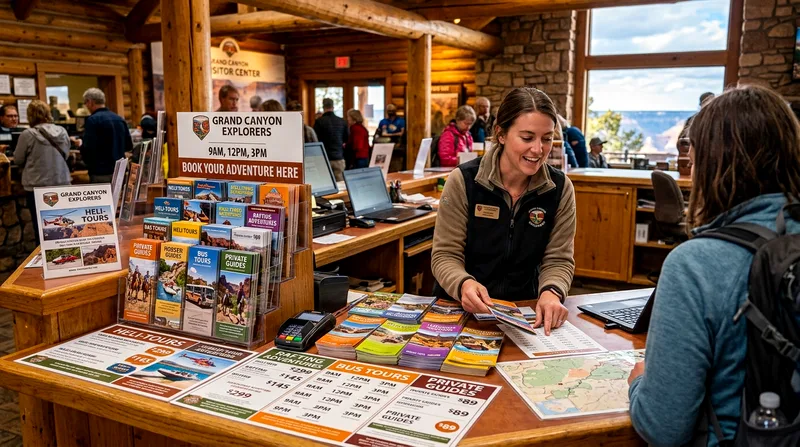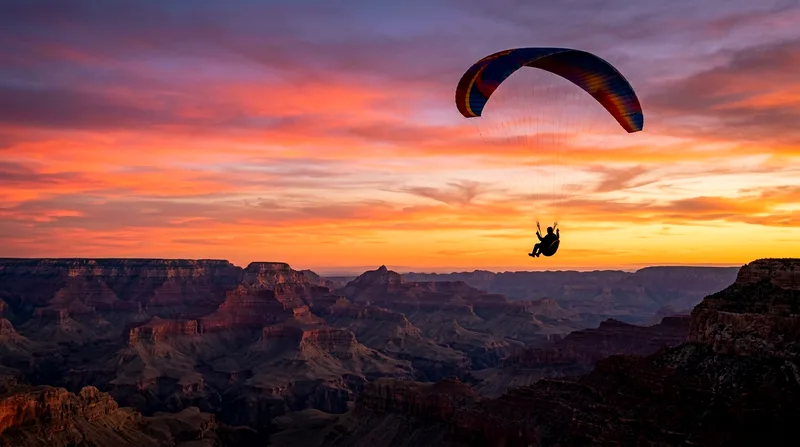
Compare paragliding near Grand Canyon tours, tandem flights, and skydiving options. Learn no-fly rules, safety checks, and when to book.
Who Aerial Tours Suit Best
Paragliding and skydiving near the Grand Canyon attract a narrower crowd than the mule rides and rim-trail walks that dominate most tour listings. These are adrenaline products first, scenic products second. If you want gentle, guaranteed canyon views, a helicopter tour over the South Rim or a scenic flight out of Tusayan will serve you better and involves none of the physical demands below. But if you want your heart rate up and a story worth telling, this is where to look.
Solo travelers and couples make up most tandem bookings, since no solo certification is required for a first flight. Families with children under about 12 are mostly excluded — most operators set minimum age and weight requirements for tandem paragliding, typically around 70-80 lbs minimum and no hard upper age limit as long as you can walk briskly and run a few steps at launch. Senior travelers in good health fly all the time; age itself isn't the barrier, mobility and weight-bearing joints are.
Thrill-seekers and adventure athletes
If you already hike, climb, or ski hard, tandem paragliding near Sedona or skydiving out of a drop zone near Page will feel like a natural extension rather than a leap into the unknown. Experienced pilots and athletes sometimes use these flights as a stepping stone toward independent certification through organizations like the Arizona Hang Gliding & Paragliding Association, which runs training clinics and maintains site guides for legal launch and landing zones across the state. Sportsmen who've done tandem jumps elsewhere — Interlaken, Queenstown — will find the Arizona versions comparable in intensity but with a drier, redder landscape underneath. One genuine complaint: conditions here are more weather-dependent than coastal or alpine sites, so your flight window can shrink to a few hours a day during shoulder seasons.
First-time flyers and tandem participants
For a first-timer, tandem is the only sensible option — you're clipped to a certified pilot who handles launch, steering, and landing while you experience the flight itself. Expect a 20 to 40 minute pre-flight briefing covering body position, launch running, and landing posture. Nerves are normal; pilots who do this daily are generally good at talking anxious flyers through it. What I don't love: some outfits upsell video packages and extra "thermal time" add-ons fairly aggressively once you're already on-site and committed — ask what's included before you drive out, not after.
Paragliding vs Skydiving: Key Differences
These get lumped together in search results, but they're different sports with different sensations, costs, and risk profiles. Paragliding is a controlled, gradual flight — you launch from a cliff or hill on foot, fly for a sustained period, and land on your feet. Skydiving, like the operations billed as Skydive the Grand Canyon near Boulder City or similar drop zones in northern Arizona and Nevada, involves a short freefall from an aircraft followed by a canopy ride and landing.
Flight duration and altitude
A tandem paragliding flight near Sedona typically runs 15 to 30 minutes in the air, launched from elevations around 4,500 to 5,000 feet above the valley floor, depending on thermal activity. Skydiving is almost the opposite shape: a plane climbs to 10,000-15,000 feet over roughly 15-20 minutes, then you freefall for about 45-60 seconds before 5-7 minutes under canopy. If you want sustained, floating views of red rock terrain, paragliding wins. If you want the freefall sensation and don't care about duration, skydiving wins.
Cost and physical demands
Tandem paragliding near Grand Canyon-adjacent towns generally costs less than skydiving — expect paragliding in the low-to-mid hundreds of dollars per person, and skydiving somewhat higher, particularly with video packages added. Both require a short running launch or a stable exit position; neither demands serious fitness, but paragliding is gentler on the body overall since there's no freefall deceleration. Skydiving puts more strain on the neck and shoulders during canopy deployment — worth noting if you have existing back issues. Always check current prices and reviews directly with operators before booking, since costs shift with fuel surcharges, season, and add-ons.
Tour Categories and Experience Types
Three broad categories cover nearly everything marketed as a "Grand Canyon aerial adventure." None of them fly inside the canyon's restricted airspace — more on that below — but each gives a genuinely different experience of the wider region's terrain.
Tandem paragliding is the most accessible aerial adventure near the Grand Canyon, while skydiving delivers shorter but more intense thrills and hang gliding suits experienced pilots only.
Paragliding near Grand Canyon: tour categories compared
| Activity | Typical duration | Physical demand | Best for | Typical cost range |
|---|---|---|---|---|
| Tandem paragliding | 15-30 min airtime | Low-moderate | First-timers, couples, seniors in good health | Low-to-mid hundreds (USD) |
| Tandem hang gliding | 10-20 min airtime | Moderate | Experienced adventure travelers | Mid hundreds (USD), limited availability |
| Tandem skydiving | 45-60 sec freefall + canopy ride | Moderate | Thrill-seekers wanting maximum adrenaline | Mid-to-high hundreds (USD) |
| Scenic helicopter flight | 25-50 min | Very low | Families, seniors, limited mobility | Varies by route and duration |
Figures are typical industry ranges, not quotes from any specific operator; always check current prices and availability before booking.
Tandem paragliding flights
Most tandem paragliding tours in the region launch from sites around Sedona's red rock formations rather than the canyon rim itself — outfits such as Sonora Wings and smaller regional operators have historically run flights here, taking advantage of reliable thermals off the mesas. Flights last 15-30 minutes, include basic gear and a safety briefing, and usually offer photo or video add-ons for an extra fee. This is the most accessible category for first-timers and requires the least physical preparation.
Hang gliding alternatives
Hang gliding near Grand Canyon country is a much smaller niche than paragliding — fewer tandem operators offer it, and it's more common among certified pilots flying their own gear at sanctioned sites. The Arizona Hang Gliding & Paragliding Association maintains a list of legal launch sites and can point visiting pilots toward active clubs. If you're not already rated, tandem hang gliding is harder to find on short notice than tandem paragliding; call ahead rather than assuming walk-up availability.
Skydiving experiences
Skydive the Grand Canyon and similar operations typically fly out of small regional airports, giving jumpers aerial views of canyon-adjacent terrain and the Colorado River plateau rather than a direct pass over the inner gorge. Expect a half-day commitment once you include check-in, gearing up, the flight up, and the jump itself, even though the actual freefall is under a minute. This suits travelers who want maximum adrenaline in minimum airtime.
What to Look for When Booking
Booking an aerial tour is less about comparing itineraries and more about vetting operators — the margin for error in this sport is unforgiving, and not every outfit maintains the same standards.
Pilot certification and safety records
Ask specifically whether tandem pilots hold a USHPA (US Hang Gliding and Paragliding Association) tandem rating, which requires logged flight hours and instructor sign-off beyond a basic solo rating. For skydiving, instructors should hold a USPA (United States Parachute Association) tandem instructor rating. Don't be shy about asking how many tandem flights a specific pilot has logged — experienced operators answer this without hesitation. Figures like paragliding pioneer Will Gadd's decades of flight experience represent the elite end of the sport; your tandem pilot won't match that, but should still have hundreds of logged tandem flights, not dozens.
Group size and inclusions
Tandem flights are one-on-one with a pilot by nature, but ground logistics vary — some operators shuttle groups of 6-10 to a launch site and run flights back-to-back, which means waiting around between turns. Ask what's included: helmet, harness, and basic gear are standard; transport to and from the launch or landing zone sometimes isn't, especially if the site is remote. Photo and video packages are nearly always an add-on cost, not a default inclusion.
Cancellation policies and weather guarantees
Wind and thermal conditions cancel more flights than most first-timers expect — this is outdoor aviation, not a theme park ride with a fixed schedule. Look for operators with a clear rebooking or refund policy for weather cancellations rather than vague "credit only" language. If you're traveling from Europe or flying in for a single day, build at least one buffer day into your itinerary before your flight date; same-day rebooking after a wind cancellation is common but not guaranteed.
Best Seasons and Weather Conditions
Timing matters more for paragliding near Grand Canyon country than for most other canyon activities, since thermal conditions directly determine whether you fly at all.
Optimal flying months
Spring (March through May) and fall (September through November) generally offer the most reliable combination of moderate temperatures and consistent thermal activity around Sedona and northern Arizona launch sites. Summer brings strong thermals but also afternoon monsoon storms from roughly July through early September, which ground flights with little warning. Winter flying is possible but weather windows narrow considerably, and cold mornings delay the thermal activity paragliders depend on. Compare this to Zion National Park, where canyoneering season follows a similar spring/fall logic, or Bryce Canyon, where winter actually adds a scenic draw rather than closing activities — aerial sports here are more seasonally restrictive than most canyon-country adventures.
Thermal conditions and flight times
Most tandem paragliding flights happen in mid-morning to early afternoon, after the sun has warmed the terrain enough to generate lift but before afternoon winds become too strong or erratic. Early morning flights tend to be smoother and calmer, better for nervous first-timers; midday flights can include more thermal bumps, which experienced flyers often enjoy and first-timers sometimes don't. If you're prone to motion sensitivity, request an early slot specifically.
No-Fly Zones and What You're Actually Booking
Here's the detail that trips up a lot of travelers searching for paragliding near Grand Canyon: the airspace directly over Grand Canyon National Park is heavily restricted. The FAA and National Park Service regulate flight paths and minimum altitudes over the canyon itself to protect the experience for rim-based visitors and reduce noise impact on wildlife and the natural soundscape — this is why even commercial helicopter tours fly fixed corridors rather than freely roaming routes. Unregulated paragliding, hang gliding, or skydiving directly over the inner canyon isn't permitted.
What this means practically: tours marketed with "Grand Canyon" in the name are almost always based in nearby towns — Sedona, Tusayan, Page, or similar — and fly over surrounding red rock or desert terrain rather than the canyon's interior. The canyon may be visible in the distance from altitude on a clear day, but you're not swooping through the gorge itself. This is worth knowing before you book, so you're not disappointed on arrival. For travelers who specifically want to see the canyon from the air legally, a fixed-wing or helicopter scenic flight out of Tusayan or Las Vegas remains the only way to fly directly over it, and that's a completely different product from paragliding or skydiving.
Frequently asked questions
What is the difference between paragliding and hang gliding?
Paragliding uses a soft, fabric wing with no rigid frame, packs into a backpack, and launches by running down a slope. Hang gliding uses a rigid, triangular frame you're suspended beneath horizontally, requiring more setup and typically a steeper or higher launch point. Hang gliders generally fly faster and can cover more distance; paragliders are slower, more portable, and easier for tandem first-timers to learn in a single session.
Are tandem paragliding tours available year-round?
Technically yes, but reliability varies sharply by season. Spring and fall give the most consistent flying windows; summer brings strong but sometimes unstable thermals plus monsoon storm risk; winter flights happen but with fewer daily windows due to cold mornings and weaker thermal activity. Book with flexible dates if you're traveling outside spring or fall.
What altitude do Grand Canyon aerial tours reach?
Tandem paragliding near Sedona typically launches from 4,500-5,000 feet above the valley floor and climbs further on strong thermals. Skydiving flights climb to 10,000-15,000 feet before the jump. Neither flies inside Grand Canyon National Park's restricted airspace, so these altitudes apply to the surrounding terrain, not the canyon's inner gorge.
Why are there no-fly zones over the Grand Canyon?
The FAA and National Park Service restrict low-altitude and unregulated flight over the canyon to limit noise, protect the visitor experience at viewpoints, and reduce disturbance to wildlife. Commercial scenic flights operate under fixed, approved corridors with minimum altitude rules; independent paragliding, hang gliding, or skydiving over the canyon interior isn't authorized.
What safety certifications should operators have?
For paragliding, ask whether the tandem pilot holds a USHPA tandem instructor rating, which requires logged hours beyond a basic solo certification. For skydiving, the tandem instructor should hold a USPA tandem rating. Reputable operators disclose this readily and carry liability insurance — treat hesitation or vague answers as a reason to look elsewhere.