Learn how to save on Grand Canyon tours with timing strategies, combo passes, free ranger programs, and smart booking tactics that actually work.
Where Your Tour Money Goes
Before you look for ways to save, it helps to know what you're actually paying for. A Grand Canyon trip typically bundles three separate costs: the park entrance fee (or West Rim admission, which is a different system entirely), the guide or tour service, and transportation to get you there from Phoenix, Flagstaff, Sedona, or Las Vegas. Each of these can be optimized separately, and that's where most of the savings hide.
People often assume the entrance fee is the expensive part. It isn't. The fee is modest compared to what operators charge for transportation and guiding, especially if you're coming from Las Vegas to the West Rim, a four-to-five-hour round trip that eats into fuel, driver wages, and vehicle costs long before anyone talks about the canyon itself. Understanding this split matters because it tells you where bargaining power actually exists — you can't negotiate a federal entrance fee, but you can absolutely shop around for transportation and guiding.
Entrance fees and permits
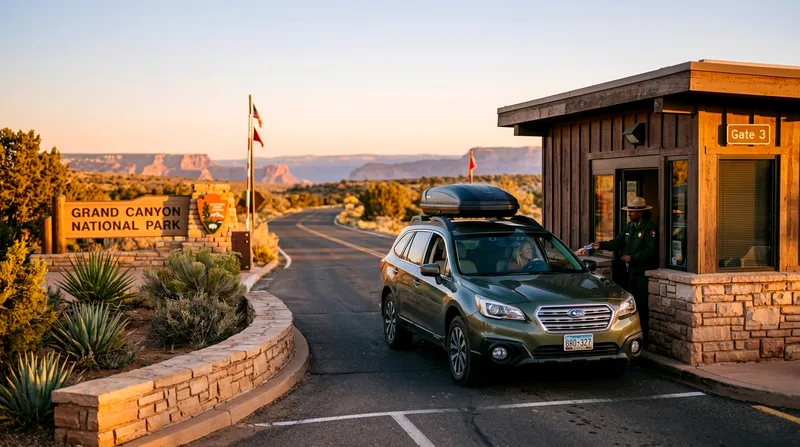
Grand Canyon National Park (which covers the South Rim and North Rim) charges a per-vehicle entrance fee that covers everyone in the car for seven days, typically in the range of $35. If you're arriving by foot, bike, or motorcycle, the per-person or per-motorcycle fee is lower. Compare that to the America the Beautiful annual pass, around $80, which covers entry to every national park for a year — a strong deal if you're also hitting Zion, Bryce Canyon, or Yosemite on the same trip, since each of those charges similar entrance fees separately.
The West Rim, run by the Hualapai Tribe, isn't part of the National Park Service system at all. It charges its own admission plus a separate fee if you want to walk onto the Skywalk glass bridge. Don't assume your America the Beautiful pass works there — it doesn't. This is one of the most common budgeting mistakes I see: travelers assume "Grand Canyon" means one fee structure, then get surprised at the West Rim gate.
Guide services and transportation
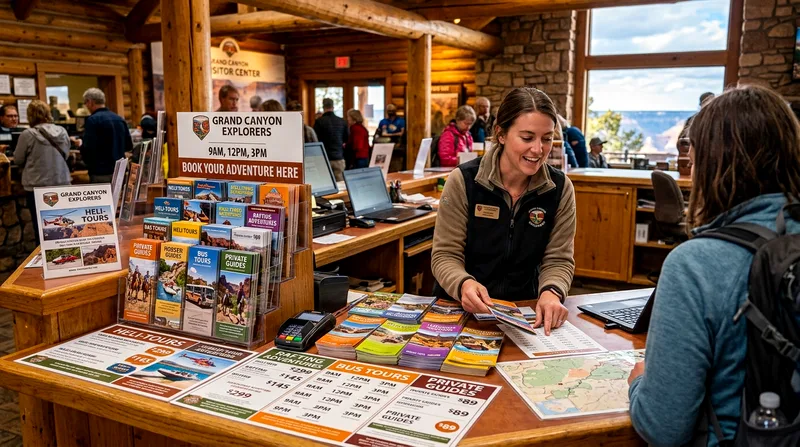
This is where your money really goes. A guided day tour from Las Vegas to the West Rim, including transportation, typically runs in the $150-$250 per person range; add a helicopter descent to the canyon floor and a pontoon boat ride on the Colorado River, and you're often looking at $300-$500. South Rim tours from Flagstaff or Sedona tend to cost less because the drive is shorter and the park's shuttle system is free once you're inside.
If you're comfortable driving yourself, renting a car and paying only the entrance fee is dramatically cheaper than any packaged tour — you lose the guiding and the pickup convenience, but you gain total control over your schedule. For solo travelers and couples without kids, this is often the better trade.
Legitimate Ways to Save on Tours
There's no shortage of sites promising Grand Canyon tour discounts, but most of what actually moves the needle on price comes down to three durable levers: when you go, how you bundle, and how far ahead you book. None of this requires a promo code — it requires planning.
Ground tours from the South Rim and self-guided visits during shoulder season offer the lowest cost per day at the Grand Canyon.
How to save on Grand Canyon tours: rim, season, and tour type compared
| Option | Typical Cost | Best Season to Save | Good For |
|---|---|---|---|
| South Rim self-guided (own car) | Entrance fee only, approx. $35/vehicle | Shoulder season (Apr-May, Sep-Oct) | Hikers, solo travelers, budget trips |
| South Rim guided day tour | $100-$200 per person | Shoulder season | Families, first-time visitors |
| West Rim day trip from Las Vegas | $150-$250 per person | Winter (lower crowds) | Couples, short-stay travelers |
| West Rim + Skywalk + river combo | $250-$400 per person | Off-peak weekdays | Travelers wanting multiple experiences in one trip |
| Helicopter tour (West Rim) | $300-$500+ per person | Off-peak, early morning slots | Special occasions, helicopter enthusiasts |
| Annual America the Beautiful pass | Approx. $80 per year | Anytime, if visiting 3+ parks | World travelers combining Zion, Bryce, Yosemite |
Prices are broad, typical ranges and vary by operator, group size, and season — always check current pricing before booking.
Seasonal pricing and off-season discounts
Summer (June through August) is peak season at the South Rim — hotel rates near the park climb, shuttle buses run fuller, and popular tours sell out weeks ahead. Visit in late October through early December, or February through March, and you'll find thinner crowds, lower lodging rates, and more tour availability at the lower end of typical price ranges. Winter brings snow to the South Rim, which some travelers love and others find limiting, since a few trails close or require traction gear.
The West Rim, at lower elevation, stays warmer and more accessible through winter, making it a reasonable off-season alternative to the South Rim if you're traveling in January. Shoulder season (April-May, September-October) tends to offer the best balance: decent weather, somewhat lower prices, and fewer logistics headaches than peak summer.
Combo tickets and package deals
Bundling genuinely saves money versus booking each piece separately. A combo that pairs a West Rim day trip with the Skywalk and a Colorado River pontoon ride usually costs less than buying each component on its own, because operators price packages to encourage the upsell but still discount the bundle itself. Similarly, if you're visiting Sedona or Antelope Canyon on the same trip, look for multi-stop itineraries sold as a single package rather than booking three separate transfers from Las Vegas or Phoenix.
Be skeptical of "deals" that just bundle a mediocre lunch and an overpriced souvenir photo into the price — read what's actually included before assuming a package is cheaper than building your own day.
Early booking and advance purchase
Booking six to eight weeks ahead, especially for helicopter tours and anything departing from Las Vegas, almost always beats booking a week out — not because of discounts, but because the cheaper departure slots and smaller-vehicle options sell first. By the time you're booking three days ahead in July, what's left tends to be the pricier large-group tours with less flexible timing.
Last-minute booking discounts are inconsistent and largely a myth for the Grand Canyon's most popular tours — unlike cruise cabins or hotel rooms, tour operators rarely need to dump inventory at a loss because demand is steady. If you see a genuinely good rate on Viator, TripAdvisor, or Expedia, compare it against the same tour on at least one other platform before booking, since the same operator is often listed on multiple sites at slightly different prices.
Free and Low-Cost Alternatives
If your goal is genuinely cheap Grand Canyon activities, skip the paid tours almost entirely at the South Rim. The National Park Service runs a free shuttle system along Hermit Road and the Village area, meaning you can see a dozen named viewpoints without paying a guide a single dollar beyond the entrance fee.
Ranger-led programs and talks
Park rangers lead free geology walks, sunset talks, and evening programs at the South Rim throughout the year, with a heavier schedule in summer. These aren't a diluted version of a paid tour — rangers often know more canyon geology and history than a commercial guide crammed into a tight schedule. Check the visitor center or the park's posted schedule boards on arrival, since programs shift with staffing and season. The catch: you need to be flexible about timing, since these talks run on a fixed schedule, not on-demand like a private tour.
Self-guided trails and viewpoints
The Rim Trail at the South Rim is flat, paved in sections, and stretches roughly 13 miles one-way — you can walk as little or as much as you like, hopping on the free shuttle whenever you're done. For something more active, the first mile or two of the Bright Angel Trail or South Kaibab Trail gives you a real descent into the canyon without a guide and without a permit, as long as you turn around well before you're tired, not when you're tired. This is genuinely free beyond the entrance fee, and for solo travelers and hikers it's often more rewarding than a bus tour that stops for ten minutes per viewpoint.
What's Not Worth Skimping On
Saving money at the Grand Canyon has limits, and I'd rather tell you where not to cut corners than let you find out the hard way.
Safety equipment and professional guides
If you're rafting the Colorado River, canyoneering, or doing anything beyond a rim-level hike, don't book the cheapest operator you can find without checking what's included. Life jackets, proper footwear rental, and a guide with real whitewater or technical experience aren't optional add-ons — they're the reason you come back in one piece. The same goes for paragliding or any aerial activity near the canyon rim: wind conditions here are unpredictable, and a guide who skips a weather check to keep a schedule is a red flag, not a bargain.
Reputable operators and insurance
Helicopter tours in particular are worth booking through an established operator rather than the lowest bid you can find on a classifieds-style site. Check that the operator carries proper liability insurance and ask directly if they don't make it obvious — a legitimate company will answer this without hesitation. I also wouldn't skip travel insurance that covers activity cancellations; canyon weather closes helicopter flights and some tours with little notice, and without coverage you simply lose that money.
Smart Booking Checklist
Pull all of this together and the savings strategy for the Grand Canyon is less about hunting for discounts and more about sequencing your decisions correctly.
Pre-visit planning steps
Start by deciding South Rim or West Rim — this single choice affects your entrance fee structure, your driving distance, and whether an America the Beautiful pass even applies. If you're also visiting Zion, Bryce Canyon, or Yosemite within twelve months, buy the annual pass; it pays for itself after about three park visits. Next, pick your season — shoulder months stretch your dollar further than July. Then decide if you actually want a helicopter flight or if a ground tour plus a free ranger talk covers what you're hoping to see; a ground-based day trip from Flagstaff can run several hundred dollars less than a helicopter-inclusive package from Las Vegas. Finally, book transportation and guiding six-plus weeks out, compare the same tour across two platforms, and leave entrance fees and ranger programs as the one cost category you don't need to shop around for — they're fixed and, at the South Rim, mostly free once you're inside the gate.
Frequently asked questions
Are there free ways to visit the Grand Canyon?
Yes, at the South Rim. Once you've paid the park entrance fee, the shuttle system, Rim Trail, viewpoints, and ranger-led talks are all free. The West Rim doesn't offer this — its admission and Skywalk fees are separate and there's no free shuttle network comparable to the National Park Service system.
What is the best time to book discounted Grand Canyon tours?
Book six to eight weeks ahead for the best selection of lower-priced departure times, and travel during shoulder season (April-May or September-October) when lodging and tour demand both ease off. Genuine last-minute discounts are rare for Grand Canyon tours, unlike hotels or cruises.
How much do entrance fees cost?
Grand Canyon National Park (South and North Rim) charges a per-vehicle fee valid for seven days, typically around $35, covering everyone in the car. The West Rim, run separately by the Hualapai Tribe, has its own admission and an additional Skywalk fee — an America the Beautiful annual pass does not cover it.
What combo deals save the most money?
Bundles pairing a West Rim day trip with the Skywalk and a Colorado River pontoon ride typically cost less than booking each piece individually. If you're also visiting Antelope Canyon or Sedona, a multi-stop package from Las Vegas or Phoenix usually beats arranging separate transfers.
How much cheaper are ground tours than helicopter tours?
Ground tours from the South Rim or West Rim typically run $100-$250 per person, while helicopter tours including a canyon descent often run $300-$500 or more. The gap narrows if the helicopter package replaces a long separate drive, but for most budgets, ground touring plus a free ranger talk delivers comparable satisfaction for less money.