Compare Grand Canyon photography tour types, from rim workshops to river expeditions. Find the right fit for your skill level and booking tips.
Who Photography Tours Suit Best
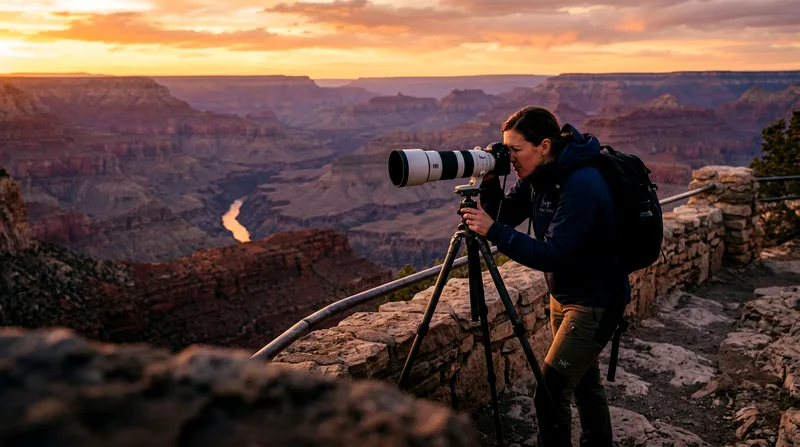
A Grand Canyon photography tour earns its cost when it solves two problems amateurs struggle with on their own: being in the right place at the right time, and knowing what to do with the camera once they're there. The canyon looks different every twenty minutes as the sun moves, and a guide who's shot the same overlook fifty times knows exactly when the light turns from flat to dramatic. That knowledge is worth paying for if you're not willing to scout locations yourself over several failed mornings.
Not everyone needs this. If you're happy with phone shots and a few postcard-quality frames, you don't need a workshop — you need a good guidebook and an alarm clock. Photography tours are built for people who want to come home with images they'd actually print or submit somewhere, not just share once on social media.
Beginners and Hobbyists
Beginners get the most value from rim-based group tours lasting two to four hours, usually scheduled around sunrise or sunset. These trips typically cover manual exposure basics, composition against the canyon's horizontal strata, and how to handle the enormous dynamic range between a bright sky and dark canyon walls. Expect a guide to walk you through camera settings in plain language rather than assuming you know what ISO invariance means. If you're shooting with a smartphone or an entry-level DSLR, say so when booking — some workshops cater specifically to mirrorless and DSLR users and may not adjust well for phone photography, so ask before you pay.
Advanced Photographers and Professionals
Experienced shooters get more out of smaller workshops — four to eight people — or private sessions that focus on specific techniques: long exposure on the Colorado River from a rafting platform, astrophotography from the Colorado Plateau's dark skies, or multi-day light-chasing itineraries timed to a full moon or a particular storm pattern. Outfits like Visionary Wild and Backcountry Journeys run trips pitched at this level, often requiring a portfolio or prior experience before you can book a seat. If you already know your camera cold, a beginner-focused rim tour will bore you and waste your money — look specifically for "advanced" or "intermediate+" labeling in the tour description.
Main Tour Categories Compared
Grand Canyon photography tours split into four broad categories, and they are not interchangeable. Picking the wrong one for your fitness level or timeline is the single most common mistake people make when booking.
Rim tours suit beginners and tight schedules, while backcountry and river trips demand more time and fitness for angles most visitors never see.
Grand Canyon photography tour categories compared by duration, skill level, and subject
| Tour Type | Typical Duration | Skill Level | Primary Subjects | Fitness Demand |
|---|---|---|---|---|
| Rim-based guided tour | 2-5 hours | Beginner to intermediate | Classic overlooks, sunrise/sunset light | Low |
| Backcountry hiking expedition | 1-4 days | Intermediate to advanced | Inner canyon layers, trail views, night skies | High |
| Raft/river photography tour | 1-7+ days | Intermediate to advanced | Canyon walls from river level, side canyons | Moderate to high |
| Private workshop | Half-day to multi-day | Any level | Client-chosen locations | Low to moderate |
| Small-group workshop | 2-5 days | Intermediate to advanced | Varied, instructor-led itinerary | Moderate |
Durations and group sizes vary by operator and season; confirm current itinerary details before booking.
Rim-Based Guided Tours
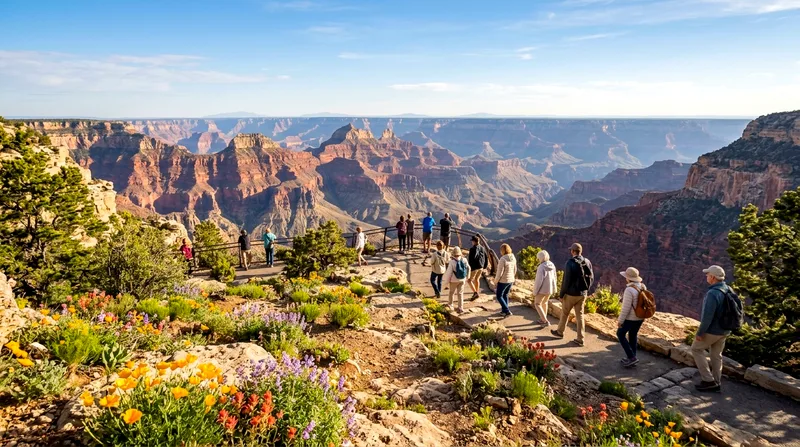
These are the most common and the easiest entry point. Most run two to five hours, departing before sunrise or ending after sunset, and they stick to paved overlooks along the South Rim — places like Mather Point, Hopi Point, and the area around Kolb Studio near Grand Canyon Village. No hiking fitness required beyond walking a few hundred yards from a parking area. Groups typically run six to fifteen people. The tradeoff: you're shooting the same views every other visitor can reach, so your results depend heavily on timing and guide expertise rather than access. Expect a fee per person, with some workshops pricing per half-day and others bundling a full day with multiple locations — check current pricing and group size when booking.
Backcountry Hiking Expeditions
These push below the rim on trails like Bright Angel or South Kaibab, sometimes overnight at Phantom Ranch, to shoot the canyon from inside rather than above. Expect one to four days, significant elevation change — over 4,000 feet of descent and climb on the main corridor trails — and a fitness requirement that rim tours don't have. The reward is photographing layers of rock and light angles rim visitors never see, plus far fewer tourists in frame. The catch is real: heat exhaustion is a genuine risk below the rim in summer, and the National Park Service strongly discourages rim-to-river-to-rim hikes in a single day for exactly that reason. This category suits fit hikers and sportsmen, not casual shooters.
Raft and River Photography Tours
River-based trips, run by outfitters such as Western River Expeditions, put you on the Colorado River itself, shooting canyon walls from below at angles no rim or trail vantage offers. Trips range from one-day smooth-water floats to multi-day whitewater expeditions lasting a week or more. Photography-specific river trips often build in extra stops at side canyons for shorter hikes to waterfalls and slot formations. Gear protection is the real consideration here — waterproof housings or dry bags are non-negotiable, and a tour that doesn't mention gear protection in its itinerary is one to question. This is the category European and long-haul travelers tend to underestimate: booking windows fill up far earlier than rim tours because permits and boat capacity are limited.
Private vs. Group Workshops
Private sessions cost more per person but buy flexibility — you choose the exact overlook, the pace, and get one-on-one instruction. Group workshops, often run over two to five days by companies like Backcountry Journeys, cost less per person and add a social element, but you compete for the guide's attention and the itinerary is fixed. Couples and solo travelers on a budget tend to go group; professionals building a portfolio with specific shots in mind tend to go private. Neither is objectively better — it's a tradeoff between cost and control.
What to Look for When Booking
Not all tours advertised as "photography tours" actually teach photography — some are general sightseeing trips with a camera-friendly label slapped on. Read the itinerary description closely, not just the title, and check whether the guide is a working photographer or a general tour guide with a camera.
Inclusions and Equipment Provided
Most rim and workshop tours include transport between viewpoints, a guide, and sometimes a light breakfast for sunrise departures. Tripods, filters, and lenses are rarely included — bring your own. A handful of higher-end workshops loan specialty gear like graduated ND filters or star trackers for astrophotography sessions; confirm this explicitly rather than assuming. If a tour promises "professional equipment provided," ask exactly what that means before you pack light.
Group Size and Skill Accommodation
Ask directly how many people will be in your group and whether skill levels are mixed. A group of fifteen beginners and one advanced shooter means the advanced person waits around a lot. Smaller workshops — four to eight people — generally handle mixed skill better because guides can split attention. Check recent reviews on TripAdvisor for comments about pacing and whether the guide actually gave individual feedback, not just generic group instruction.
Cancellation and Weather Policies
Weather at the canyon can shut down a shoot entirely — monsoon storms in July and August roll in fast, and winter can bring snow closures on rim roads. Look for operators offering a weather-reschedule option rather than a flat no-refund policy. This matters more for sunrise tours, since a cloudy morning can mean a wasted trip if there's no flexibility to rebook.
When to Book Your Tour
Timing a Grand Canyon photography tour is really two separate decisions: what season to visit, and how far ahead to reserve your spot.
Seasonal Lighting and Weather
Spring (April-May) and fall (September-October) offer the most reliable combination of clear skies, moderate temperatures, and dramatic light without summer's haze from distant wildfires or monsoon humidity. Winter brings occasional snow dusting the rim — striking in photos but with limited road access and shorter daylight windows. Summer delivers longer days and the chance of dramatic storm light during monsoon season, but afternoon thunderstorms and triple-digit heat below the rim make midday backcountry shooting risky. If you're comparing this to somewhere like Zion or Bryce Canyon, the Grand Canyon's sheer scale means light behaves differently across its width — a shot at Hopi Point can look completely different from one at Yaki Point taken the same hour.
Advance Booking Windows
Popular sunrise and sunset rim tours during spring and fall shoulder seasons often sell out two to three months ahead, especially around holiday weekends. River photography expeditions book even further out — six months to a year ahead for peak-season whitewater permits — because boat capacity is capped by the park. If you're flying in from Europe or planning a longer Colorado Plateau trip that also covers Horseshoe Bend or Antelope Canyon, lock in your photography tour dates before booking flights, not after.
Photography Spots and Lighting Conditions
Mather Point and Yavapai Point give wide, accessible views close to the main visitor center — good for beginners but crowded at sunrise. Hopi Point and Mohave Point, reachable by the free shuttle along Hermit Road, offer wider unobstructed views and are favorites among guided sunset tours specifically because the shuttle restricts private car traffic, keeping foreground clutter down. Desert View, roughly 25 miles east, catches different light angles in the afternoon and includes the historic Desert View Watchtower as a compositional anchor.
Kolb Studio, perched right on the rim near the historic village, works well for compressed shots layering architecture against canyon depth — a composition many standard tours skip because it's not a "wide vista" shot. Compare this to Horseshoe Bend, where the entire draw is one overlook and one composition; the Grand Canyon rewards tours that move you between several distinct vantage points rather than parking at a single spot for hours. A tour that only visits one overlook for your whole sunrise session, however famous, is underselling what a short drive along Hermit Road or Desert View Drive could add.
Frequently asked questions
What are the main types of Grand Canyon photography tours?
They fall into four categories: rim-based guided tours (a few hours, easy access), backcountry hiking expeditions (one to four days, demanding fitness), raft and river photography tours (one day to over a week, shooting from the Colorado River), and private or small-group workshops that can be built around any of the above. Rim tours are the most accessible; river and backcountry trips require more planning and physical readiness.
Do photography tours accommodate beginners?
Yes, particularly rim-based group tours, which are typically built around teaching manual exposure, composition, and basic camera settings. Confirm the skill level listed in the tour description before booking — some advanced workshops run by outfits like Visionary Wild or Backcountry Journeys expect prior experience and move too fast for first-timers.
What is included in a Grand Canyon photography workshop?
Most include a guide, transport between shooting locations, and sometimes a light meal for early starts. Camera bodies, lenses, and tripods are almost never included — you bring your own gear. Specialty equipment like filters or star trackers is occasionally loaned on higher-end multi-day workshops, so ask directly rather than assuming.
What is the best time to photograph the Grand Canyon?
Sunrise and sunset consistently produce the best light, with spring and fall offering the clearest skies and most comfortable temperatures. Summer monsoon storms (July-August) can create dramatic skies but bring lightning risk and afternoon heat; winter offers snow-dusted rim views but limited access and shorter days.
How do I choose between group and private photography tours?
Choose group workshops if you're budget-conscious and don't mind a fixed itinerary and shared guide attention — typical group sizes run four to fifteen people depending on operator. Choose private sessions if you want full control over locations and pacing and are willing to pay a premium for one-on-one instruction.