Complete Bright Angel Trail guide: permits, difficulty, water sources, guided tours, gear checklist & best times to hike the Grand Canyon's most popular trail.
What Is Bright Angel Trail & Why Hike It
Bright Angel Trail is the most-used corridor trail into the Grand Canyon, starting right in Grand Canyon Village on the South Rim and dropping nearly to the Colorado River. Unlike the South Kaibab Trail, which is steeper, more exposed, and has no reliable water, Bright Angel offers shade in spots, seasonal water stations, and a gentler gradient at the top — which is exactly why it draws the largest crowds of any trail in the park.
It's maintained, well-signed, and historically significant: the route follows an old Havasupai path later developed into a tourist and mule corridor in the early 1900s. You'll share it with mule trains heading to Phantom Ranch, so expect brief standstills while wranglers pass — rangers ask hikers to step to the uphill side and stay quiet.
I'd call it the best "choose your own adventure" trail in the park. You can walk 1.5 miles and turn around, or commit to a 19-mile round trip to the river and back. That flexibility is the trail's biggest strength, but it's also a trap: because the first few miles feel manageable, people without a turnaround plan keep going and run into trouble on the climb out.
Route overview and scenic highlights
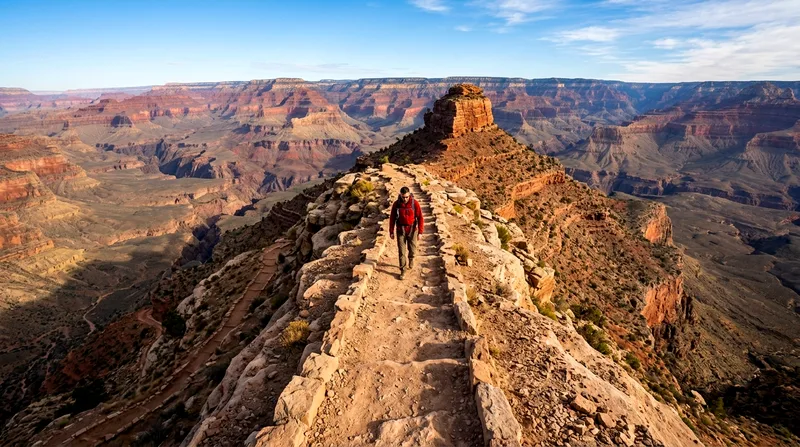
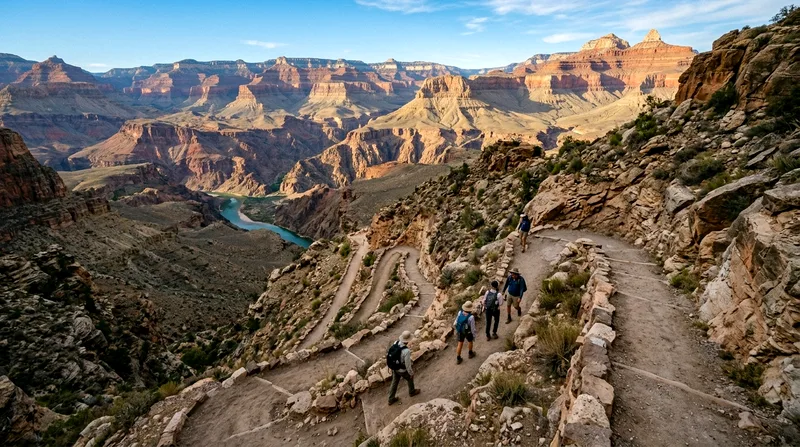
From the trailhead near Kolb Studio, the path switchbacks through two short tunnels almost immediately — a distinctive feature you won't find on other South Rim trails. One-Mile Resthouse and Three-Mile Resthouse mark clear progress points, both with seasonal water and shade shelters. Beyond that, the trail levels out through Indian Garden (officially renamed Havasupai Gardens), a cottonwood oasis roughly 4.6 miles down with a ranger station, restrooms, and a campground. From there, a side spur leads to Plateau Point, a flat overlook with a near-unobstructed view of the Colorado River 1,300 feet below — arguably the best reward-to-effort viewpoint in the entire park.
Day hike vs overnight backpacking options
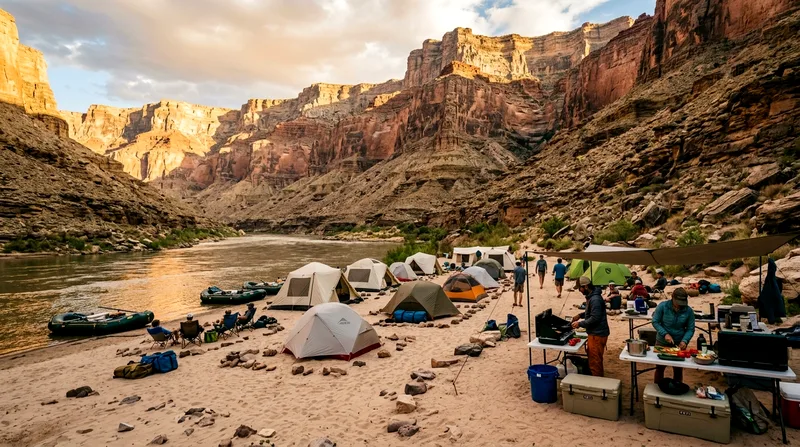
Most visitors treat Bright Angel as a day hike, and the park actively discourages day-hiking all the way to the river in one push, especially in summer. For an overnight trip, Havasupai Gardens and the Bright Angel Campground near Phantom Ranch both require backcountry permits booked through the park's lottery-style system months in advance. Phantom Ranch itself has dorm beds and cabins bookable through a separate lodging lottery — a genuinely different experience from camping, with meals available if you reserve them ahead, but it fills up fast and isn't a spontaneous option.
Trail Difficulty, Distance & Elevation
Bright Angel Trail drops about 4,380 feet over 9.5 miles from the rim to the Colorado River — meaning a round trip to the river is roughly 19 miles with nearly a mile of elevation gain on the way back. That climb out is the real difficulty, not the descent. Hiking down is deceptively easy on the legs but hard on the knees and joints; hiking up in afternoon heat, with a few thousand feet of switchbacks ahead of you, is where most rescues happen.
Compare it to Zion's Angels Landing — a shorter, more exposed scramble with chains — or Bryce Canyon's Navajo Loop, which is steep but only a few miles total. Bright Angel is in a different category: it's long-distance endurance hiking in a desert with almost no flat ground and huge temperature swings between rim and river (often 20-25°F hotter at the bottom).
Choosing a realistic turnaround point matters more on Bright Angel Trail than reaching any particular landmark.
Bright Angel Trail turnaround points compared: distance, difficulty and time
| Turnaround Point | Round Trip Distance | Elevation Change | Typical Time | Best For |
|---|---|---|---|---|
| One-Mile Resthouse | approx. 2 miles | approx. 800 ft | 1-2 hours | Families, beginners, seniors |
| Three-Mile Resthouse | approx. 6 miles | approx. 2,100 ft | 4-6 hours | Moderate fitness hikers |
| Havasupai Gardens | approx. 9.2 miles | approx. 3,060 ft | 6-8 hours | Experienced day hikers |
| Plateau Point | approx. 12.2 miles | approx. 3,100 ft | 8-10 hours | Very fit, early start only |
| Colorado River / Phantom Ranch | approx. 19 miles | approx. 4,380 ft | Overnight recommended | Backpackers with permits |
Figures are approximate and drawn from standard NPS trail data; always confirm current conditions and water status before hiking.
Elevation change and turnaround points
For a reasonable day hike, use these standard turnaround points: One-Mile Resthouse (round trip about 2 miles, 1-2 hours, suitable for most fitness levels including families with kids over 7 or so); Three-Mile Resthouse (round trip about 6 miles, 4-6 hours, moderate fitness required); and Havasupai Gardens / Plateau Point (round trip 12.2 miles, a full and demanding day, recommended only for experienced, well-conditioned hikers starting before sunrise). Going all the way to the river and back in a day is not recommended by the National Park Service for anyone, regardless of fitness — it's an overnight hike compressed into brutal single-day mileage.
Water availability and trail conditions
Water stations exist at One-Mile Resthouse, Three-Mile Resthouse, Havasupai Gardens, and Bright Angel Campground near the river — but these are seasonal, typically running from early May through mid-October, and pipelines do fail periodically due to rockfall or freeze damage. Never assume water will be flowing; check current trail conditions at the Backcountry Information Center or park website before you go, and always carry a full supply as backup. The surface itself is maintained dirt and rock, mule-trafficked and occasionally dusty or icy near the top in winter.
How to Hike: Independent vs Guided Tours
Most people hike Bright Angel independently, and it's entirely feasible — the trail is free to access, well marked, and doesn't require technical skill. But a guided tour has real value for specific travelers: first-time desert hikers unsure of pacing, families wanting a safety net, or anyone nervous about heat illness recognition. Guides carry extra water, set conservative turnaround times, and know the mule schedule so you're not caught in a group of ten animals on a narrow switchback.
Guided tour operator options
Guided options generally fall into three categories: ranger-led interpretive walks (free, typically short, check the visitor center schedule), licensed commercial hiking guide services offering half-day or full-day trips to Havasupai Gardens or Plateau Point, and multi-day guided backpacking trips to Phantom Ranch that bundle permits, meals, and sometimes mule support for gear. Mule rides down Bright Angel to Phantom Ranch are a separate product entirely, booked through the park concessioner well in advance — they're not a hiking tour, but worth comparing if knee problems rule out walking. Compare current guided tour prices and availability before you book, since options and seasonal schedules shift.
Permits, Reservations & Entry Requirements
Here's the part people get wrong: you do not need a permit to day hike Bright Angel Trail, no matter how far you go, as long as you're back at the rim by nightfall of the same day. Permits only apply to overnight stays below the rim — camping at Havasupai Gardens or Bright Angel Campground, or lodging at Phantom Ranch.
Permit system and reservation process
Backcountry permits are issued by the Grand Canyon Backcountry Information Center through a request system that opens months ahead on a rolling schedule, and popular dates — spring and fall weekends especially — get allocated quickly. There's a non-refundable processing fee plus a per-person, per-night camping fee; exact figures are published on the park's backcountry page and worth checking directly, since they're adjusted periodically. Phantom Ranch lodging uses a separate advance lottery run roughly 15 months out, which is genuinely competitive — don't expect to book it a month before your trip.
Grand Canyon National Park entry fees
Hiking Bright Angel requires standard Grand Canyon National Park entry, currently structured as a per-vehicle fee valid for seven days, with separate rates for motorcycles and individuals arriving on foot or bicycle. An annual Grand Canyon pass or the America the Beautiful interagency annual pass pays for itself if you're also visiting other parks like Zion or Bryce Canyon on the same trip — a realistic itinerary for many European and long-haul visitors doing a Southwest loop.
Best Time to Visit & Seasonal Conditions
Spring (March-May) and fall (September-October) are the sweet spot — daytime rim temperatures sit in the 60s-70s°F, water stations are running, and you avoid both summer heat and winter ice. Summer is when most heat-related rescues occur on this exact trail, because the lower canyon regularly hits 100-110°F while the rim stays pleasant, tricking people into underestimating conditions below.
Month-by-month weather and crowd patterns
December through February bring the thinnest crowds but icy upper switchbacks that often require microspikes. March-April sees wildflowers and moderate crowds. May-June ramps up heat fast and fills parking by mid-morning. July-August is monsoon season — afternoon lightning and flash flood risk in narrow sections, plus extreme heat below the rim. September-October is arguably ideal: stable weather, fewer families since school's back in session, comfortable hiking temperatures rim to river.
Seasonal water and trail considerations
Water stations typically operate May through mid-October but can be shut off early for pipeline repairs — a recurring issue hikers should plan around rather than assume won't happen. Winter hikers face a different problem: ice on the upper mile means even short hikes benefit from traction devices, and days are shorter, so a Three-Mile Resthouse turnaround might need to become a One-Mile turnaround to get back before dark.
Essential Gear Checklist & Preparation
Don't treat this like a casual rim-side stroll — it's a desert hike with real consequences for under-preparation, and the park service responds to dozens of heat-related emergencies on this trail every summer.
Footwear, hydration and sun protection
Wear broken-in trail shoes or boots with good tread — the descent is harder on toes and ankles than people expect. Carry at least 1 liter of water per 2 hours of hiking in moderate heat, more in summer, plus electrolyte tablets or a salty snack to offset sweat loss. A wide-brim hat, sunglasses, and SPF 30+ sunscreen are non-negotiable; there's minimal shade below Three-Mile Resthouse. Avoid cotton clothing — it stays wet and chills you once the sun drops.
Navigation tools and safety equipment
Bring a paper map or offline trail app, a headlamp even for day hikes (afternoon turnarounds sometimes run late), and a basic first-aid kit with blister treatment. Trekking poles genuinely help on the climb out and reduce knee strain on the way down. Skip the huge camera rig if you're going past Three-Mile Resthouse — extra pack weight matters more here than you'd think once you're three hours into the return climb.
Frequently asked questions
Is a permit required to hike Bright Angel Trail?
No permit is needed for a day hike, regardless of distance, as long as you return to the rim the same day. Permits are only required for overnight stays below the rim, such as camping at Havasupai Gardens or Bright Angel Campground, issued through the park's Backcountry Information Center.
How difficult is Bright Angel Trail and what is the elevation change?
It drops about 4,380 feet over 9.5 miles one-way to the Colorado River. The upper sections to One-Mile or Three-Mile Resthouse are moderate; going further becomes genuinely strenuous, with the climb back up being far harder than the descent down.
Can you hike Bright Angel Trail as a day hike?
Yes, for shorter distances — One-Mile Resthouse, Three-Mile Resthouse, or Havasupai Gardens are all reasonable day-hike targets. The National Park Service specifically advises against attempting the full round trip to the river in one day due to heat and distance.
Where is water available on Bright Angel Trail?
Seasonal water stations are located at One-Mile Resthouse, Three-Mile Resthouse, Havasupai Gardens, and Bright Angel Campground, typically running May through mid-October. Pipelines can fail, so always carry backup water and check current status before hiking.
What should I bring for a Bright Angel Trail hike?
Broken-in trail shoes, at least 1-2 liters of water per few hours of hiking, electrolytes, sun protection, a map or offline GPS, and a headlamp. Trekking poles help significantly on the return climb, and cotton clothing is best avoided.