A romantic Grand Canyon itinerary for couples with sunset viewpoints, helicopter tours, and quiet rim walks. 3 days of lodging and dining tips included.
Who This Itinerary Is For
This Grand Canyon itinerary for couples assumes you have three full days, a rental car, and a preference for quality moments over ticking off every overlook on the South Rim. It's built around the South Rim rather than the North Rim, mainly because the North Rim closes to vehicles roughly mid-October through mid-May and has far fewer lodging and dining options — fine for solitude, frustrating if you want a hot dinner and a soak afterward.
If you're the type of couple who wants a sunrise hot-air balloon and a spa morning, you'll need to adjust: the Grand Canyon itself doesn't offer balloon rides or spa resorts on the rim. What it offers is scale, quiet trails if you walk even ten minutes from a parking lot, and light shows at dawn and dusk that genuinely earn the word dramatic. Compare that to Sedona, 90 minutes south, which has the spa culture and red-rock backdrops for a more pampered half-day add-on — plenty of couples tack on a night there before or after.
This plan works for honeymooners, anniversary trips, and senior couples who want minimal hiking but maximum view. It's less suited to couples chasing adrenaline — if whitewater rafting on the Colorado River or multi-day backcountry permits are the goal, you need a different itinerary entirely, and likely four to seven extra days.
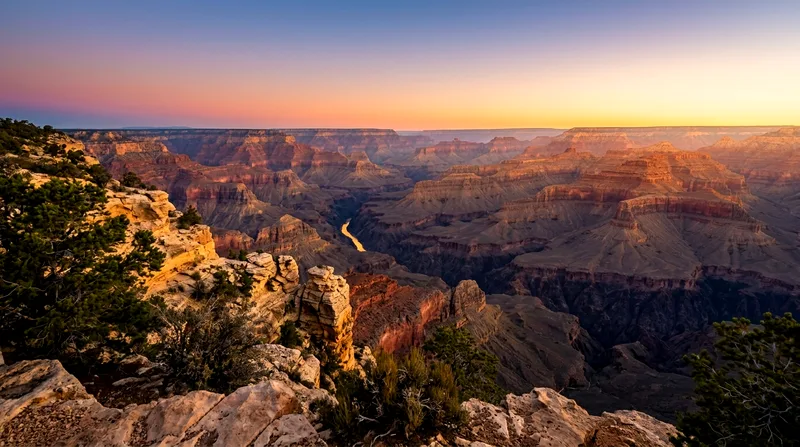
Hopi Point offers the widest unobstructed sunset view with a short shuttle ride, while Mather Point is the most convenient but also the most crowded.
Best sunset viewpoints Grand Canyon South Rim compared for couples
| Viewpoint | Distance from Village | Crowd Level | Best For |
|---|---|---|---|
| Mather Point | 5-min walk | Very high | Quick, easy access |
| Hopi Point | 20-min shuttle | Moderate-high | Widest sunset views |
| Mohave Point | 25-min shuttle | Moderate | River views, quieter |
| Yavapai Point | 10-min walk | Moderate | Sunrise and geology exhibits |
| Desert View Watchtower | 25-min drive | Low-moderate | History plus views |
Crowd levels shift seasonally; arrive 30-45 minutes before sunset for a good spot at any of these.
Day 1: Arrival and South Rim Sunset
Most couples fly into Phoenix Sky Harbor (about 3.5 hours south) or Flagstaff's smaller airport (80 minutes from the South Rim). Flagstaff is the better arrival point if you can manage it — less driving, and it sits conveniently between Sedona and the canyon if you want to extend the trip either direction.
Morning and Afternoon Activities
Pick up your rental car and drive straight to Grand Canyon National Park via Highway 180 from Flagstaff — about 80 minutes, scenic the whole way through ponderosa pine forest. Entry is a flat per-vehicle fee (currently in the $35 range, valid 7 days, so check current pricing before you go). Arrive by early afternoon, check into your lodge, and spend two or three hours doing an easy orientation walk along the paved Rim Trail near Grand Canyon Village. It's mostly flat, stroller- and cane-friendly, and gives you your first real look into the canyon without committing to a hike. Grab a late lunch at one of the village cafés — nothing fancy, but functional and canyon-adjacent.
Evening Sunset Viewing
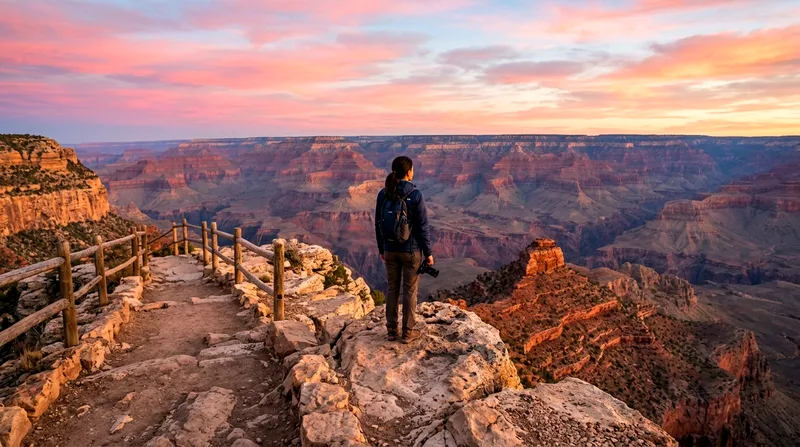
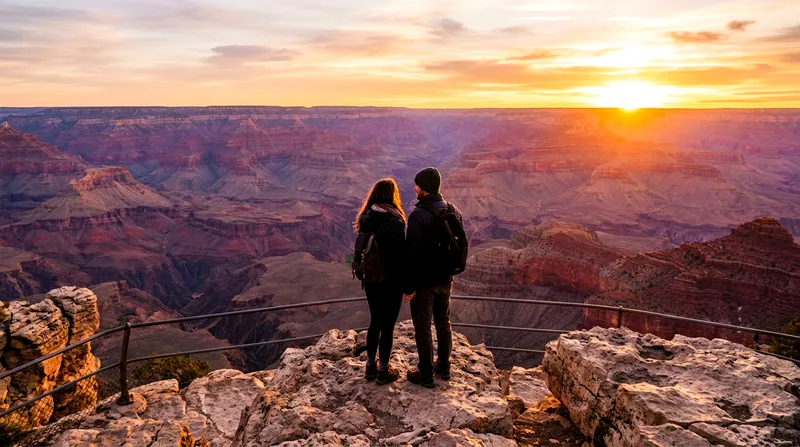
Skip Mather Point for sunset — it's the closest overlook to the main parking and visitor center, so it draws the heaviest crowds right when you want quiet. Instead, catch the free shuttle (the Hermit Road Route, red line) out to Hopi Point, about 4 miles west, widely regarded as one of the best sunset viewpoints Grand Canyon has to offer because it faces west with an unobstructed, wide-angle view. Arrive 45 minutes before sunset to claim a spot on the rocks slightly off the main overlook — couples who walk two minutes past the crowd gathering point get noticeably more space. Bring a light jacket; even in summer, rim elevation (about 7,000 feet) means temperatures drop fast once the sun's down.
Day 2: Helicopter Flight and Rim Walk
This is the splurge day, and it's worth structuring the whole itinerary around it.
Morning Helicopter Tour
Book a helicopter tour Grand Canyon couples' itinerary for the early morning slot — light is better for photos, winds are calmer, and you avoid afternoon thunderstorm delays that are common in the summer monsoon season (roughly July through September). Papillon is the best-known operator flying out of the South Rim's Grand Canyon National Park Airport near Tusayan, with flights typically running 25 to 50 minutes depending on the route chosen. Expect to pay several hundred dollars per person for the longer routes that include a Colorado River flyover — check current prices and seat availability when booking, since weight restrictions and limited daily flights mean popular time slots sell out days in advance. Window seats matter more here than almost any other tour type; ask about seating assignments when you reserve.
A fair warning: helicopter tours are loud, short, and not for anyone with motion sensitivity or a fear of small aircraft. If that's a dealbreaker, a fixed-wing plane tour is a gentler, usually cheaper alternative with longer flight times.
Afternoon and Evening Exploration
After landing, have a relaxed lunch back in the village, then spend the afternoon driving Desert View Drive — 25 miles east along the rim, stopping at Grandview Point, Moran Point, and the Desert View Watchtower. Traffic is lighter here than on the Hermit Road side, and the Watchtower itself (built in 1932) makes a good photo stop with historical interest rather than just scenery. For dinner, book ahead at El Tovar Hotel's dining room — it's the park's most atmospheric restaurant, with canyon views from the lodge's veranda, and reservations fill up a week or more ahead in peak season (spring and fall shoulder months especially). If El Tovar is booked, the Arizona Room offers similar views with a shorter wait.
Day 3: Quiet Trails and Departure
Your last day should be slower and more physical than the first two — a good antidote to a day spent mostly in vehicles and aircraft.
Early Morning Hike
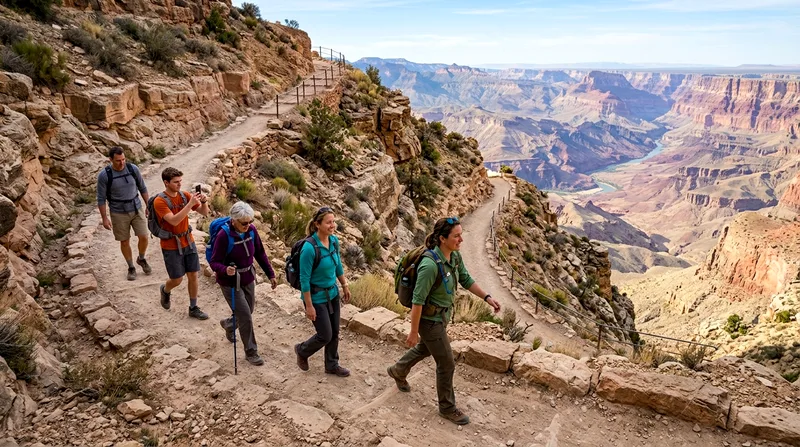
Head out before 8 a.m. to the South Kaibab Trail and walk as far as Ooh Aah Point, roughly 1.8 miles round trip with about 600 feet of elevation change. It's steep enough to feel like a real hike but short enough for most fitness levels, and morning light hits the canyon walls at a different angle than sunset — reds and golds instead of purples. Alternatively, the Bright Angel Trail to the 1.5-Mile Resthouse is slightly longer but has shade and water stations, a better choice for warmer months or less experienced hikers. Either way, start early: by 10 a.m. in summer, rim temperatures climb into the 80s-90s°F and the trail traffic thickens considerably.
Afternoon Departure
Shower, check out, and grab a last coffee at the village before driving back toward Flagstaff or Phoenix. If your flight isn't until evening, detour through Sedona (about 2.5 hours from the South Rim) for a late lunch among the red rocks — a nice tonal shift after three days of canyon scale, and a reasonable way to break up the drive to Phoenix Sky Harbor.
Where to Base Yourself
For a Grand Canyon couples trip, staying inside the park beats staying in Tusayan or Williams, even though in-park lodges cost more and book out months ahead for peak season. Xanterra operates all six in-park lodges, including El Tovar (the historic, most romantic option, built in 1905 right on the rim) and Bright Angel Lodge, which is more affordable and still just steps from the rim trail. Booking 6-9 months ahead is realistic for summer and October, the park's busiest stretches.
If in-park lodging is sold out or over budget, Tusayan sits 7 miles south, just outside the entrance, with newer hotel chains and a free shuttle into the park in peak season. Williams, about an hour south, is cheaper still and has a small-town charm with the historic Grand Canyon Railway, though you lose the convenience of walking to the rim at sunrise.
I wouldn't recommend Flagstaff as a base for the whole stay — it's a genuinely good town with better restaurant variety, but the 80-minute drive each way eats into your rim time, especially for sunset and sunrise viewing when timing matters most.
Getting Around the Grand Canyon
The South Rim's free shuttle system runs several color-coded routes and is honestly one of the best-run parts of the whole park. The Village Route and Hermit Road Route (red line) operate year-round or seasonally depending on vehicle restrictions — Hermit Road is closed to private cars March through November, so the shuttle is your only option for that stretch unless you're walking or cycling.
Parking fills up fast at the main lots near the visitor center by mid-morning in peak season, so arriving early or using the shuttle from your lodge saves real frustration. Rental bikes are available near the visitor center if you want more flexibility than the shuttle but don't want to drive — a nice middle option for couples who like moving at their own pace.
Unlike Zion National Park, where the shuttle is mandatory for the entire main canyon road during peak season, the Grand Canyon still lets you drive Desert View Drive yourself, which gives couples more control over stopping points and timing for photos.
Romantic Experiences to Book
Among all the romantic things to do Grand Canyon offers, two categories are worth reserving well before you arrive, since both have limited daily capacity.
Helicopter and Air Tours
Beyond Papillon, a few smaller operators run similar South Rim routes, and some offer combination packages pairing a helicopter flight with a ground tour or a Hummer excursion through nearby desert terrain. If you're set on seeing the river from the air, confirm the route includes a Colorado River descent — not all do, and the difference in experience is significant. Compare current prices and seat availability before you book, since rates vary by season and route length, and morning slots in spring and fall sell out fastest.
Guided Rim Walks and Dining
Ranger-led walks, free with park admission, run daily from the visitor center and cover geology and history in about an hour — a low-cost way to add context to your views without hiring a private guide. For dining, beyond El Tovar, the Yavapai Lodge restaurant and the Bright Angel Fountain (seasonal, counter-service) offer more casual, budget-friendly alternatives. If you want a splurge dinner outside the park, Sedona's restaurant scene is considerably more varied, though that means an added drive.
Frequently asked questions
How many days do couples need at the Grand Canyon?
Three full days works well for most couples — enough time for a sunset, a helicopter flight, and a morning hike without feeling rushed. Two days is workable if you cut one activity, but anything less means skipping either the flight or the quiet rim walk, which are arguably the two most memorable parts.
What are the best romantic activities for couples at Grand Canyon?
Sunset at Hopi Point, an early-morning helicopter flight, and a quiet stretch of the South Kaibab Trail cover the highlights. Dinner at El Tovar with a reservation adds a proper date-night element that's otherwise hard to find inside a national park.
What is the best sunset viewpoint for couples?
Hopi Point is the strongest overall choice — wide views, west-facing light, and reachable by free shuttle in about 20 minutes from the village. Mohave Point is a solid, slightly quieter alternative a few minutes further down Hermit Road.
Where should couples stay at the Grand Canyon?
Stay inside the park if your budget allows — El Tovar for atmosphere, Bright Angel Lodge for value — both run by Xanterra and within walking distance of the rim. Book 6 to 9 months ahead for peak season; Tusayan is the best fallback if in-park lodges are full.
Are helicopter tours worth it for a couples trip?
For most couples, yes — the perspective on the canyon's scale from the air is genuinely different from any rim view, and 25-50 minutes is enough to feel worthwhile without dominating the day. Skip it if either of you gets motion sick easily or has a strong fear of small aircraft; a fixed-wing plane tour is a calmer alternative.