Plan your 3-day Grand Canyon trip with this detailed itinerary. Mix South Rim sightseeing, guided hikes, and optional helicopter or rafting tours.
Who This Itinerary Is For
This 3 day Grand Canyon itinerary is built around the South Rim, because that's where the roads, lodges, shuttles, and most guided tours actually operate. If your trip includes the North Rim, treat it as a separate itinerary — the two rims are a 4.5-hour, 215-mile drive apart, and the North Rim closes to vehicles from mid-October through mid-May.
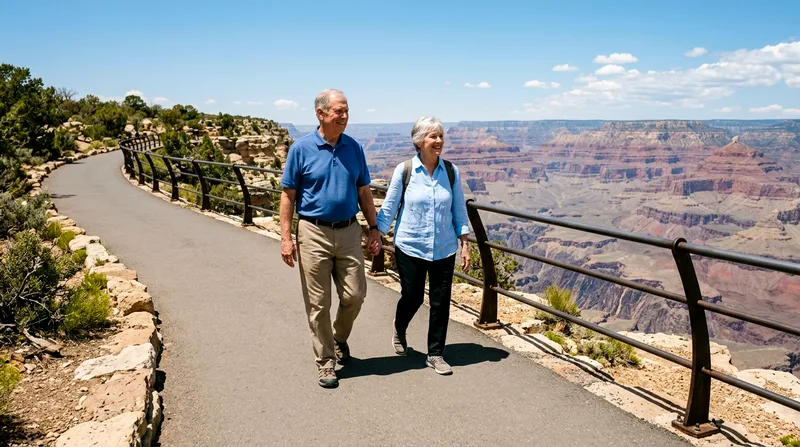
This plan suits solo travelers who want one meaningful hike without committing to a multi-day backcountry permit, couples who want a mix of sightseeing and one bookable adventure, and families with kids old enough to handle a few miles of uneven trail (Bright Angel Trail's upper section works for most kids 7 and up with good shoes). Senior travelers and those with limited mobility will still get full value — Hermit Road and Desert View Drive offer paved, wheelchair-accessible viewpoints with minimal walking.
European and other international visitors flying into Las Vegas or Phoenix should budget the extra travel day separately; this itinerary assumes you've already arrived at the South Rim. If you're short on time and only want the headline views without a hike, you could compress this into two days — but you'd lose the Bright Angel descent, which is genuinely the best way to understand the canyon's scale. I wouldn't recommend trying to add Antelope Canyon or Horseshoe Bend into this same three days; both sit roughly 2.5 hours east near Page, Arizona, and deserve their own day rather than a rushed add-on.
Day 1: Arrival and South Rim Orientation
Day one is about getting oriented without overdoing it, especially if you've just driven in from Las Vegas (about 4.5 hours, 275 miles) or Phoenix (about 3.5 hours, 230 miles).
Day 2's guided hike is the most physically demanding part of this 3 day Grand Canyon itinerary, while Day 1 and Day 3 stay mostly on paved, accessible terrain.
3 day Grand Canyon itinerary: daily activities, duration, and difficulty compared
| Day | Main Activity | Duration | Difficulty |
|---|---|---|---|
| Day 1 | Rim viewpoints and Village orientation | 4-5 hours | Easy |
| Day 1 evening | Sunset at Hopi Point or Yaki Point | 1-2 hours | Easy |
| Day 2 | Guided hike on Bright Angel Trail | 4-6 hours | Moderate to strenuous |
| Day 3 | Desert View Drive scenic stops | 3 hours | Easy |
| Day 3 optional | Helicopter or airplane tour | 25-50 min flight | Easy (seated) |
| Day 3 optional | Half-day smooth-water rafting | 4-5 hours | Easy to moderate |
Durations are typical and exclude travel time between the South Rim and Las Vegas or Phoenix; check seasonal shuttle and trail closures before you go.
Morning and afternoon
Arrive at Grand Canyon Village by early afternoon if possible. Stop first at the Grand Canyon Visitor Center near the South Entrance to pick up a park map and check the day's ranger program schedule — these are free and genuinely worth attending, often covering condor recovery or geology at Mather Point. From there, walk the short, paved path to Mather Point itself, the first viewpoint most visitors reach and usually the most crowded between 10am and 2pm. Continue half a mile west to Yavapai Point, which has a smaller geology museum and, in my opinion, a better unobstructed view with fewer people jostling for the rail. Spend the rest of the afternoon riding the free Village Route shuttle to get a feel for Grand Canyon Village's lodges, the historic El Tovar, and the rim trail connecting them.
Evening
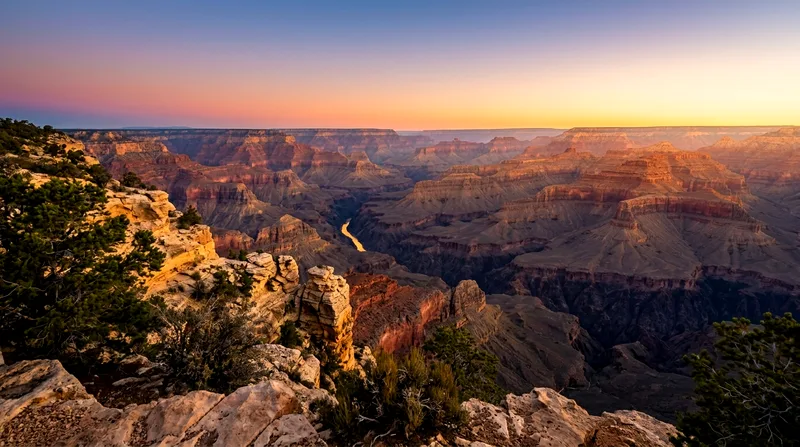
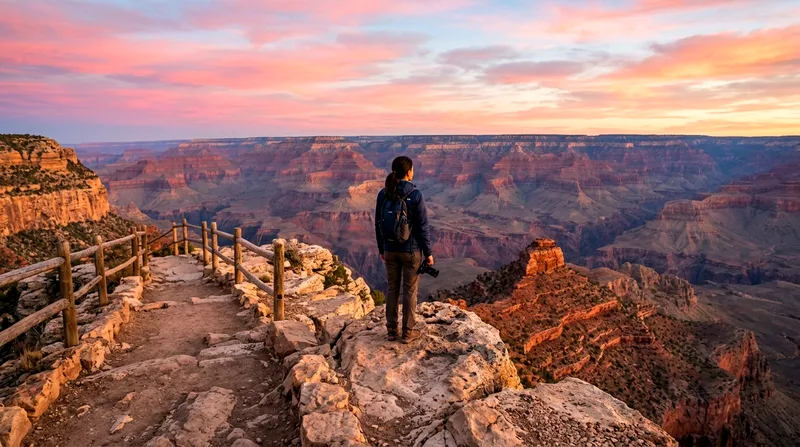
Book a sunset viewpoint visit at Hopi Point or Hermits Rest, both reached via the Hermit Road shuttle (closed to private vehicles March through November). Hopi Point is the widest, most photographed sunset spot on the South Rim, which means arriving 45 minutes before sunset to get a decent rail position. If you'd rather skip the crowds, Yaki Point to the east offers a similar show with a third of the people. This is also the night to lock in tomorrow's guided hike reservation if you haven't already — permits and guide slots for Bright Angel fill up, particularly in spring and fall.
Day 2: Guided Hike and Canyon Exploration
This is the physical heart of the itinerary and the day worth planning around.
Morning and afternoon
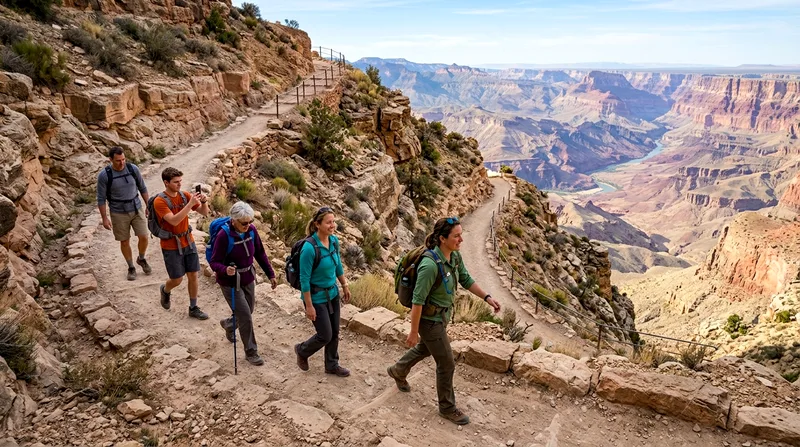
Start early — by 7am in summer, to avoid hiking in full sun and heat, or 8am in cooler shoulder seasons. The Bright Angel Trail, starting right at Grand Canyon Village, is the most reliable choice for a day hike: it has two seasonal water stations (Mile-and-a-Half Resthouse and Three-Mile Resthouse, both closed in winter) and shade in sections, unlike the more exposed South Kaibab Trail. A guided half-day hike to Three-Mile Resthouse and back covers about 6 miles round trip and 2,120 feet of elevation change — a genuinely tiring but manageable outing for reasonably fit hikers, with a guide who'll explain rock layers from the Kaibab Limestone down to the Redwall. If you want the classic contrast, descend via South Kaibab (steeper, no water, better views) and ascend via Bright Angel — but that's an 8-plus mile full-day commitment best left to experienced hikers in cooler months.
Less confident hikers or anyone traveling with young children should stick to the first 1.5 miles of Bright Angel to Mile-and-a-Half Resthouse and turn back — still a solid three-hour round trip with real canyon immersion, none of the exposure risk further down.
Evening
Legs will be sore. Keep it simple: dinner at Grand Canyon Village (the Bright Angel Lodge dining room or El Tovar if you booked ahead — reservations for El Tovar often need to be made weeks out), then an easy stroll along the paved Rim Trail toward Yavapai Point for a low-effort sunset that doesn't require another steep climb. Skip Hermit Road tonight; your knees will thank you.
Day 3: Scenic Drives and Optional Adventures
Your last day is where the optional bookable experiences — the ones that justify calling this a tour-package-style trip rather than just a hiking weekend — come in.
Morning and afternoon
If you booked a helicopter tour or a mule ride, this is the morning for it (see below) — most operate early to avoid afternoon winds and thermal turbulence over the inner canyon. If you're skipping the splurge activity, drive Desert View Drive instead: 25 miles east along the rim, stopping at Grandview Point, Moran Point, and the Tusayan Museum, ending at the 70-foot Desert View Watchtower with arguably the single best panoramic view on the South Rim, including a rare glimpse of the Colorado River itself winding through the inner gorge. Budget three hours round trip with stops, longer if the Watchtower's gift shop and small museum interest you.
Evening
Head back toward the South Entrance in the late afternoon, timing your drive out to avoid sunset glare heading west. If you still have energy, one last stop at Lipan Point along Desert View Drive gives a quieter, less crowded alternative to Hopi Point for a final sunset before the long drive back to Las Vegas, Phoenix, or Flagstaff.
Getting Around the Grand Canyon
Inside the park, the free shuttle system is good, not great. The Village Route and Kaibab Rim Route run year-round; Hermit Road Route runs March through November when the road closes to private cars. Buses come every 15–30 minutes depending on route and season, and during peak summer months you can wait 20 minutes just to board at popular stops. If you're not up for standing and waiting, renting a bike from the Village (around $45 per day, including helmet) covers the paved Greenway Trail along the rim and skips the shuttle lines entirely.
Driving your own car still works for Desert View Drive year-round and for Hermit Road outside its closure months. Parking at Grand Canyon Village fills by mid-morning in summer, so get there before 9am or use the free Tusayan shuttle (seasonal) from outside the park gates. I'd avoid trying to drive yourself to sunset viewpoints on Hermit Road during peak season — you'll circle for parking and miss the light entirely.
Where to Base Yourself
Staying inside the park at Grand Canyon Village (Bright Angel Lodge, Maswik Lodge, Thunderbird, Kachina, or El Tovar) saves you the most time — you're walking distance from the rim trail and the Bright Angel trailhead, which matters hugely on hike day. Rooms run roughly $150–$450 a night depending on lodge and season, and they book out months ahead for summer.
Tusayan, seven miles south of the South Entrance, is the fallback if in-park lodges are full — slightly cheaper, with a free shuttle into the park, but you lose the ability to walk to viewpoints at odd hours. Williams and Flagstaff, 60 and 80 miles south respectively, are budget options with chain hotels from around $90–$130 a night, but you're adding an hour-plus each way, which eats into your three days. For a trip this short, I'd pay the premium to stay inside the park rather than save money in Williams and lose half a travel day to driving.
Optional Bookable Experiences
A three-day trip has room for exactly one premium add-on without the schedule feeling rushed. Pick based on what you actually want: aerial perspective, river time, or a different way to experience the inner canyon without hiking.
Colorado River rafting and mule rides
Full river rafting trips through the Grand Canyon run multiple days (some stretch to two weeks) and need booking up to a year ahead through authorized concessioners — not realistic within this itinerary. What does fit is a half-day smooth-water rafting trip on the stretch above Lees Ferry, or a mule ride along the rim or partway into the canyon from the South Rim corrals, which also require advance booking, often months out for the popular Phantom Ranch overnight trip. If mule rides are full, as they often are for walk-up requests, a guided half-day hike on Bright Angel remains the better and more flexible substitute. Check current rafting and mule ride availability directly, since slots are limited and fill well ahead of summer.
Frequently asked questions
What should I do on each day of a 3-day Grand Canyon trip?
Day 1 covers arrival and rim orientation — Mather Point, Yavapai Point, and a sunset viewpoint. Day 2 is for a guided hike into the canyon on Bright Angel Trail, followed by an easy rim walk in the evening. Day 3 is Desert View Drive plus one optional activity like a helicopter tour or half-day rafting trip, finishing with a last sunset before leaving the park.
Which hiking trails are best for a 3-day visit?
Bright Angel Trail is the best fit for this timeline — it has seasonal water stops and shade, and you can turn around at 1.5 or 3 miles depending on fitness. South Kaibab Trail offers better views but no water and more sun exposure, making it riskier for a single day hike without strong preparation. Save a Rim-to-Rim hike for a dedicated multi-day trip.
Where should I stay during a 3-day Grand Canyon trip?
Staying inside the park at Grand Canyon Village — at Bright Angel Lodge, Maswik Lodge, or El Tovar — saves the most time since you're steps from the rim trail and the Bright Angel trailhead. Tusayan, seven miles south, is a solid backup with a shuttle into the park; Williams and Flagstaff are cheaper but add over an hour of driving each way.
What adventure activities can I book for 3 days?
A helicopter or fixed-wing airplane tour over the canyon fits easily into a morning slot on Day 3. Half-day smooth-water rafting trips above Lees Ferry also work within three days. Full multi-day river rafting and the Phantom Ranch mule ride both require booking months to a year ahead and don't fit a short trip.
Is 3 days enough time to see the Grand Canyon?
Three days is enough to properly cover the South Rim: major viewpoints, one meaningful hike below the rim, and one bookable adventure activity. It's not enough to add the North Rim, which sits over four hours away and closes seasonally, or to do a multi-day river rafting trip — those need separate, dedicated trips.