Plan your solo Grand Canyon trip with a 3-day itinerary, safety tips, group tours for solo travelers, and practical advice for visiting alone.
Who This Itinerary Is For
Grand Canyon solo travel works well for a specific kind of visitor: someone comfortable eating dinner alone, driving a few hours between stops, and setting their own pace on a trail. This three-day itinerary assumes you're flying into Phoenix or Las Vegas, renting a car, and focusing on the South Rim — by far the more accessible and better-served side for a solo trip, with more shuttle routes, lodging, and ranger programs than the North Rim.
It's built for independent travelers who still want some structure. You'll get specific timings, one bookable experience per day worth reserving ahead, and backup plans for heat, fatigue, or bad weather. If you're picturing total isolation, recalibrate: Grand Canyon Village sees enough foot traffic that you're rarely more than a few hundred yards from other hikers, and most popular trails have cell coverage near the rim.
This isn't the itinerary for someone chasing a North Rim wilderness experience or planning a multi-day backcountry permit hike alone — that's a different, much more serious undertaking requiring a backcountry permit from the National Park Service, cached water, and ideally a hiking partner. This is for a focused, well-paced long weekend that respects both your independence and the canyon's genuine hazards.
Day 1: South Rim Orientation
Treat your first day as an orientation lap, not a hiking day. Altitude at the South Rim sits around 7,000 feet, and even fit travelers notice shortness of breath for the first 24 hours.
Morning: Arrival and lodging check-in
If you're driving from Phoenix (about 3.5 hours) or Las Vegas (around 4.5 hours), aim to arrive by early afternoon rather than pushing a late-night drive — deer and elk cross Highway 64 and 180 at dusk, and solo night driving in unfamiliar terrain isn't worth the risk. Check into your lodging, drop your bags, and grab lunch at one of the cafeterias or delis in Grand Canyon Village. Refill water bottles immediately; dehydration starts creeping in at altitude before you even notice thirst.
Afternoon and evening: Viewpoint exploration
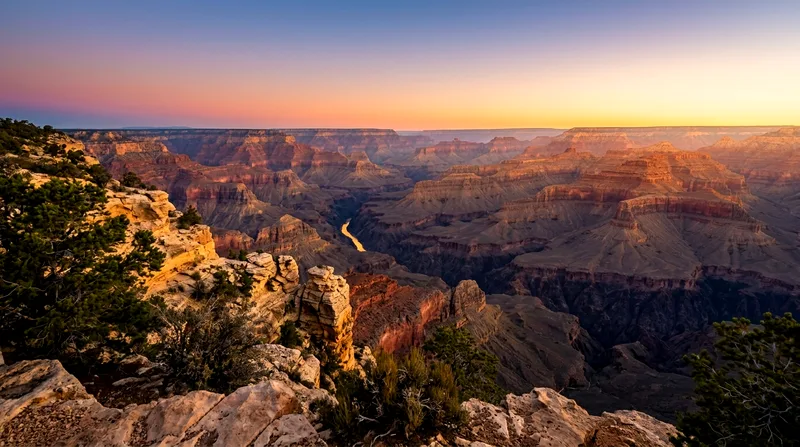
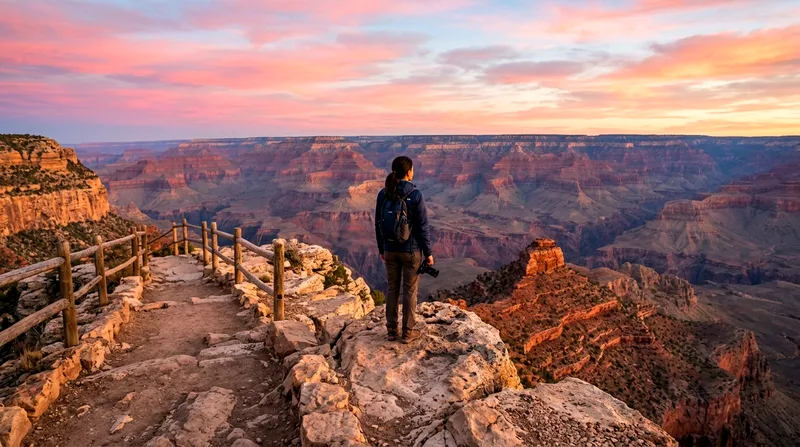
Use the free park shuttle (Hermits Rest Route or Village Route) to visit Mather Point, Yavapai Point, and Hopi Point without driving yourself. This is where solo travel at the Grand Canyon feels easiest — shuttles are full of other visitors, families, and tour groups, so you're never isolated, and you don't have to coordinate parking. Book a sunset viewpoint tour for this evening if you'd rather not navigate shuttle timing alone; small-group sunset tours typically run 2–3 hours and include a knowledgeable guide pointing out geology you'd otherwise miss. If it's cloudy or cold, skip the sunset chase and instead visit the Yavapai Geology Museum, which stays open into early evening and gives context for tomorrow's hike.
Day 2: Hiking and Canyon Views
This is your main hiking day, and the one where solo hiking Grand Canyon safety actually matters. The golden rule here, repeated by rangers constantly, is: the canyon is optional, the return trip is mandatory. Hiking down is easy; hiking back up in rising heat is where people get into trouble.
Morning: Trail selection and early start
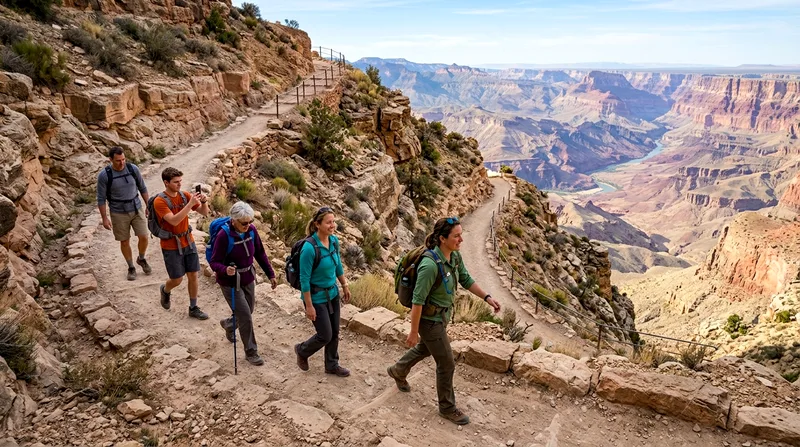
Start by 6:30–7am, especially between May and September when rim temperatures already feel warm by 9am and canyon-floor temperatures can exceed 100°F (38°C). For a solo day hike, South Kaibab Trail to Ooh Aah Point (1.8 miles round trip, roughly 1.5–2 hours) or Cedar Ridge (3 miles round trip, about 3 hours) gives you genuine canyon views without river-level heat exposure. Bright Angel Trail is the better choice if you want shade and seasonal water refill stations — it has rest houses at 1.5 and 3 miles with water available roughly May through September. Do not attempt a rim-to-river round trip solo in one day; rangers report dozens of heat-related rescues annually, disproportionately among hikers who underestimated the climb back. Carry at least 1 liter of water per hour of hiking, electrolyte tablets, and a hat — this is non-negotiable, not optional gear advice.
Afternoon and evening: Rest and reflection
Back on the rim by early afternoon, rest — your legs will feel it more than you expect, even on short trails, because of the elevation gain on the return. Spend the afternoon at the Desert View Watchtower (about 25 miles east along Desert View Drive, roughly 45 minutes by car or scenic drive shuttle), which gives a different, less crowded perspective than the Village viewpoints. If your legs are too tired for more walking, an alternative is a ranger-led talk at the visitor center — these are free, run multiple times daily, and require zero physical effort. In the evening, eat at El Tovar's dining room or a casual spot in the Village; solo diners are completely normal here, and bar seating at El Tovar is a comfortable, low-key way to eat without feeling conspicuous.
Day 3: Colorado River and Departure
Your last day should be lower-effort — partly because your legs need it, partly because this is the day most solo travelers extend into a multi-park loop.
The three days move from orientation to hiking to low-effort sightseeing, front-loading physical activity when you're freshest.
Grand Canyon solo travel itinerary: 3-day overview of morning, afternoon, and evening plans
| Day | Morning | Afternoon | Evening |
|---|---|---|---|
| Day 1 | Arrival, check-in, lunch in the Village | Shuttle to rim viewpoints | Sunset tour or geology museum |
| Day 2 | Early trail start (South Kaibab or Bright Angel) | Rest, short drive to Desert View | Dinner in the Village, early night |
| Day 3 | Rafting or scenic flight | Departure drive or pivot to next park | Arrival at next stop or flight home |
Timings assume South Rim access only; North Rim adds significant driving time and is closed in winter.
Morning: Guided river or scenic tour
Book a half-day smooth-water rafting trip on the Colorado River or a scenic helicopter/small-plane tour for this morning — both are ideal "join alone" bookings since groups are typically strangers brought together by the tour operator, not friend groups. Smooth-water rafting trips (as opposed to whitewater) run through calmer sections near Glen Canyon Dam and typically take 3–4 hours including transport, with no rapids and no prior experience needed. If you prefer aerial views and have the budget, a helicopter tour over the canyon typically runs 30–50 minutes and gives you a sense of scale that's impossible from the rim. Weather-dependent alternative: if flights are grounded or rafting is fully booked, the IMAX-format film at the National Geographic Visitor Center in Tusayan (just outside the park) gives solid geological context in about 35 minutes.
Afternoon: Departure or extended stay
If you're flying out of Phoenix or Vegas same-day, budget the full drive time plus a buffer — don't schedule a flight within 2 hours of your expected arrival at the airport. If you have more days, this is the natural pivot point for a multi-park itinerary: Sedona is about 2.5 hours south and pairs well with red-rock hiking and a lighter pace; Antelope Canyon and Horseshoe Bend near Page are roughly 2.5 hours northeast; Zion National Park and Bryce Canyon are both reachable in a long day's drive (around 4.5–5 hours combined if routed through Page) and work well as a second leg for travelers doing a longer loop. Monument Valley, about 3.5 hours from the South Rim, is worth it only if you have an extra day — it's a long drive for a few hours of sightseeing otherwise.
Getting Around as a Solo Traveler
A rental car is the practical backbone of Grand Canyon solo travel — the park's free shuttle system covers the Village and rim roads well, but you need your own vehicle to reach the park at all, and to reach Desert View or outlying trailheads like South Kaibab (which has no parking lot and requires the shuttle anyway). Expect $45–70/day for an economy rental from Phoenix or Las Vegas, plus gas; the drive itself is straightforward interstate and two-lane highway, nothing technically demanding.
Inside the park, park your car once at your lodging or a day-use lot and rely on the shuttle for the rest of the day — this is the single best piece of logistical advice for a solo traveler, since it removes parking stress and puts you around other people constantly. Don't rent an RV for a first solo trip here; the Village's roads and lots weren't built for long vehicles, and maneuvering one alone adds stress you don't need. If you're flying in without a car at all, shuttle services from Phoenix Sky Harbor and Flagstaff exist but run limited daily schedules — check current times before relying on one, since missing the return shuttle leaves you stranded for a full day.
Where to Base Yourself
Where you sleep shapes how much of each day you actually get to use, and this matters more for solo travelers managing their own logistics without someone else to share driving or planning.
South Rim lodging options
Staying inside the park at Grand Canyon Village — at places like Bright Angel Lodge, Maswik Lodge, or the historic El Tovar — costs more (roughly $150–450/night depending on season and property) but saves you the daily drive and puts you within walking distance of trailheads and the shuttle hub. For solo travelers, this proximity matters: you're not driving tired after a hike, and you can duck back to your room between activities. El Tovar is the splurge option with real character; Maswik is more basic and better value. Book 3–6 months ahead for summer, since in-park lodging sells out well before the shoulder seasons do.
Nearby towns and alternatives
Tusayan, about 7 miles south of the park entrance, has chain hotels in the $120–250/night range and is a reasonable budget alternative with a free shuttle into the park during peak season. Williams, roughly an hour south, is cheaper still and has the Grand Canyon Railway as a scenic (if slower) alternative to driving. I wouldn't recommend Williams if you're tight on time, though — the train adds a fixed schedule that limits flexibility, which cuts against one of the main advantages of traveling solo in the first place.
Group Tours and Bookable Experiences
Grand Canyon group tours for solo travelers are genuinely one of the best features of this destination — unlike a lot of national parks, there's a dense ecosystem of day tours, small-group hikes, and scenic flights designed for people booking individually, not just couples or families. This is where solo travel at the Grand Canyon stops feeling solitary, if you want it to.
Sunset and sunrise small-group tours (typically 8–20 people, 2–4 hours) are the easiest entry point — you show up alone, meet a mixed group, and leave with context you wouldn't get wandering viewpoints by yourself. Mule rides into the canyon are bookable solo but require advance reservations, often many months out for peak season, and have a minimum weight limit (generally 200 lbs/90 kg including gear) — check current requirements before counting on this one. Smooth-water rafting and scenic flights, mentioned on Day 3, almost always fill with solo bookings mixed together, so you won't be the odd one out.
What I'd skip: large 40+ person bus tours that rush through five viewpoints in two hours. They're inexpensive and easy to book, but you spend more time reboarding the bus than actually at the rim, and the pace defeats the purpose of traveling solo in the first place — you lose the ability to linger exactly where you want. Compare current tour options and prices before you book, since availability shifts seasonally and operators change their schedules.
Frequently asked questions
Is the Grand Canyon safe for solo travelers?
Yes, particularly on the South Rim, which has heavy foot traffic, shuttle service, and ranger presence throughout the main season. The real risks aren't other people — they're heat exhaustion, dehydration, and overestimating hiking ability on steep trails. Solo female travelers generally report feeling comfortable in the Village and on rim trails; standard precautions apply, like sharing your hiking plan with someone and avoiding isolated trail sections after dark.
What are the easiest trails for solo hiking?
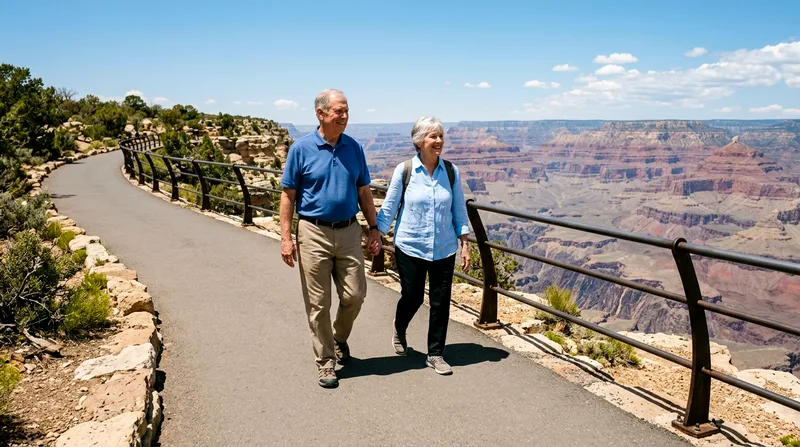
The Rim Trail is flat, paved in sections, and runs about 13 miles along the South Rim with shuttle access, making it the lowest-risk option. For below-rim hiking, South Kaibab to Ooh Aah Point (1.8 miles round trip) or Bright Angel to the 1.5-Mile Resthouse are manageable solo day hikes with clear turnaround points and, on Bright Angel, seasonal water stations.
Where should solo travelers stay at Grand Canyon?
Staying inside Grand Canyon Village (Maswik Lodge or Bright Angel Lodge) gives you walkable access to trailheads and shuttles, which simplifies logistics considerably when you're managing everything yourself. Budget travelers can base in Tusayan, 7 miles south, for lower rates with a seasonal shuttle into the park.
How do solo travelers get around the Grand Canyon?
Rent a car for the drive in and out, then park it and use the free in-park shuttle system (Village, Kaibab/Rim, and Hermits Rest routes) for daily movement. This removes parking stress and keeps you around other visitors rather than navigating alone in a car the whole time.
Are there group activities for solo travelers at Grand Canyon?
Yes — small-group sunset/sunrise tours, smooth-water rafting trips, scenic flights, and ranger-led programs are all structured for individual bookings and mix solo travelers together naturally. These tend to be a better fit than large bus tours, which move fast and leave little time at any single viewpoint.