Make the most of a one day Grand Canyon itinerary with hour-by-hour timing, top South Rim viewpoints, a day hike option, and bookable tours.
Who This Itinerary Is For
A one day Grand Canyon itinerary is a compromise, and it's worth being honest about that upfront. You will not raft the Colorado River, you will not descend to Phantom Ranch, and you won't see the North Rim — it's a separate, 4.5-hour drive away and closed to vehicle traffic from mid-October through mid-May. What you can do in 24 hours is hit three or four of the best South Rim viewpoints, walk a meaningful stretch of the Rim Trail, descend partway into the canyon on the Bright Angel Trail, and catch one genuinely memorable sunrise or sunset.
This plan suits solo travelers stitching the Grand Canyon into a bigger Southwest loop — Sedona, Monument Valley, maybe Zion or Bryce Canyon on the same trip — as much as it suits families with kids over age six or seven who can handle a few miles of walking. Senior travelers who want the views without strenuous hiking can simply swap the trail segment for more time along the paved Rim Trail, which is flat and accessible in long sections. European visitors flying into Phoenix or Las Vegas and renting a car for a week often land here with exactly one day to spare, and this is the itinerary built for that traveler.
If you're the type who needs to see everything a place offers before leaving, one day will frustrate you. Come back for the North Rim, or add a second day for a longer hike. But if your goal is to understand why this canyon earns the reputation it has, 24 hours — used deliberately — gets you there.
Day 1: Hour-by-Hour Breakdown
Treat this as a flexible skeleton, not a rigid schedule. Sunrise and sunset times shift by season — check local times for your travel dates, since they swing by more than two hours between June and December.
For a one day Grand Canyon itinerary, Mather Point wins for sunrise convenience, Lipan Point wins for sunset views of the river, and Bright Angel Trail is the only realistic hiking option within time limits.
One day Grand Canyon itinerary: viewpoints and activities compared
| Stop | Best Time | Distance/Effort | Crowds | Access |
|---|---|---|---|---|
| Mather Point | Sunrise | Short walk from parking | Heavy | Private car |
| Yavapai Geology Museum | Mid-morning | Flat, under 1 mile | Moderate | Shuttle or car |
| Rim Trail (Village section) | Late morning | 2.5 miles, flat, paved | Moderate | Walk or shuttle |
| Bright Angel Trail (to 1.5-Mile Resthouse) | Midday | 3 miles round trip, steep | Moderate | Walk from Village |
| Hermit Road viewpoints | Afternoon | Multiple stops, easy | Moderate | Shuttle only (seasonal) |
| Lipan Point | Sunset | Short walk from parking | Light-Moderate | Private car |
| Desert View Watchtower | After sunset | Short walk, stairs inside | Light | Private car |
Crowd levels and seasonal shuttle rules vary; confirm Hermit Road access and sunset times before you go.
Early Morning: Sunrise and Mather Point
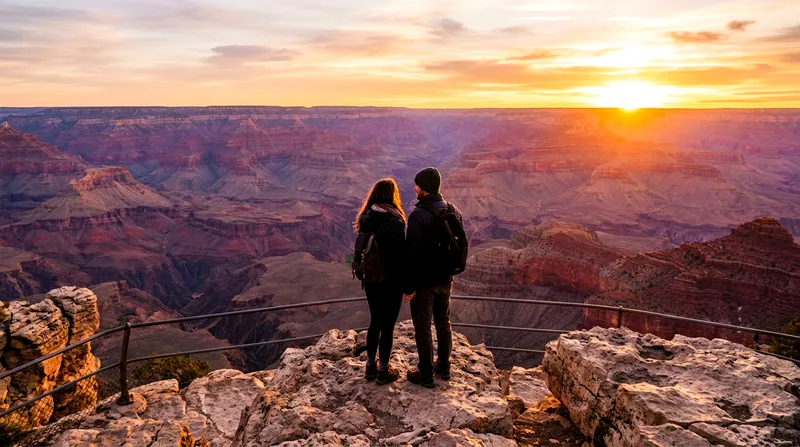
Arrive at Mather Point by 5:30 AM in summer, or closer to 6:45 AM in winter — aim to be in place 20 minutes before official sunrise. Mather Point is the most visited overlook in the park for good reason: it's a two-minute walk from its own parking area, close to the main visitor center, and offers a wide, unobstructed view east over the canyon's inner gorge. The trade-off is crowds; by sunrise in peak season (June through August), you'll have company. If you want more solitude, Yaki Point or Grandview Point along Desert View Drive offer similar light with fewer people, though Yaki Point requires a shuttle since private vehicles aren't allowed on that road. Bring a layer — even in July, rim elevation sits around 7,000 feet and mornings run cold, often in the 40s°F before sunrise.
Mid-Morning: Yavapai Geology Museum and Rim Trail
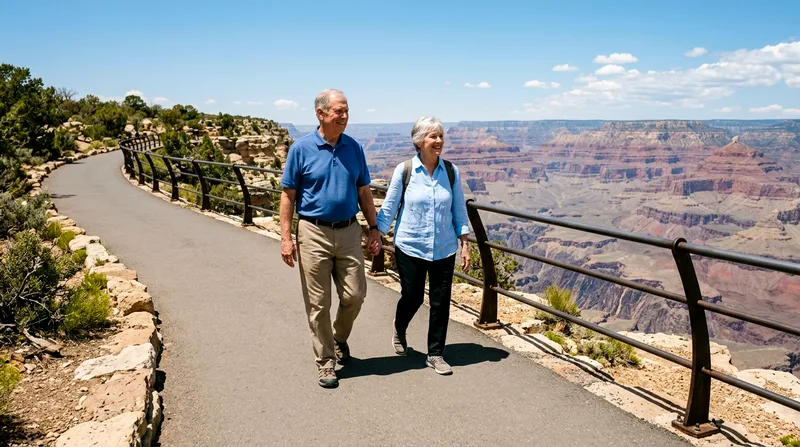
By 9:00 AM, walk or shuttle to the Yavapai Geology Museum, about a mile west of Mather Point along the paved Rim Trail. It's small — you'll spend 20 to 30 minutes inside — but the exhibits on the canyon's rock layers make the scenery that follows more legible, and the museum's windows frame one of the better formal views on the South Rim. From there, continue on the Rim Trail toward Grand Canyon Village. This stretch is flat, fully paved, and roughly 2.5 miles, doable by anyone reasonably fit, including most seniors and kids. Budget 45 minutes to an hour if you're stopping for photos, which you will be.
Afternoon: Bright Angel Trail Hike or Viewpoint Loop
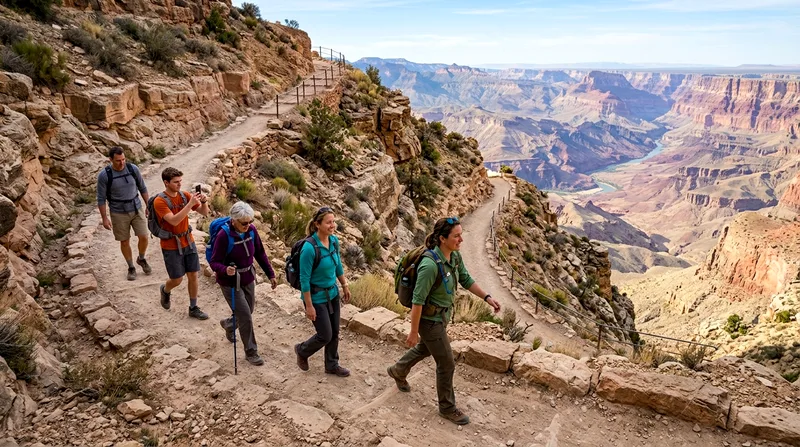
This is the decision point of the day. The Bright Angel Trailhead sits right in Grand Canyon Village, near Bright Angel Lodge, so there's no logistics problem getting there. The trail itself is steep, exposed, and deceptively hard on the way back up — rangers aren't exaggerating when they say more people get airlifted off this trail than almost any other in the National Park System. For a one-day visit, the sensible target is the 1.5-Mile Resthouse (round trip about 3 miles, 2–3 hours) or, if you're fit and started early, the 3-Mile Resthouse (round trip 6 miles, 4–5 hours with the climb back). Do not aim for Indian Garden or Plateau Point unless hiking is your main goal for the day — it's a 12-mile round trip that eats your whole afternoon and leaves nothing for sunset.
If hiking isn't your priority, skip the trail entirely and drive Hermit Road instead (shuttle-only March through November), stopping at Hopi Point, Powell Point, and Pima Point. This covers more visual ground with far less physical effort — a reasonable trade for families with young kids or anyone with knee or hip issues.
Evening: Sunset at Lipan Point or Hermit Road
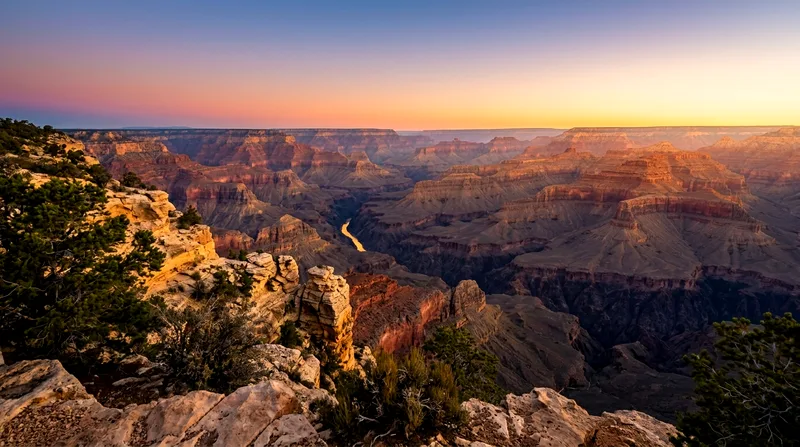
Head toward Desert View Drive for sunset at Lipan Point, about 25 minutes by car east of the Village. Lipan Point is wider and less crowded than Mather Point, with a clear view of the Colorado River itself — a rarity from the South Rim, where the river is often hidden by intervening cliffs. If you're low on energy or already west of the Village from your Hermit Road loop, Hopi Point works nearly as well for sunset and skips the extra drive. On your way back, if you still have light and legs left, the Desert View Watchtower (another 10 minutes east of Lipan Point) is worth 15 minutes — it's a 1932 stone structure with a climbable interior and one more layer of elevation on the view.
Getting Around the South Rim
Distances on the South Rim are longer than they look on a park map, and this trips up a lot of first-time visitors who assume they can walk between every viewpoint.
Shuttle Buses and Free Transit Options
The park runs four free shuttle routes: Village Route (Blue), Kaibab Rim Route (Orange) to Yaki Point and the South Kaibab Trailhead, Hermits Rest Route (Red) along Hermit Road, and a Tusayan Route (Purple) connecting to the gateway town outside the park entrance. Buses run roughly every 15–30 minutes depending on route and season, starting about an hour before sunrise. They're reliable but not fast — expect waits of 10 to 20 minutes at busier stops in summer, and buses can fill up at peak viewpoints, meaning you sometimes let one pass and wait for the next.
Self-Driving vs. Guided Tours
Desert View Drive (toward Lipan Point and the Watchtower) is open to private cars year-round, which makes self-driving straightforward for that part of the day. Hermit Road, by contrast, is shuttle-only for most of the year, so factor that into timing — don't plan to drive yourself to Hopi Point in July. Parking at Grand Canyon Village fills by mid-morning in peak season; arriving before 8:00 AM solves this. Guided bus tours exist for travelers who'd rather not deal with parking or shuttle logistics at all, and they make sense for solo travelers or couples without a rental car, though they move on a fixed schedule that limits time at any one stop.
Where to Base Yourself
Where you sleep the night before (or after) shapes how much of this itinerary is actually doable.
Grand Canyon Village Lodging and Dining
Staying inside the park, in Grand Canyon Village, is the single best decision you can make for a one-day visit. Lodges like Bright Angel Lodge, El Tovar, or Maswik Lodge put you within walking distance of the Bright Angel Trailhead and the Rim Trail, cutting out a 7-mile drive from the gateway town of Tusayan each way. Rooms book out months ahead for summer dates and run from roughly $130 to $450 a night depending on the lodge and season — El Tovar is the historic, pricier option; Maswik is more basic and budget-friendly. If in-park lodging is sold out, Tusayan is the next-best base, 10–15 minutes from the entrance gate.
Proximity to Trailheads and Viewpoints
Compare this to staying in Williams or Flagstaff, both over an hour from the rim — fine for a multi-day trip, a poor choice if you've only got one day and need every hour on the rim itself. Basing in the Village means you can do sunrise at Mather Point, walk back for breakfast, hike Bright Angel, and still make it to Lipan Point for sunset without ever really driving more than 20 minutes at a stretch.
Bookable Experiences Worth Your Time
A one day Grand Canyon itinerary doesn't need heavy pre-planning, but one or two bookable add-ons genuinely improve the day rather than just filling time. A helicopter tour over the canyon is the obvious one — flights typically run 25 to 50 minutes and cover ground (the Dragon Corridor, sections toward the Dam area) that no amount of rim walking replicates. They're not cheap, generally several hundred dollars per person, and they're loud and brief, which bothers some travelers philosophically more than practically. If you want the aerial perspective, book it for first thing in the morning, before wind picks up in the afternoon and flights start getting delayed or canceled.
A mule ride into the canyon is the other classic option, but it requires booking months — sometimes close to a year — ahead for peak season, which makes it impractical to add to a spontaneous one-day plan. Skip it unless you planned specifically around it. Ranger-led walks along the Rim Trail are free, require no booking, and are genuinely worth timing your afternoon around if one lines up with your schedule — check the visitor center board when you arrive.
Compare current helicopter tours and shuttle-based sightseeing options before you book, since availability shifts by season and time slots fill fast in summer.
Frequently asked questions
Is one day enough to see the Grand Canyon?
It's enough to see the South Rim well — several viewpoints, a stretch of the Rim Trail, and a partial hike into the canyon. It's not enough for the North Rim, a river trip, or a full rim-to-river hike. Treat a one-day visit as a solid introduction, not a complete experience, especially if you're comparing it to multi-day trips people take at Zion or Yosemite.
What are the best viewpoints to visit in one day?
Mather Point for sunrise, Yavapai Point for the geology context, and Lipan Point for sunset cover the essentials without excessive driving. If you have extra time, add Hopi Point or Pima Point along Hermit Road for more river-adjacent views.
Can you hike the Bright Angel Trail in one day?
You can hike a portion of it in a day, but you should not attempt the full trail to the river and back — that's a two-day trip with an overnight at Phantom Ranch for most hikers. The 1.5-Mile or 3-Mile Resthouse turnaround points are realistic and well-marked day-hike goals.
Where should I watch sunrise and sunset?
Mather Point or Yaki Point work well for sunrise due to their east-facing orientation and easy access. For sunset, Lipan Point or Hopi Point give wide, unobstructed views west, with Lipan Point adding a rare glimpse of the Colorado River itself.
Do I need to book tours in advance for a one-day visit?
Helicopter tours and mule rides should be booked ahead — mule rides especially, since they often sell out months in advance. Shuttle buses and ranger programs need no booking. Lodging inside the park should be reserved as early as possible, particularly for summer dates.