Pace-friendly Grand Canyon itinerary for seniors with accessible viewpoints, shuttle tips, and low-exertion tours. Plan your comfortable visit today.
Who This Itinerary Is For
This Grand Canyon itinerary for seniors is built for people who want the full visual payoff of the canyon without the knee-punishing descents that dominate most hiking guides. It assumes you can walk half a mile to a mile at a slow pace, with benches along the way, but that you have no interest in — or medical clearance for — the Bright Angel or South Kaibab Trail below the rim.
It also assumes you're traveling by car or with a tour group, staying one or two nights inside or near the park, and want a realistic, unhurried pace rather than a checklist of twelve viewpoints in one day. That's the honest trade-off: this plan covers the South Rim thoroughly over two days instead of rushing both rims in one.
If you're traveling with grandchildren who want more movement, or a spouse who wants to hike into the canyon a few hundred feet, this itinerary still works — you simply split up for two or three hours and meet back at a shuttle stop. The South Rim's infrastructure makes that kind of splitting-up easy, unlike Zion National Park, where the main canyon shuttle has far fewer accessible branch points, or Antelope Canyon, where tour groups move as a single unit through narrow slot passages that aren't wheelchair-friendly at all.
One caution upfront: elevation here sits around 7,000 feet at the rim. That's enough to cause shortness of breath or mild headaches in some older visitors, especially those with heart or lung conditions. Pace yourself the first day, drink more water than feels necessary, and don't schedule anything strenuous within the first few hours of arrival.
Day 1: South Rim Orientation and Viewpoints
Day one is about orientation, not distance. You'll stay almost entirely within Grand Canyon Village and the stretch of rim immediately east of it, using paved paths and the shuttle rather than your car.
Morning: Sunrise at Mather Point
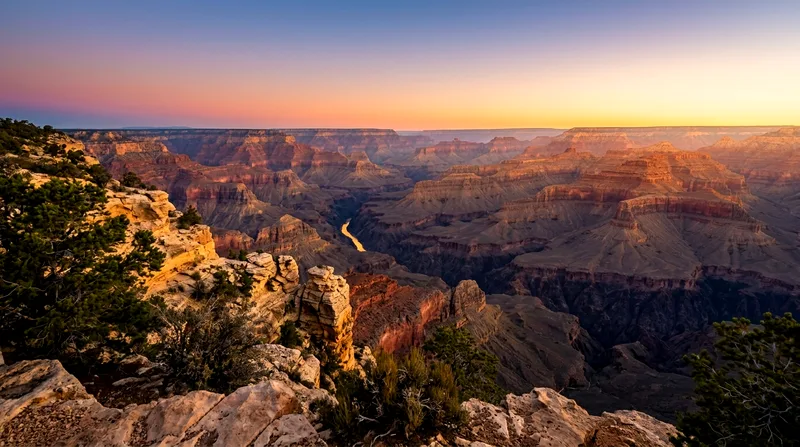
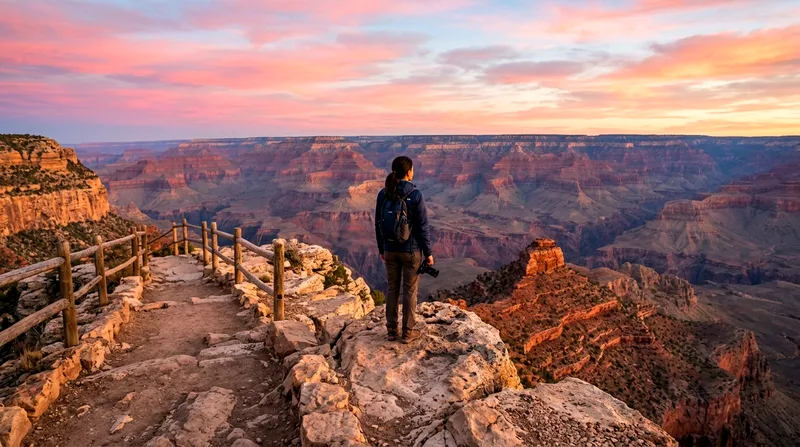
Mather Point is the single best sunrise spot for seniors because it's a two-minute walk from the Canyon Village Visitors Center parking area, fully paved, and has low stone walls rather than open drop-offs in most viewing sections. Sunrise typically falls between 5:30 and 6:45 a.m. depending on season — check the park's posted times, since they shift by over an hour between June and December.
Arrive 20 minutes before sunrise; parking fills fast even in shoulder season, and the lot is small. Bring a light jacket regardless of how warm the afternoon forecast looks — rim temperatures at dawn often sit 30 degrees cooler than midday. There are accessible restrooms at the visitor center, about a 5-minute walk away, which matters more here than almost anywhere else on this itinerary since it's your first stop of the day.
After sunrise, have breakfast at the visitor center café or back at your lodge before doing anything else. Don't plan a long walk on an empty stomach at this elevation.
Afternoon and Evening: Village and Yavapai Point
Spend the late morning exploring Grand Canyon Village itself — the Bright Angel Lodge area has a flat, paved walkway along the rim with multiple benches, historic buildings worth a slow look, and several accessible restroom stops. This is a good two-to-three-hour block with plenty of sitting opportunities.
After lunch, rest at your lodge for an hour if you're feeling the altitude, then take the shuttle (Village Route) to Yavapai Point, about 1.5 miles east. Yavapai Geology Museum here has a paved approach, interior seating, and arguably the best panoramic view on the South Rim because the museum itself is built into the rim's curve. It's a shorter walk than Mather Point and less crowded at midday.
Return to the village by shuttle for an early dinner, then decide whether to go back out for sunset. If you're tired, skip it — Yavapai Point's geology exhibits alone justify the stop, and you'll see plenty more canyon on day two.
Day 2: Scenic Drives and Accessible Stops
Day two shifts east along Desert View Drive, a 25-mile paved road with multiple pullouts — this is where you trade walking for windshield views, which is exactly what a senior-friendly Grand Canyon visit should do on its second day.
Morning: Desert View Drive
Start by 9 a.m., after the first rush of day-trippers but before the heat builds. Desert View Drive has around eight named overlooks between the village and the Desert View Watchtower; you don't need to stop at all of them. Grandview Point, Moran Point, and Lipan Point each have short paved or hard-packed paths under 300 feet from the parking area, with minimal elevation change.
The Desert View Watchtower itself, about 45 minutes from the village by car, has an elevator-free but shallow-stepped interior — if stairs are a problem, the exterior viewing area and gift shop are still worth the stop for the view alone, considered by many the best vista on the entire South Rim because the Colorado River itself becomes visible below.
Driving this route yourself gives you total control over pacing, which matters more here than almost any other day. Compare that to Monument Valley's scenic drive, which requires a rougher dirt road and, in most sections, a guided vehicle — Desert View Drive is simply easier on an aging back and a rental sedan.
Afternoon: Rest and Optional Gentle Activity
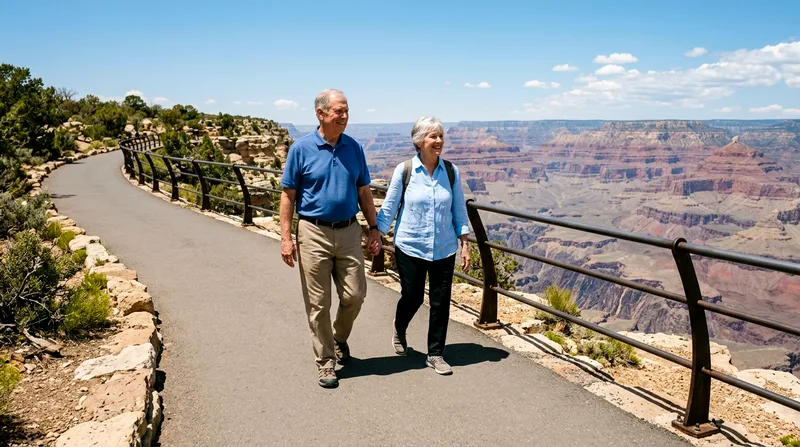
Head back toward the village by early afternoon and rest for at least an hour — the Desert View loop involves more total standing time than it feels like in the moment. For a gentle activity afterward, walk a short, flat segment of the Rim Trail (part of the greater Kaibab/Rim Trail system) between Pipe Creek Vista and Mather Point; this stretch is fully paved and mostly shaded by piñon pine.
If your legs are done for the day, skip the walk entirely and instead take a slow drive to Hermit Road (shuttle-only in peak season, open to private vehicles other times) for a lower-effort scenic finish. Either option beats forcing a sunset hike you'll regret the next morning.
Getting Around: Shuttle and Transportation
The free shuttle system is arguably the single biggest reason the South Rim works so well for a senior-friendly Grand Canyon visit — no other canyon-adjacent destination in this region matches it. Bryce Canyon has a similar but smaller shuttle loop, and Zion's is mandatory for most of the year, but neither covers as many accessible viewpoints per route as the South Rim's four combined lines.
Mather Point and Yavapai Point offer the shortest, flattest walks from parking to view, making them the best first stops for a Grand Canyon itinerary for seniors.
Grand Canyon accessible viewpoints compared for a senior-friendly visit
| Viewpoint | Walk from parking/shuttle | Surface | Seating/shade | Best time to visit |
|---|---|---|---|---|
| Mather Point | 2–5 min | Paved | Benches, limited shade | Sunrise |
| Yavapai Point | 5–8 min | Paved | Indoor seating, museum | Midday |
| Desert View Watchtower | 2–5 min | Paved, shallow steps inside tower | Benches, some shade | Late morning |
| Grandview Point | 3–5 min | Paved/hard-packed | Limited benches | Morning |
| Hermits Rest | 2–4 min (shuttle only, peak season) | Paved | Covered seating | Afternoon |
Walk times and conditions are approximate and can change with trail maintenance or seasonal closures, so confirm current status at the visitor center.
Free Shuttle System Overview
Four color-coded routes — Village, Hermits Rest, Kaibab/Rim, and Tusayan — cover most of the developed South Rim. Buses run roughly every 15–30 minutes depending on route and season, starting before sunrise and continuing past sunset on the Hermits Rest and Village routes. You don't need tickets or reservations; just board at any marked stop.
The Hermits Rest Route is closed to private vehicles from roughly March through November, meaning the shuttle is your only practical way to reach those western viewpoints during peak season — plan for that rather than assuming you can drive yourself.
Accessibility Features and Mobility Assistance
Every shuttle bus has a wheelchair lift or low-floor boarding and designated securement areas — drivers are trained to assist, and you can ask them to wait a few extra seconds if boarding slowly. If you use a wheelchair, scooter, or have a documented mobility limitation, ask at the Canyon Village Visitors Center about a temporary accessibility permit, which allows limited private-vehicle access to otherwise shuttle-only roads like Hermit Road.
Accessible restrooms exist at every major shuttle hub — Market Plaza, Visitor Center, Yavapai Point, and Hermits Rest — so you're rarely more than a 20-minute ride from one.
Where to Base Yourself
For this itinerary, staying inside the park beats staying in Tusayan or Williams, despite the higher nightly rate — it removes a 15-to-30-minute drive from both ends of your day and keeps you near shuttle stops rather than dependent on a car for every movement.
Bright Angel Lodge is the standout choice for seniors: it sits directly on the rim, has ground-floor rooms available (request one when booking), and is a flat two-minute walk to the main Rim Trail. It won't impress anyone looking for modern hotel amenities — rooms are simple, some share bathrooms down the hall, and there's no elevator in the historic section — but the location is unmatched for minimizing walking distance.
If you want more modern comfort, El Tovar and Kachina/Thunderbird Lodges are also rim-adjacent with more consistent accessibility features, though they book out months ahead in peak season (May through September). Avoid the Maswik Lodge's farther-flung rooms if mobility is a concern; some buildings sit a genuine 8–10 minute walk from the main shuttle hub, which adds up over several days.
Optional Bookable Experiences for Seniors
A few structured, low-exertion options are worth reserving ahead rather than improvising, especially in peak season when guided slots fill early.
Guided Ranger Programs
Free ranger-led talks happen daily at the Visitor Center, Yavapai Geology Museum, and sometimes at Desert View, typically 20–45 minutes long with seating available. These require no booking, just check the day's schedule posted at any visitor center, and they're genuinely some of the best context you'll get on the canyon's geology without walking more than a few hundred feet.
Motorcoach and Scenic Drive Tours
Small-group motorcoach tours along Desert View Drive or Hermit Road are worth booking in advance if you'd rather not drive or wait for the standard shuttle — Road Scholar and similar educational travel organizations run multi-day senior-focused itineraries that build in rest stops, narrated history, and accessible vehicles as standard. A scenic motorcoach tour is also the better pick over a helicopter tour if balance, hearing-protection headsets, or getting in and out of a small aircraft is a concern — helicopter flights are spectacular but involve a tighter, lower seat and a noisier cabin than most seniors expect. Compare current tour options and prices before booking, since availability shifts by season.
Frequently asked questions
Is visiting the Grand Canyon with elderly people a good idea?
Yes, with planning. The South Rim's paved Rim Trail, accessible shuttle fleet, and multiple rest facilities make it more manageable than many national parks — far more so than Yosemite's valley floor trails or Zion's Narrows hike. The main risks are elevation (around 7,000 feet) and sun exposure, both manageable with a slower first day, extra water, and shade breaks.
What are the most accessible viewpoints at the Grand Canyon?
Mather Point and Yavapai Point are the two best, both with paved paths under 500 feet from parking or shuttle stops and low walls rather than open edges. Desert View Watchtower's exterior overlook and several pullouts on Desert View Drive, including Lipan Point and Moran Point, are also short, flat walks.
What gentle hikes are suitable for seniors?
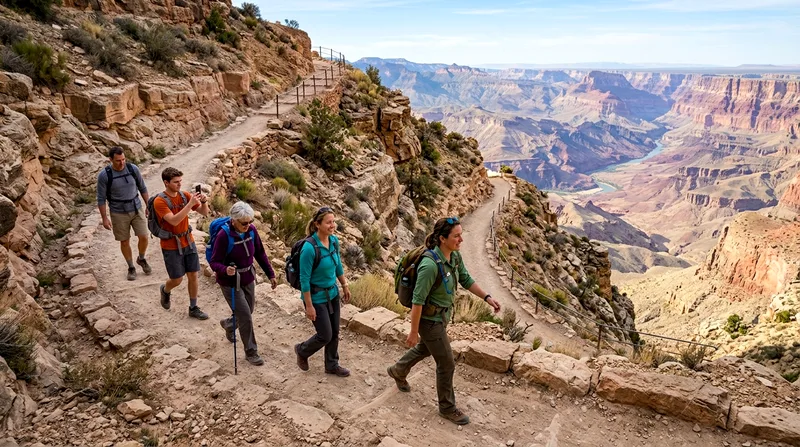
The paved segment of the Rim Trail between Pipe Creek Vista and Mather Point is flat, shaded in parts, and roughly a mile one-way — walk as much or as little as you like since shuttle stops punctuate it regularly. Avoid any descent past the first few hundred feet of the Bright Angel Trail; the climb back out is steep and deceptively tiring even for fit hikers.
How do shuttle systems work at the Grand Canyon?
Four free, color-coded routes run continuously from before sunrise to after sunset in peak season, with wheelchair lifts on every bus and no ticket required. The Hermits Rest Route is shuttle-only for most of the year, so if you want to drive yourself, stick to Desert View Drive, which stays open to private cars year-round.
What is the best time to visit for seniors?
Late April through May or September through October give you mild daytime temperatures, thinner crowds than summer, and shorter shuttle wait times. Summer brings heat that's genuinely risky for older visitors with cardiovascular conditions, while winter can close Desert View Drive sections after snow — check conditions before a December or January trip.