Explore Desert View Drive at Grand Canyon. Discover scenic stops, Watchtower tickets, best viewpoints, and how to visit this 23-mile East Rim route.
What is Desert View Drive and why visit
Desert View Drive is the 23-mile stretch of Arizona State Route 64 running along the South Rim from Grand Canyon Village to the park's East Entrance near Cameron. It's the quieter counterpart to Hermit Road, the shorter scenic drive west of the Village that's closed to private cars for most of the year. Desert View Drive stays open to personal vehicles year-round, which is a big part of its appeal — you set the pace, not a shuttle schedule.
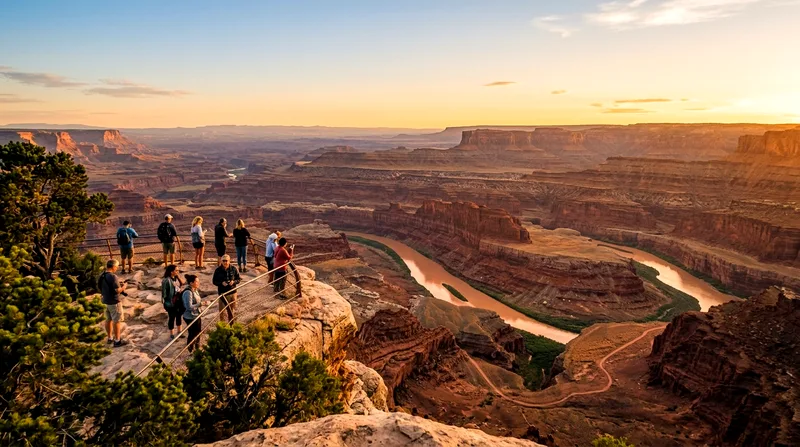
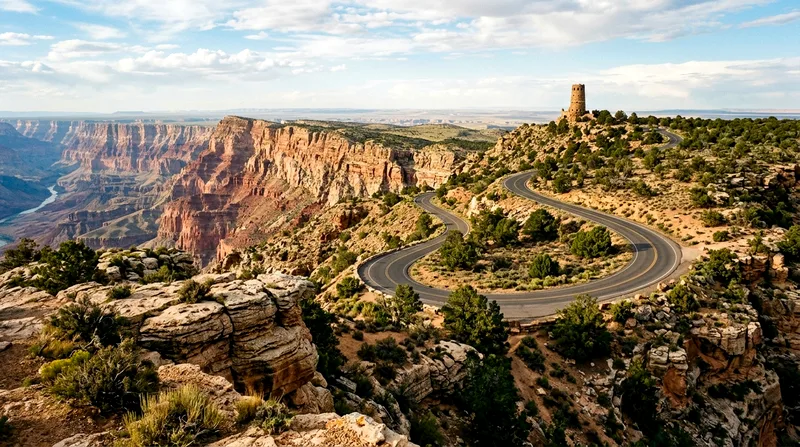
The road threads through ponderosa pine forest, opening up at a series of overlooks before ending at the Desert View Watchtower, a 70-foot stone structure perched right at the rim with what's arguably the single best panoramic view in the entire park. Along the way you'll pass the Tusayan Museum and ancient Pueblo ruins, Grandview Point, Moran Point, and Lipan Point, each with a distinct angle on the canyon and the Colorado River below.
Route overview and scenic highlights
Driving the full length takes about 45 minutes without stops, but nobody does it that way. Budget two and a half to three hours if you want to get out at four or five viewpoints, walk the short paths, and climb the Watchtower. The route runs one direction — east from the Village toward Desert View — so plan your return trip or loop back through the East Entrance toward Cameron and US-89 if you're continuing north toward Page or Antelope Canyon. That's actually one of the drive's practical advantages: it doubles as the exit route if you're heading toward Monument Valley or the Navajo Nation afterward, rather than backtracking through the park entrance you came in through.
Why it's worth the drive from Grand Canyon Village
Most first-time visitors cluster around Mather Point and the Rim Trail near the Village, then assume they've seen the canyon. They haven't seen this version of it. The East Rim viewpoints sit at different elevations and angles, so the canyon's color and depth shift noticeably compared to the South Rim's central viewpoints. Lipan Point, in particular, shows a wide bend of the Colorado River that you simply can't see from anywhere near the Village. If you've already done Bryce Canyon or Zion on the same trip, Desert View Drive is the closest Grand Canyon experience to that open, drive-and-stop rhythm — far more car-friendly than the Village's trail-heavy layout.
How to visit: independent driving vs. guided tours
You have two realistic ways to do this drive: behind your own wheel, or as part of a guided tour that includes it alongside other South Rim highlights. Neither is objectively better — it depends on whether you value flexibility or narration.
Self-guided driving directions and timing
From Grand Canyon Village, head east on Desert View Drive (AZ-64) past the junction with the road to Yaki Point. The drive to Desert View Watchtower at the far end covers roughly 25 miles including the access roads to overlooks, and there's no shuttle bus serving this route — you need a private vehicle, rental car, or RV. That's the single biggest planning point: if you flew in and relied on the park's free shuttle system from the Village, you physically cannot reach most of these stops without a car.
Parking lots at each overlook range from small gravel pullouts (Moran Point) to larger paved lots (Grandview Point, Desert View itself). None require reservations. I'd recommend starting mid-morning after the sunrise crowd at Mather Point disperses, hitting Grandview and Moran on the way out, then timing your arrival at Desert View Watchtower for early-to-mid afternoon before the gift shop and tower get their heaviest foot traffic.
Guided tour options and benefits
If you don't have a car — common for European travelers flying into Phoenix or Las Vegas and relying on organized transport — a guided tour covering Desert View Drive is the only practical way to see the East Rim stops. These tours typically bundle Desert View Watchtower with Grandview Point and sometimes the Tusayan Museum, running from the Village or from gateway towns like Tusayan or Williams. The benefit is obvious: a driver, historical commentary on the Watchtower's design by architect Mary Colter, and no worrying about where to park at peak hours. The downside is equally obvious — you're on someone else's clock, usually two to four hours total, with limited time at any single stop. Compare current Desert View Drive tours and prices before you book, since operators and durations vary by season.
Desert View Watchtower tickets and entry
Desert View Watchtower itself doesn't require a separate paid ticket beyond your standard Grand Canyon National Park entrance pass, which covers seven consecutive days and grants access to the entire South Rim, including every stop on this drive. There's no timed-entry reservation system for the tower as of typical operating patterns, unlike some permit-controlled hikes in the park.
Ticket types and entry requirements
Your park entrance pass — purchased at the gate, online in advance, or covered by an annual America the Beautiful pass — is the only "ticket" you need for Desert View Drive and the Watchtower. The tower building is free to enter and climb during visitor center operating hours, typically daytime hours with seasonal variation. Climbing to the top involves a narrow spiral staircase with low ceilings in places — not ideal if you're claustrophobic or have mobility issues, and there's no elevator. Families with young kids should know the stairs have no handrail guard partway up in the older sections, so keep a hand on children.
What to expect at the Watchtower
Inside, the lower level has a trading post and bookstore; the upper floors display murals by Hopi artist Fred Kabotie depicting Hopi legends and ceremonial imagery. The roof-level viewing area is the real draw — on a clear day you can see roughly 100 miles in some directions, including a stretch of the Colorado River rarely visible from other South Rim points. Expect it to be busy between 11 a.m. and 3 p.m.; arrive before 10 a.m. or after 4 p.m. for a noticeably calmer experience and better light for photos.
Best time to drive and road conditions
Desert View Drive is open year-round, which sets it apart from Hermit Road's seasonal shuttle-only restrictions, but "open" doesn't mean conditions stay the same across seasons.
Seasonal considerations and crowd patterns
Summer (June through August) brings the heaviest traffic and the fullest parking lots at Grandview Point and the Watchtower, especially midday. Spring and fall offer the best balance of mild weather and manageable crowds — October is a genuinely good month, with cooler air and fewer tour buses. Winter thins the crowds dramatically; you might have Moran Point nearly to yourself on a weekday morning in January, but be ready for cold wind at the exposed overlooks and shorter daylight hours limiting how many stops you can comfortably fit in.
Road safety and weather impacts
The road itself is paved, two-lane, and well maintained, but it does see occasional winter closures after heavy snow — the park service clears it, usually within a day, but check conditions before driving in December through February. Summer monsoon season (July–August) brings sudden afternoon thunderstorms with lightning, which is genuinely dangerous at exposed overlooks like Lipan Point; if you hear thunder, get back in the car rather than lingering at the rail for one more photo. Wildlife crossings — elk especially — are common at dawn and dusk, so dusk drives require slower speeds than you'd expect on an open highway.
Viewpoints, stops and photo opportunities
Five stops matter most along this route, and you can realistically hit all of them if you've budgeted the full three hours.
Grandview Point and Lipan Point reward photographers, while Desert View itself offers the most facilities and the Watchtower's rooftop view.
Desert View Drive stops compared: distance, facilities and best use
| Stop | Distance from Village (miles) | Facilities | Best for |
|---|---|---|---|
| Grandview Point | approx. 12 | Restrooms, trailhead | Hikers, sunset views |
| Moran Point | approx. 17 | Small pullout only | Photography, fewer crowds |
| Tusayan Museum | approx. 22 | Museum, restrooms | History, Pueblo ruins |
| Lipan Point | approx. 23 | Small pullout only | Widest river view |
| Desert View Watchtower | approx. 25 | Store, snack bar, restrooms, tower | First-timers, panoramic views |
Distances are approximate from Grand Canyon Village via AZ-64; actual driving distance may vary slightly depending on route taken.
Major overlooks and pullout locations
Grandview Point, about 12 miles from the Village, sits at one of the highest elevations on the South Rim and marks the trailhead for the Grandview Trail, a steep unmaintained path popular with experienced hikers heading down to Horseshoe Mesa. Moran Point, a few miles further, is named for painter Thomas Moran and offers dramatic late-afternoon color on the canyon's red rock bands. The Tusayan Museum sits just before Desert View, a small free museum with an 800-year-old Pueblo site out back — worth 20 minutes if you're interested in the area's human history before European contact. Lipan Point, often overlooked, gives the widest river view on the entire drive and is a favorite among photographers for that reason alone. Desert View itself, at the end, has the largest facilities: a general store, a snack bar, restrooms, and the Watchtower.
Photography tips for each stop
Morning light favors Lipan Point and Moran Point, both facing generally east-southeast across the canyon. The Watchtower itself photographs best in late afternoon when the stone catches warm light against the sky — avoid midday, when harsh overhead sun flattens the texture of the tower's masonry. Bring a wide-angle lens if you have one; the canyon's scale at these East Rim stops tends to swallow standard zoom framing. Don't bother chasing a totally empty shot at Desert View — the parking lot and store are visible from most angles near the tower, so if you want an uncluttered composition, walk the short path to Lipan Point instead.
Frequently asked questions
How long is the Desert View Drive?
Desert View Drive runs approximately 23 to 25 miles one-way along AZ-64 from Grand Canyon Village to the Desert View Watchtower near the East Entrance. Driving straight through takes about 45 minutes, but with stops at the main overlooks you should plan for two and a half to three hours.
What are the main stops on Desert View Drive?
The key stops, in order from the Village, are Grandview Point, Moran Point, the Tusayan Museum, Lipan Point, and Desert View Watchtower. Each offers a different angle on the canyon; Lipan Point has the best river view, and Desert View has the most facilities.
Where is the Desert View Watchtower located?
It sits at the eastern end of Desert View Drive, near the park's East Entrance close to Cameron, Arizona. It's about 25 miles from Grand Canyon Village and the farthest point of this scenic drive before you exit the park toward US-89.
Are there picnic areas along Desert View Drive?
Yes — there are designated picnic areas at Grandview Point and near Desert View, with tables and shade in a few spots, though facilities are basic. There's no food service until you reach Desert View, which has a small snack bar and general store.
What is the best time to visit Desert View Drive?
Early morning or late afternoon gives you the best light and the lightest crowds, especially at the Watchtower, which gets congested between 11 a.m. and 3 p.m. Spring and fall offer milder weather than summer's heat and monsoon storms or winter's occasional road closures.