Book a Grand Canyon mule ride to Phantom Ranch or along the South Rim. Learn pricing, weight limits, booking windows, and what's included.
What Is a Grand Canyon Mule Ride?
A Grand Canyon mule ride is a guided trip on a trained mule, led by National Park Service-concessioned wranglers, down into the canyon from the South Rim. It's one of the oldest ways to see the canyon beyond the overlooks — mule trips to the canyon floor have run since the early 1900s, long before most of the current trail infrastructure existed. Today the rides are operated under permit on National Park Service land, departing from the South Rim near Grand Canyon Village.
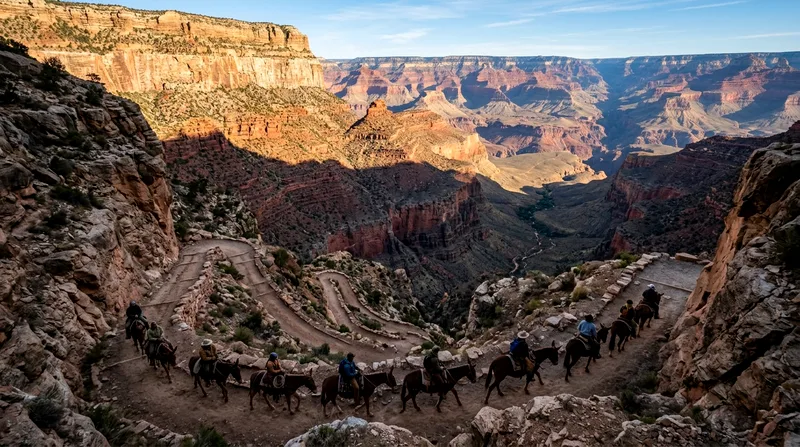
Don't picture a gentle pony walk. These are working stock animals moving along narrow trail sections with exposed drop-offs, and the wranglers run a tight operation because there's zero margin for a spooked animal on a switchback. If you've done a trail ride at a dude ranch and found it tame, recalibrate your expectations here.
The iconic South Rim experience
All current mule trips depart from the South Rim, not the North Rim — the North Rim mule concession has been discontinued for regular tourist bookings in recent years, so if you're set on riding, plan your base around Grand Canyon Village. Riders meet at the corral area near Bright Angel Lodge early in the morning, get weighed in, fitted with gear, and briefed before heading out. The novelty isn't just the animal — it's riding a trail that took mule trains decades to carve and maintain, past viewpoints that hikers on foot see from a different angle entirely.
Physical demands and trail overview
The main route uses Bright Angel Trail and the South Kaibab Trail in combination, descending roughly 4,800 feet from rim to river over the course of the trip. You don't need hiking fitness, but you do need core strength and tolerance for hours in a saddle on uneven ground — expect saddle soreness even if you ride horses regularly at home. Riders must be at least 4 feet 7 inches tall and comfortable gripping with their legs for extended periods; this isn't a ride where you can zone out. Heat is a real factor too, since the inner canyon runs 20-30°F hotter than the rim, especially from May through September.
Overnight vs. Day Ride Options
There are really two products here, and confusing them is the most common planning mistake. One takes you to the bottom and keeps you there overnight. The other keeps you on or near the rim and brings you back the same day. They serve different trips entirely, so decide which one matches your schedule before you even look at prices.
The overnight Phantom Ranch trip and the shorter South Rim day ride serve very different travelers, mainly split by time, budget, and tolerance for advance planning.
Grand Canyon mule ride options compared: duration, cost, and who they suit
| Option | Duration | Approx. Cost (per person) | Reaches Colorado River? | Booking Lead Time | Best For |
|---|---|---|---|---|---|
| Phantom Ranch overnight mule trip | 2 days, 1-2 nights | $700-$1,400+ | Yes | Up to 13 months ahead | Riders wanting the full canyon-floor experience |
| South Rim day ride | A few hours | Lower, roughly a few hundred dollars | No | Weeks to a few months ahead | Travelers short on time or budget |
| Self-guided day hike (comparison) | 6-10 hours round trip | Free (park entry fee only) | No (day hikers don't reach river safely in a day) | None needed | Fit hikers wanting flexibility |
| Helicopter tour (comparison) | 30-50 minutes | Varies by operator | Flies over, doesn't land at river | Days to weeks ahead | Travelers short on time, wanting aerial views |
Prices and booking windows are approximate and change; always confirm current rates and availability on the official Xanterra and National Park Service sites before booking.
Phantom Ranch overnight trips
The overnight mule ride to Phantom Ranch is the marquee trip: two days, one or two nights at the historic cabins near the Colorado River, with meals included at the ranch's dining hall. Riders descend via Bright Angel Trail, spend the layover at the canyon floor — swimming in Bright Angel Creek, exploring the river corridor — and typically return via South Kaibab or Bright Angel the next day. This is the trip most people mean when they say "Grand Canyon mule ride," and it's also the hardest to book, since Phantom Ranch has limited bed capacity and the mule allocation is small relative to demand.
Rim-to-rim and day ride alternatives
If you can't get an overnight slot, or you simply don't want to commit to two days, a shorter day ride along the South Rim is sometimes offered, covering rim-adjacent trail sections without the descent to the river. These day rides are shorter — typically a few hours — and considerably cheaper, but they don't reach Phantom Ranch or the Colorado River. There's no current mule option for a genuine rim-to-rim crossing; if that's your goal, you're looking at a multi-day hike instead, which is a completely different trip in terms of fitness demand and logistics.
What's Included and What Isn't
Mule ride pricing is bundled differently depending on the trip, and the headline number rarely tells the whole story. Expect the overnight Phantom Ranch package to run somewhere in the range of $700-$1,400+ per person depending on single or double occupancy and the season — confirm the current published rate on the official booking site before you commit, since these figures shift and older blog posts quote outdated numbers constantly.
Meals, lodging, and equipment
The overnight package generally includes the mule and wrangler-guided ride both directions, one or two nights in a Phantom Ranch cabin (shared dorm-style options may also exist depending on availability), and meals at the canteen — typically a hearty dinner, breakfast, and a sack lunch for the ride out. Basic riding equipment — saddle, helmet on request, rain gear in wet season — is provided. You don't need to bring your own tack or saddle pad, which is one less thing to worry about compared to packing for a self-guided backcountry trip.
Exclusions and additional costs
What's not included trips up a lot of first-timers: personal gear like a hat, sunscreen, water bottle, and appropriate footwear (closed-toe boots with a heel, not sneakers) are on you. Alcohol and snacks beyond the set meals cost extra at the canteen. Park entrance fees — currently around $35 per private vehicle, good for seven days — are separate from the mule trip cost entirely. Gratuities for wranglers are customary and not built into the price. And if you need to cancel, refund policies tend to be strict given how far in advance bookings lock in, so travel insurance is worth considering for a trip at this price point.
How to Book Your Mule Ride
Booking a Grand Canyon mule ride isn't like reserving a canyon helicopter tour or a Horseshoe Bend parking slot where you can often get a spot a day or two out. Demand for Phantom Ranch mule trips far outstrips the small number of animals and beds available, so this needs to go on your calendar months, sometimes over a year, ahead.
Official booking channels and reservation windows
Book directly through Xanterra Travel Collection, the National Park Service's authorized concessioner for Grand Canyon lodging and mule trips — avoid third-party resellers who mark up prices or, worse, don't have real inventory. Reservations for overnight Phantom Ranch mule trips typically open 13 months in advance, and popular dates (spring and fall weekends especially) can fill within hours of release. Set a reminder and call or book online right when your target date opens. If you missed the window, check for cancellations periodically — they do happen, often a few weeks out when someone fails the weight check or reconsiders.
Weight limits and eligibility requirements
This is the part that eliminates the most would-be riders, and it's non-negotiable because it's a safety limit for the animal and trail, not a suggestion. The published weight limit is 200 pounds fully dressed, including clothing, gear, and anything carried — not just body weight. Riders are weighed at check-in, and there are no exceptions made for muscle mass or height. Minimum height is 4 feet 7 inches. Pregnant riders are not permitted, and the park service advises against mule trips for anyone with serious back, heart, or balance conditions. Children under a certain age (generally under about 7 on the shortest rides, older for the full Phantom Ranch trip) aren't eligible, which is a big reason this isn't really a family-with-young-kids activity. Read the eligibility page closely and don't assume you'll be the exception — wranglers enforce this strictly and will turn riders away at check-in.
Is a Mule Ride Worth It?
It depends entirely on what you're optimizing for. If your goal is simply seeing the canyon from a dramatic viewpoint, you don't need a mule — a short walk along the Rim Trail, a sunset at Hopi Point, or a scenic flight will get you there for far less money and zero booking stress. The mule ride earns its price tag specifically because it delivers something a day-tripper can't easily get: a night at Phantom Ranch, at the bottom, by the Colorado River, without hiking it yourself.
Best for adventure seekers and hikers
If you want the Phantom Ranch experience but your knees, schedule, or hiking fitness won't support a round-trip descent on foot, the mule solves a real problem. It's also genuinely appealing to riders who like horses or trail riding generally and want a version of that hobby with canyon views instead of a paddock. Solo travelers tend to like it because the group format (usually small, wrangler-led) builds in some social contact without requiring you to organize anything.
Not ideal for certain traveler types
I wouldn't recommend it for anyone nervous around large animals — a mule has its own mind, and eight hours of trusting it on a cliff edge is not the place to discover you don't like that. Families with kids under the minimum age or height are simply excluded, full stop. And budget travelers comparing it to, say, a self-guided day hike on the Bright Angel Trail or a visit to Zion where trail access is free, should know the mule ride costs several times more than almost any other canyon activity — it's a splurge item, not a default choice.
Frequently asked questions
How do I book a Grand Canyon mule ride?
Book directly through Xanterra Travel Collection, the official concessioner for Grand Canyon South Rim lodging and mule trips. Overnight Phantom Ranch reservations typically open 13 months in advance and sell out fast for weekends and shoulder-season dates, so book the moment your target date becomes available rather than waiting. Avoid third-party booking sites claiming to offer mule trips, as the real inventory runs through Xanterra and the National Park Service.
What are the weight limits for mule rides?
The published limit is 200 pounds fully dressed, including clothing and any gear you're carrying — not just bare body weight. You're weighed at check-in on the morning of the ride, and wranglers enforce this without exceptions since it's a safety limit tied to the animal and the trail, not a flexible guideline. There's also a minimum height requirement of 4 feet 7 inches for riders.
Is a mule ride to the bottom of the Grand Canyon worth it?
If your main goal is an overnight at Phantom Ranch without hiking the Bright Angel or South Kaibab Trail yourself, yes — it solves a logistics problem few other options can. If you just want views of the canyon or a quick adventure story, a day hike, scenic drive, or helicopter flight delivers more for less money and far less advance planning.
What is included in a mule ride package?
The overnight Phantom Ranch package generally includes the guided mule ride down and back, a cabin stay at Phantom Ranch, and meals at the canteen (dinner, breakfast, and a packed lunch). It typically does not include park entrance fees, personal gear like boots and sunscreen, alcohol, snacks beyond set meals, or wrangler gratuities — budget separately for those.
How long does a mule ride take?
The overnight Phantom Ranch trip runs two days with one or two nights at the ranch, covering roughly 4,800 feet of descent each way along Bright Angel and South Kaibab Trails. A shorter South Rim day ride, where available, typically lasts just a few hours and doesn't descend to the Colorado River.