Compare the Grand Canyon South Rim entrance fee, annual passes, and fee-free days. Learn what's included and how to save on admission.
What Is the South Rim Entrance Fee?
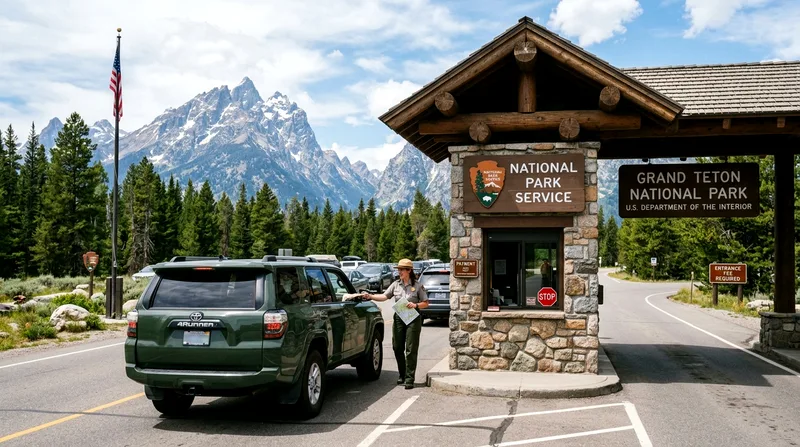
The Grand Canyon South Rim entrance fee is the admission cost charged by the National Park Service to enter Grand Canyon National Park through the South Rim gates — the main entrance used by roughly 90% of park visitors, as opposed to the more remote North Rim or the separate Havasupai and Hualapai tribal lands on the west side of the canyon. This is not a timed-entry ticket in the way Zion or Yosemite have experimented with reservation systems; it's a flat admission fee paid at the gate, online in advance, or at a self-service kiosk if lines are long.
Prices are set by NPS and reviewed periodically, so treat any number you read — including here — as a snapshot to confirm on the official NPS Grand Canyon fee page before you travel. As a general guide, the per-vehicle rate has sat in the $35–40 range for a private, non-commercial vehicle, with motorcycle and per-person (walk-in, bike-in, or bus-in) rates priced lower. That single payment is good for seven consecutive days, which matters if you're combining the South Rim with a Sedona side trip or a multi-day Arizona itinerary.
Per-vehicle vs per-person pricing
NPS charges by vehicle, not by head, which is good news for families and groups. A car with four adults pays the same single vehicle fee as a couple traveling alone — unlike Antelope Canyon tours or Horseshoe Bend parking, where per-person guide fees are more common. If you arrive without a vehicle (on foot, by bicycle, or dropped off by a non-commercial shuttle), you pay a lower per-person rate instead. Large commercial vans and tour buses pay a different, higher commercial rate that's baked into the tour price you'd see on GetYourGuide or Viator, so if you're on an organized coach tour, you're not paying the gate fee separately — it's already included.
What admission covers
The entrance fee covers access to both the South Rim and North Rim for seven days — useful if you're ambitious enough to drive the roughly 4.5-hour route around to the North Rim during the same trip, though most visitors never bother given the distance. It does not cover mule rides, rafting permits, campground fees, or the parking-adjacent shuttle system, which is actually free and unlimited once you're inside the park. Lodging inside the park, at places like El Tovar or Bright Angel Lodge, is billed separately and doesn't include the entrance fee if you're entering by a different vehicle than the one you arrived in originally.
Ticket Types and What's Included
Beyond the standard private vehicle pass, NPS sells several entry categories, and picking the wrong one is an easy way to overpay or get stuck re-purchasing at the gate. The categories exist mainly to account for how different visitors actually arrive — car, motorcycle, bicycle, tour bus, or on foot — and each has its own fee tier.
I'd avoid buying a "Grand Canyon admission" product through a generic marketplace listing unless it's bundled with a specific service you want, like a guided hike or shuttle from Flagstaff. Those listings often mark up the raw entrance fee by a noticeable margin for the convenience of "skip the gate line," which barely exists outside of the three or four peak weeks in summer anyway.
The standard private vehicle pass covers everyone in your car for seven days and is the right choice for most visitors.
Grand Canyon South Rim entrance fee options compared
| Pass Type | Typical Cost | Valid For | Best For |
|---|---|---|---|
| Private vehicle pass | Approx. $35–40 | 7 days, both rims | Families, couples, road-trippers |
| Motorcycle pass | Slightly less than vehicle rate | 7 days, both rims | Riders, pairs on one bike |
| Per-person (foot/bike/bus-in) | Lowest single rate | 7 days, both rims | Cyclists, shuttle users, solo walk-ins |
| Grand Canyon annual pass | Roughly double a single vehicle fee | 12 months, this park only | Frequent local visitors |
| America the Beautiful annual pass | Approx. $80 | 12 months, all federal fee sites | Multi-park road trips, groups sharing a car |
| Senior lifetime pass (62+, US residents) | One-time fee, approx. $80 | Lifetime, all federal fee sites | Senior travelers planning repeat visits |
Figures are widely published approximate ranges and subject to change — confirm current pricing on the official NPS Grand Canyon fee page before booking.
Vehicle pass options
The standard private vehicle pass covers one non-commercial vehicle and everyone inside it, valid for seven days at both rims. This is the right choice for the overwhelming majority of visitors — solo road-trippers, families, and couples driving in from Las Vegas, Phoenix, or Flagstaff. If you're renting an RV or driving a larger passenger van that's not a commercial tour vehicle, you still generally fall into the standard private vehicle category, though NPS reserves the right to classify oversized vehicles differently at the gate, so ask the ranger if you're unsure.
Motorcycle and bicycle passes
Motorcycles pay their own reduced vehicle rate, typically a few dollars less than the standard car rate, and it covers the rider plus one passenger. Cyclists and pedestrians pay the lowest per-person rate, which makes sense if you're arriving via the Hermit Road shuttle system from a Tusayan hotel without a car at all — a genuinely pleasant way to see the rim if you don't want to deal with parking, since South Rim lots fill up by mid-morning in spring and summer.
Annual Passes vs Single-Entry Tickets
This is where most visitors either save real money or waste it. NPS sells an "America the Beautiful" annual pass, good for entry to every federal fee-charging site in the country for twelve months from the date of purchase — not the calendar year. It's priced around $80 and covers the pass holder plus up to three additional adults in the same vehicle, which makes it a shared-cost no-brainer for carpooling groups.
There's also a Grand Canyon-specific annual pass, cheaper than the national one, that only covers Grand Canyon National Park itself. It makes sense only if you're local to Arizona or visiting the canyon multiple times in a year but have no plans to hit Zion, Bryce Canyon, or Yosemite in the same twelve months.
Annual pass value calculation
Do the math before assuming the park-specific pass is the obvious choice. If a single South Rim entry runs around $35 per vehicle, you'd need three separate visits within a year to beat the cost of the cheaper park-only annual pass — plausible if you live within driving distance in Flagstaff or Phoenix. But the America the Beautiful pass at roughly double the park-only price becomes the better buy the moment you're also planning stops at Bryce Canyon, Zion, or Monument Valley (note: Monument Valley is tribal land, not NPS, and charges its own separate fee, so the federal pass doesn't apply there).
When annual passes pay for themselves
For a European traveler doing a two-to-three-week Southwest loop — Grand Canyon, Zion, Bryce, maybe Yosemite on the way back toward California — the America the Beautiful pass pays for itself after the second or third park gate, easily, since each of those parks charges a comparable per-vehicle entrance fee on its own. For a single weekend trip to just the South Rim, skip it. Buying the annual pass for one visit is the single most common ticket mistake I see recommended by generic "save money" lists online, and it's simply wrong for a one-off trip.
Fee-Free Days and Discounts
NPS designates a small number of fee-free days each year — typically including Martin Luther King Jr. Day, the first day of National Park Week in April, the Great American Outdoors Act anniversary in August, National Public Lands Day in September, and Veterans Day in November. The exact dates shift slightly year to year, so check the current NPS fee-free calendar rather than relying on a fixed list, but the pattern of roughly five to six free days annually has held for years.
Don't expect a quiet park on these dates. Fee-free days are often the most crowded days of the year at the South Rim, since locals and regional visitors time trips around them. If your priority is avoiding crowds rather than saving $35, a fee-free day is the wrong day to visit — go on an ordinary Tuesday in November instead and pay full price for a much calmer rim walk.
National Park Service fee-free days
On a fee-free day, the entrance fee is waived entirely at the gate — no voucher, no advance registration needed for general admission. This applies only to the entrance fee itself; campground reservations, mule trip fees, and rafting permits are unaffected and still cost the same as any other day. If you're trying to combine a fee-free day with a Bright Angel Trail hike, book your logistics as if it were a normal high-demand day, because parking and shuttle crowding don't ease up just because the gate fee is waived.
Senior and disability discounts
US citizens and permanent residents aged 62 and older can buy a lifetime Senior Pass for a modest one-time fee (around $80 for the lifetime version, or a cheaper annual option), which covers the same federal sites as the America the Beautiful pass. For a senior couple planning multiple national park trips over the coming years, this lifetime pass is close to the best deal in US outdoor recreation, full stop. US residents with a permanent disability qualify for a free Access Pass with the same lifetime benefits — proof of disability status is required at the time of application, typically a doctor's statement or proof of federal disability benefits. Note these two passes are US-specific; they're not available to non-resident foreign visitors, who should plan around the standard per-vehicle fee or the America the Beautiful annual pass instead.
How to Buy Tickets Online
You have two real paths to Grand Canyon South Rim entrance fee tickets: the official NPS channel, or a third-party platform that bundles admission into a larger tour product. Which one makes sense depends entirely on whether you want just the gate pass or a managed experience with transport and guiding included.
Official NPS booking channels
The NPS sells entrance passes directly through its official recreation and park websites, and some fee transactions route through Recreation.gov, the same federal booking system used for campground reservations, backcountry permits, and some timed-entry programs at other parks. Buying direct means you pay the exact published rate with no markup, and you can usually print or save a digital receipt to speed up the gate line. This is the right move if you're driving yourself and just need the admission — no added service required. Annual passes, including the America the Beautiful pass, can also be purchased online in advance or at any federal fee site entrance station, including the South Rim gate itself.
Third-party tour platforms
Platforms like GetYourGuide, Viator, and listings referenced on TripAdvisor sell Grand Canyon day tours and shuttle packages that include park admission in the total price — convenient if you don't have a rental car, don't want to navigate Arizona driving from Las Vegas or Phoenix yourself, or want a guide narrating the geology along the rim. The trade-off is cost: you're paying for transport, guiding, and group logistics layered on top of the base entrance fee, so the admission portion alone is rarely itemized or discounted. If what you actually want is cheap, flexible access to the park, skip these and drive yourself. If you want the full day handled — pickup, narration, maybe a stop at a viewpoint you wouldn't find alone — compare current tour prices and inclusions before you book, since packages vary widely in what else they cover, like lunch or Hoover Dam add-ons.
Frequently asked questions
Do you have to pay to enter Grand Canyon South Rim?
Yes, almost every day of the year. The South Rim is a fee-charging unit of the National Park Service, and admission is required for private vehicles, motorcycles, cyclists, and pedestrians alike. The only exceptions are the handful of official NPS fee-free days scheduled throughout the year, and holders of a valid annual, senior, military, or access pass who enter at no additional charge.
What is the current entrance fee amount?
The private vehicle rate has typically run in the $35–40 range, covering everyone in the car for seven consecutive days at both the South and North Rim. Motorcycle and per-person rates are lower. Because NPS periodically adjusts fees, check the official Grand Canyon National Park fee page right before your trip rather than relying on a number from an old blog post or tour listing.
Are annual passes worth buying?
Only if you'll use them. The America the Beautiful pass pays for itself after roughly two to three park visits in a year — easy to hit if you're also stopping at Zion, Bryce Canyon, or Yosemite on the same trip. For a single one-off South Rim visit, buying an annual pass is a waste of money; stick with the standard single-entry vehicle fee.
When are the fee-free days?
NPS typically designates around five or six fee-free days per year, including Martin Luther King Jr. Day, the start of National Park Week in April, National Public Lands Day in September, and Veterans Day in November. Exact dates shift annually, so check the current NPS fee-free day calendar. Expect heavier-than-usual crowds and parking pressure on these dates.
Can you buy tickets online in advance?
Yes. You can purchase the standard entrance pass and annual passes directly through official NPS and Recreation.gov channels before you travel, which avoids any line at the gate kiosk. Third-party platforms like GetYourGuide and Viator also sell tour packages that include admission, but those bundle in transport and guiding at a higher total cost than the standalone gate fee.