Compare Grand Canyon guided vs self-guided hike options—cost, safety, flexibility, and experience quality—to decide which fits your trip.
Options at a glance
The Grand Canyon guided vs self-guided hike decision isn't abstract—it plays out every morning at the South Kaibab and Bright Angel trailheads, where mule trains, ranger-led groups, and solo hikers with trekking poles all start within minutes of each other. Guided hikes range from short rim walks with a National Park Service ranger to full-day descents with licensed outfitters who carry extra water and know exactly when to turn a group around. Self-guided hikes mean you plan the route, carry your own supplies, and make every call yourself, from pace to when to bail.
Neither option is inherently "better." A guided trip on Bright Angel Trail with an experienced outfitter removes a lot of decision fatigue, but it also removes your ability to linger at a viewpoint for forty minutes because the light is good. A self-guided hike down South Kaibab Trail costs you nothing beyond park entry and your own gear, but it also means nobody is checking whether you packed enough electrolytes for a 95°F day in the inner canyon.
What guided hikes include
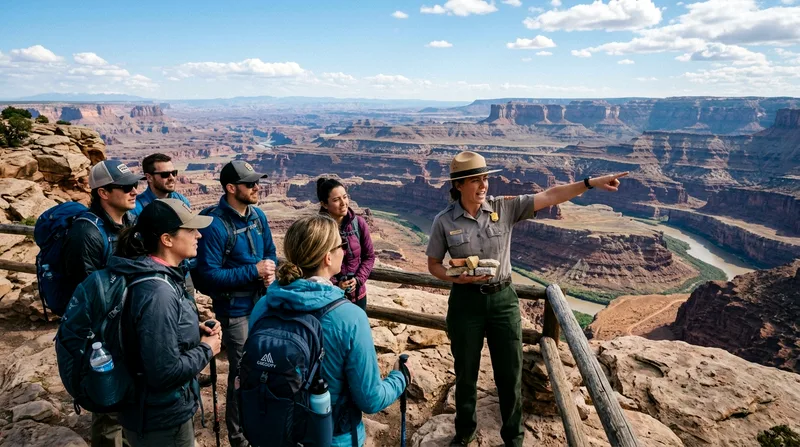
A typical guided hike at Grand Canyon National Park includes a licensed guide, a fixed itinerary, and usually transportation to and from the trailhead if you're staying outside the park. Many outfitters cap group size around 8-14 people and build in mandatory water and shade breaks that solo hikers often skip. Ranger-led programs through the National Park Service are free or low-cost and tend to focus on short walks along the rim or Desert View Drive overlooks rather than inner-canyon descents. Full-day guided treks into the canyon, by contrast, often run several hundred dollars per person and include lunch, safety briefings, and sometimes a mule or rafting add-on at Grand Canyon West.
What self-guided hikes offer
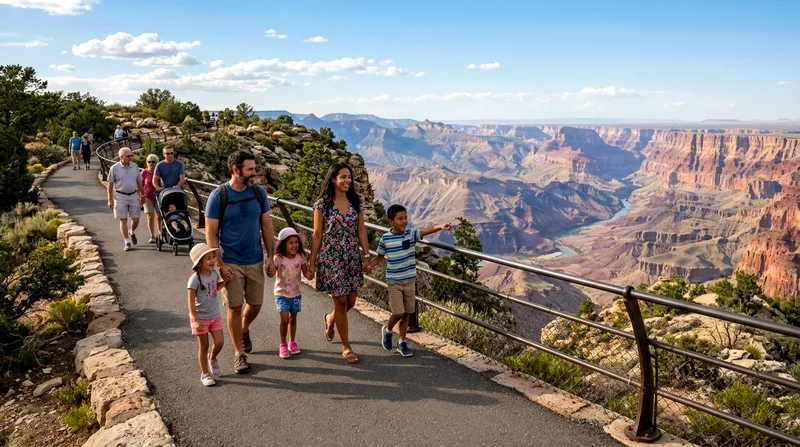
Self-guided hiking means using NPS trail maps, posted mile markers, and your own research to navigate Bright Angel Trail, South Kaibab Trail, or the rim trails near Grand Canyon Village. You set your own pace, decide your turnaround point, and pay nothing beyond the standard park entrance fee (around $35 per vehicle, valid for seven days). The trade-off is that you're responsible for water planning, heat acclimatization, and recognizing early signs of dehydration or heat exhaustion—conditions that send dozens of hikers to need rescue from the inner canyon every year, according to NPS incident reports.
Head-to-head comparison: key factors
Cost, time, safety, and crowd exposure all shift depending on which path you pick, and they don't move together—saving money on a self-guided hike can cost you time and safety margin if you're not prepared.
Guided hikes cost more but reduce safety-margin errors, while self-guided hikes save money but demand more planning discipline.
Grand Canyon guided vs self-guided hike comparison by cost, time, and safety
| Option | Typical Cost (per person) | Flexibility | Safety Support | Best Trail Match | Education Value |
|---|---|---|---|---|---|
| Ranger-led rim walk | Free–$10 | Low | High | South Rim viewpoints, Desert View Drive | High |
| Guided day hike (inner canyon) | $150–$400 | Medium | High | Bright Angel Trail | High |
| Guided multi-day trek | $800–$1,500+ | Low | Highest | South Kaibab to Bright Angel loop | High |
| Self-guided day hike | $35 (park entry only) | High | Low–Medium | Bright Angel, South Kaibab (short segments) | Low–Medium |
| Self-guided backcountry overnight | $35 + permit fee (~$10/person/night) | High | Low | Bright Angel to Phantom Ranch | Medium |
Figures are typical ranges; confirm current permit and guided tour prices before booking.
Cost and budget impact
Self-guided tour cost is close to zero beyond the park entrance fee and your own gear—water, sun protection, proper shoes. A guided day hike typically runs from roughly $150 to $400+ per person depending on length, group size, and whether transportation or meals are included. Multi-day guided backpacking trips with permits, gear, and food handled for you can run over $1,000 per person. If you're traveling as a family of four, that difference adds up fast—budget travelers and backpackers generally lean self-guided for short Corridor trail hikes, while those wanting a rim-to-river experience without logistics headaches pay for a guide.
Time and flexibility
Guided hikes run on a schedule—you meet at a set time, follow a set pace, and finish when the itinerary says you finish. That's useful if you've got one day at the park and want guaranteed results. Self-guided hikes let you adjust on the fly: start at sunrise to beat the heat, stop for an hour at Ooh Aah Point, or scrap the whole plan if weather turns. The flexibility cuts both ways, though—without a guide enforcing turnaround times, it's easy to push too far down and run out of daylight or water on the climb back up.
Safety and difficulty
Is it safe to hike the Grand Canyon alone? Yes, for most rim trails and short Corridor descents, provided you carry enough water (a gallon per person per day in summer is the NPS benchmark) and respect posted turnaround advice. It gets riskier the farther you go—South Kaibab has no water sources below the trailhead, and summer temperatures at Phantom Ranch regularly exceed 100°F. Guided hikes reduce risk mainly through experience: guides recognize early heat exhaustion symptoms and carry contingency water and first aid. They don't eliminate risk, and a guide can't fix a hiker who ignored their own fitness limits before the trip.
Views and experience quality
Guides add context you'd otherwise miss—why the Vishnu Schist at the canyon bottom is nearly two billion years old, how the Colorado River carved through a dozen rock layers, which overlooks along Desert View Drive get the best late-afternoon light. That geological and historical framing turns a scenic walk into something closer to a field class. Self-guided hikers get the same views but have to dig up that context themselves, through NPS visitor center exhibits or guidebooks, and many simply don't bother—which is fine if you're there for the physical challenge rather than the backstory.
Crowds and solitude
Guided groups tend to move at a fixed pace and stick to the most popular trails—Bright Angel and South Kaibab near the South Rim—which means you're hiking alongside other guided groups and independent hikers alike during peak season (March through May, and September through October). Self-guided hikers have more freedom to start before dawn, hike lesser-used segments, or pick weekday mornings when the rim is quieter. If solitude matters to you, self-guided and an early start beats any guided option on the Corridor trails.
Who should choose guided hikes
If this is your first visit to a desert canyon environment, a guide removes the single biggest risk factor: not knowing how fast heat and elevation gain can turn a good day bad. Grand Canyon guided hike benefits show up most clearly for travelers unfamiliar with high-desert conditions—many European visitors, for instance, underestimate how dry and hot the inner canyon gets compared to alpine hiking back home, where water sources are frequent and shade is common.
Best for first-time visitors
First-time visitors to Grand Canyon National Park often don't know the difference between a rim walk and a Corridor trail descent until they're already short on water halfway down South Kaibab. A guide handles logistics—permits, pacing, water resupply points—so you can focus on the experience rather than second-guessing your plan. This matters even more for families with children, where a guide's authority on turnaround timing tends to get respected more than a parent's.
Best for geology and history learners
If you want to understand what you're looking at—the Kaibab Limestone at the rim, the Redwall Limestone halfway down, the ancestral Puebloan sites along certain trails—a guide delivers that in real time rather than requiring you to cross-reference a book afterward. This is the strongest selling point for guided hikes over any audio guide app: a good guide adjusts the explanation to what's actually visible at that moment, not a fixed script.
Who should choose self-guided hikes
Grand Canyon hiking without a guide works well for anyone who already has backcountry experience elsewhere—Zion's Angels Landing, Bryce Canyon's Navajo Loop, or multi-day treks in Yosemite's backcountry are reasonable fitness benchmarks. If you've managed those without incident, the Corridor trails at Grand Canyon are navigable on your own, provided you respect the heat.
Best for experienced hikers
Experienced hikers often find guided groups frustratingly slow—paced for the least fit member of the group rather than for someone who wants to cover six miles before 10 a.m. to avoid afternoon heat. Self-guided hiking lets you set a faster or slower pace, skip breaks you don't need, and turn around based on your own read of your body rather than a fixed schedule. Just carry a paper map as backup; cell service disappears quickly below the rim.
Best for budget-conscious travelers
Self-guided tour cost advantages are real: a solo hiker or couple can do a full day on Bright Angel Trail for the price of park entry alone, compared to several hundred dollars for a guided equivalent. For budget travelers stacking Grand Canyon against other stops—Horseshoe Bend, Antelope Canyon, Monument Valley—money saved here often gets redirected toward a paid tour at Antelope Canyon, where self-guided access isn't allowed at all because it's on Navajo land and requires a Navajo guide by law.
The verdict: making your decision
Do you need a guide at Grand Canyon? Not for a rim walk along Desert View Drive or a short out-and-back on Bright Angel Trail to the 1.5-Mile Resthouse. You do benefit from one if you're attempting a rim-to-river hike for the first time, traveling with kids, or coming from outside the U.S. without desert hiking experience—the kind of trip where a bad decision at hour six has real consequences.
Compare that to Zion, where the Narrows can be done self-guided with a permit and a dry suit rental, or Bryce Canyon, where most trails are short enough that guided tours exist mainly for the commentary rather than safety. Grand Canyon's inner-canyon elevation change—over 4,000 feet on South Kaibab—puts it in a different risk category. Self-guided makes sense if you're fit, prepared, and hiking trails you've researched. Guided makes sense if you want the safety margin, the geology lesson, or you simply don't want to be the one deciding when to turn back.
Before you book either option, check current prices and availability for guided hikes, mule trips, or ranger programs at the South Rim—schedules shift seasonally and some ranger talks are only offered certain months.
Frequently asked questions
Do you need a guide to hike the Grand Canyon?
No, not legally or practically for day hikes on maintained Corridor trails like Bright Angel or South Kaibab. A guide becomes genuinely useful for first-time inner-canyon hikers, families, or anyone unfamiliar with desert heat management, but millions of visitors hike the rim and short trail segments self-guided every year without incident.
How much money do you save with self-guided hikes?
You'll typically save $150 to $400+ per person compared to a guided day hike, since self-guided costs usually stop at the park entrance fee (around $35 per vehicle) plus your own gear. Multi-day guided treks can run $800-$1,500+ per person, versus a backcountry permit fee of roughly $10 per person per night for the self-guided equivalent.
Is it safe to hike the Grand Canyon without a guide?
Yes, for rim trails and short Corridor hikes, provided you carry a gallon of water per person per day in summer, start early to avoid peak heat, and respect posted turnaround points. Risk rises significantly on longer descents like South Kaibab to the river, where there's no water source and rescue calls spike during summer heat waves.
What do professional guides teach that self-guided visitors miss?
Guides typically explain the canyon's rock layers in sequence—Kaibab Limestone at the rim down to Vishnu Schist near the river—tie them to specific viewpoints, and cover human history like ancestral Puebloan use of the canyon and the Hopi and Havasupai connections to the land. Self-guided hikers can learn this from NPS visitor center exhibits, but most don't take the time.
What audio guide tools are available for self-guided tours?
Several downloadable audio tour apps cover Desert View Drive and South Rim overlooks with GPS-triggered commentary on geology and history, letting self-guided hikers get some of the educational value of a guide without the cost. They work offline once downloaded, which matters since cell service is unreliable throughout most of the park.