Compare rim-to-rim guided tours, multi-day packages, and logistics for the Grand Canyon rim to rim hike. Fitness, permits, and booking tips inside.
Who Should Attempt a Rim-to-Rim Hike
The Grand Canyon rim to rim hike covers roughly 21 to 24 miles depending on route choice, with total elevation change exceeding 11,000 feet when you count both the descent and the climb out. That's not a walk in a park — it's closer in physical demand to a marathon run on uneven, exposed terrain, often in temperatures that swing 40 degrees Fahrenheit between canyon floor and rim. I'd put it bluntly: if your longest hike to date has been under 15 miles, or you've never hiked for more than six hours straight, this isn't the trip to learn on.
The people who do well here have usually completed at least one or two hikes in the 15-20 mile range with significant elevation change — think Zion's Angels Landing combined with the Narrows in a single long day, or a full Bryce Canyon rim-to-rim-to-rim loop. Trail running background helps enormously, even if you plan to walk the whole way, because it builds the tendon and joint resilience that downhill pounding demands.
Fitness and experience level required
Plan on training for eight to twelve weeks beforehand with weighted hikes — a 20-25 pound pack on hilly terrain, building to at least one 15-mile day before you attempt the real thing. Stair climbing with a loaded pack translates surprisingly well to the Grand Canyon's switchback trails. Cardio alone isn't enough; you need quad and ankle strength for the descent, which damages joints more than the climb does. Anyone managing chronic knee issues should talk to a doctor first and strongly consider trekking poles, which cut joint stress noticeably on the steep sections of South Kaibab Trail.
One-day vs multi-day hiking strategies
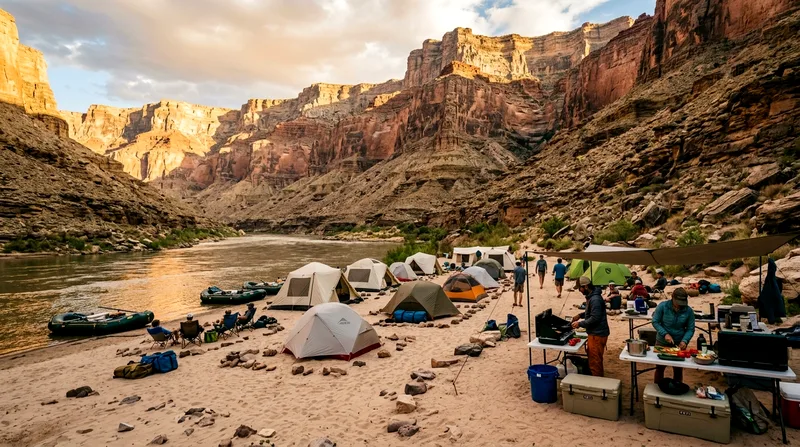
Rim-to-rim in a single day — sometimes called R2R — is done by ultra-fit hikers and trail runners in 10 to 14 hours, but the National Park Service explicitly discourages attempting it as your first canyon hike. The multi-day version, spreading the trip over two or three days with an overnight at Phantom Ranch or a backcountry campground near the Colorado River, is the saner choice for most people. It lets you hike during cooler hours, rest through the hottest part of the day, and actually look at the scenery instead of just watching the trail in front of your boots. I'd choose multi-day every time unless you're specifically chasing the one-day challenge for its own sake.
Rim-to-Rim Tour Categories Compared
Tours and trip structures for this hike fall into a few clear categories, and picking the wrong one is the most common planning mistake. Guided multi-day packages handle permits, shuttle logistics, and often carry your heavier gear between camps — you show up fit and ready, they handle the paperwork. Self-guided multi-day trips give you full control over pace and itinerary but require you to secure your own backcountry permit, arrange your own rim-to-rim shuttle, and carry everything yourself unless you book a separate lodge stay at Phantom Ranch. Single-day guided hikes, usually run south-to-north or vice versa with a shuttle back, suit experienced hikers who want support without an overnight commitment.
There's also a category worth mentioning: mule-supported hikes, where a guide service packs your gear down by mule to Phantom Ranch while you hike unburdened. It's a reasonable compromise for someone fit enough to hike the distance but not keen on carrying 30 pounds for two days.
Guided multi-day packages cost more but remove the permit and logistics risk that sinks most self-guided first attempts.
Grand Canyon rim to rim hike tour categories compared by duration, support, and cost
| Tour Category | Typical Duration | Permit Handling | Water/Gear Support | Best For |
|---|---|---|---|---|
| Guided multi-day package | 2-4 days | Operator-secured | Guide-supported, some gear carried | First-timers, those wanting support |
| Self-guided multi-day | 2-3 days | Hiker applies (competitive lottery) | None, self-carried | Experienced backpackers on a budget |
| Single-day guided hike | 10-14 hours | None required (day use) | Guide-led, no overnight gear | Fit hikers wanting support, no camping |
| Mule-supported hike | 2-3 days | Operator-secured | Gear carried by mule, hiker unburdened | Fit hikers avoiding heavy pack weight |
| Fully self-guided day hike (one-day R2R) | 10-16 hours | None required | Self-carried, no support | Ultra-fit solo hikers, trail runners |
Typical durations and structures; always confirm current permit rules and shuttle logistics directly with Grand Canyon National Park before booking.
Guided multi-day packages vs self-guided
Guided packages typically run two to four days and include a trained leader, permit handling, and sometimes meals at Phantom Ranch if you book through the lodge's dining hall reservation system. Expect to pay a premium over doing it yourself — often several times the cost of a self-guided permit and shuttle — but you're buying certainty. Self-guided trips save money and offer flexibility, but Phantom Ranch permits and campground backcountry permits are notoriously hard to get; demand regularly exceeds supply by a wide margin during spring and fall. If you're new to canyon backcountry travel, the guided route removes the single biggest point of failure: not getting a permit at all.
South Rim to North Rim route options
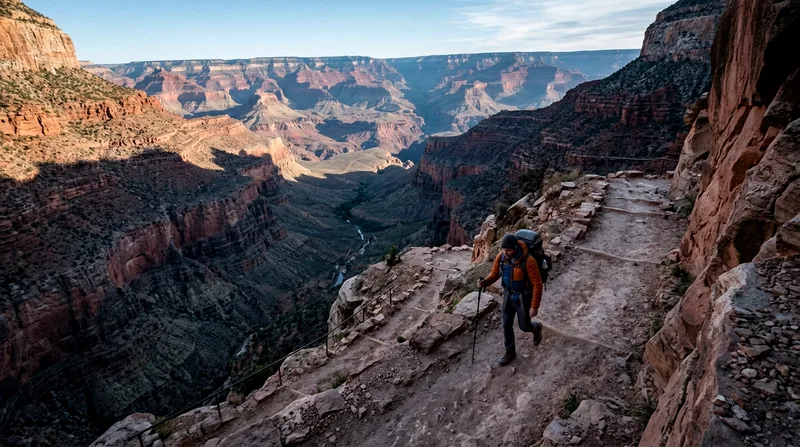
The classic route descends South Kaibab Trail from Grand Canyon Village on the South Rim — steeper, more exposed, no reliable water, but shorter at about 7 miles to the river — then climbs out via North Kaibab Trail to the North Rim, a longer but more gradual 14-mile ascent with seasonal water stations. Some hikers reverse this or descend via Bright Angel Trail instead, which is longer (9.5 miles to the river) but has three water stops and more shade, a better choice if you're hiking alone or less experienced with exposure. The North Rim closes to vehicle traffic in winter, typically mid-October through mid-May, which limits when a true rim-to-rim crossing with road support is even possible.
Key Logistics: Permits, Water, and Timing
This is where rim-to-rim trips succeed or fall apart, and it has little to do with hiking ability. Permits, water planning, and start time discipline matter more than how fast you can run a 10K.
Permit requirements and advance planning
Any overnight stay below the rim — whether camping at Bright Angel Campground, Cottonwood Campground, or staying in a cabin at Phantom Ranch — requires a backcountry permit from Grand Canyon National Park, and the lottery-style request window opens months ahead. Phantom Ranch lodging books through a separate advance reservation system, also highly competitive. If you're hiking rim-to-rim in a single day without an overnight stop, you technically don't need a backcountry permit, but you still need a reliable shuttle reservation for the roughly 4.5-hour drive back around between rims. Booking through a guided tour operator sidesteps most of this, since reputable operators hold permit allocations or have established relationships that individual hikers can't easily replicate.
Water sources and hydration strategy
Water availability varies sharply by trail and season. South Kaibab Trail has zero water sources along its entire length — a serious hazard in summer when canyon floor temperatures regularly exceed 100°F (38°C). Bright Angel Trail has seasonal water stops at Mile-and-a-Half House, Three-Mile House, and Indian Garden, usually running May through September. North Kaibab Trail has seasonal stations at Roaring Springs and the Pumphouse Residence. Carry at least one gallon of water per person for any stretch without a station, and treat every seasonal water report as provisional — pipes break, and the park service posts current status at ranger stations, not online in real time.
What to Look for When Booking a Tour
Once you've decided on guided versus self-guided, the operator details matter. Not all rim-to-rim guided experiences are built the same, and the differences show up exactly when you need support most — mid-hike, exhausted, with ten miles still ahead.
Group size, inclusions, and cancellation policies
Smaller groups — six to ten people — generally mean a more attentive guide-to-hiker ratio and a pace that can flex for slower members, compared to larger groups of fifteen-plus where you'll be told to keep up or fall back. Check exactly what's included: some packages cover Phantom Ranch lodging and meals, others only provide a permit and guide with you supplying your own food. Cancellation policies deserve real scrutiny — canyon weather and heat advisories can force schedule changes, and a rigid no-refund policy on a multi-day package is a red flag worth avoiding. Always compare current prices and recent reviews before booking rather than relying on a package description alone.
Gear provided vs what you bring
Most guided trips provide group safety gear — satellite communication, first aid, sometimes trekking poles — but expect to bring your own broken-in hiking boots, a 2-3 liter hydration reservoir, electrolyte supplements, and layered clothing for the rim's cooler temperatures versus the canyon floor's heat. Mule-supported options will carry your overnight pack but you still carry a daypack with water and snacks. Don't assume a tour provides boots or a backpack; confirm this specifically, because showing up without proper broken-in footwear is one of the more common reasons hikers develop blisters severe enough to need evacuation.
When to Book Your Rim-to-Rim Adventure
Spring (April-May) and fall (September-October) are the two realistic windows, since summer heat on the canyon floor is genuinely dangerous and the North Rim's facilities close for winter. Within those windows, book your permit application or guided package four to six months ahead — backcountry permits for popular dates are allocated well before the season starts, and multi-day guided packages with Phantom Ranch inclusions sell out early for the same reason. If you're flexible, early May and late September tend to have slightly better availability than peak late-April or early-October dates, when school breaks and ideal temperatures overlap.
Compare this against other Grand Canyon activities you might pair with the hike: a scenic flight or helicopter tour over the canyon the day before gives you an aerial preview of the route you're about to walk, and a half-day South Rim mule ride is a reasonable alternative if your travel partner isn't attempting the full crossing. Unlike Horseshoe Bend or Antelope Canyon, which are short, high-traffic stops near Page, Arizona, rim-to-rim demands a dedicated multi-day commitment — don't try to squeeze it into a broader Southwest road trip that also includes Monument Valley and Sedona without building in recovery days afterward.
Frequently asked questions
How much elevation gain is on the rim-to-rim hike?
Total elevation change across the full rim-to-rim crossing is roughly 11,000-11,500 feet combined between descent and ascent, depending on which trails you use. The North Kaibab Trail climb from the Colorado River to the North Rim alone gains about 5,800 feet over 14 miles, which is typically the hardest single stretch of the hike.
Can you hike rim-to-rim in one day?
Yes, experienced hikers and trail runners complete it in 10-14 hours, but the National Park Service advises against it as a first Grand Canyon backcountry experience. It requires high fitness, an early pre-dawn start, and careful heat management since you're exposed on canyon floor trails for most of the midday hours.
What time should you start a rim-to-rim hike?
Start before sunrise, ideally by 4-5 a.m., especially descending South Kaibab Trail, so you clear the hottest, most exposed sections before midday heat peaks. Afternoon starts in summer months have contributed to heat-related rescues, since canyon floor temperatures can exceed 110°F (43°C) by early afternoon.
Do you need permits for rim-to-rim hiking?
You need a backcountry permit only if you're camping overnight below the rim, such as at Cottonwood Campground or Bright Angel Campground; Phantom Ranch cabin stays require a separate lodging reservation. A single-day crossing with no overnight stop doesn't require a backcountry permit, but you still need a confirmed shuttle plan between rims.
What are the water sources on the rim-to-rim trail?
South Kaibab Trail has no water sources at all. Bright Angel Trail has seasonal stations at Mile-and-a-Half House, Three-Mile House, and Indian Garden, typically running May through September. North Kaibab Trail has seasonal water at Roaring Springs and the Pumphouse Residence — always confirm current status with rangers since seasonal pipes can fail.